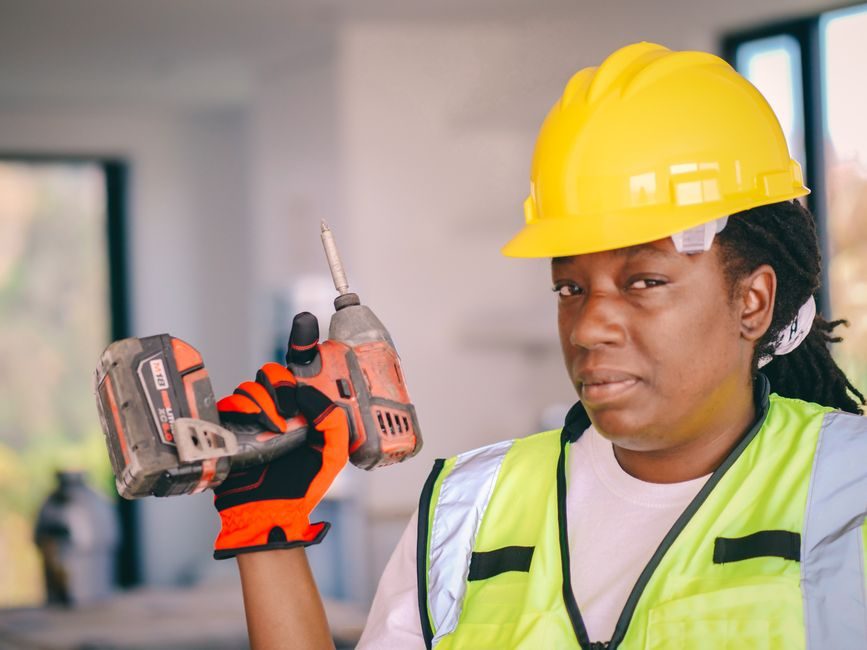
An impact drill is the workhorse on jobs where plain drill/drivers stall: masonry, brick, poured concrete, structural steel and dense hardwood. The selection gate is simple — match chuck capacity, impact energy (J), no-load RPM and hammer BPM to the largest hole diameter and hardest substrate on the BOM, then verify clutch settings, grip geometry and power source for the operator.
The market split in mid-2026 is dominated by cordless 18 V / 20 V Max brushless platforms for site work, with corded 220-240 V mains units still holding price-sensitive masonry and refurbishment work [S1][S2]. At the entry tier, 18-20 V cordless kits are commonly listed in the $35-120 band on general-merchandise channels, with 1000 N·m-class 1/2 in. cordless impact wrench/drill sets around the 36 USD price-point at promotional list price [S1].
What an Impact Drill Actually Does
An impact drill — also called a hammer drill or impact driver depending on the mechanism — adds a percussive action along the rotation axis. Two distinct mechanisms are marketed under overlapping names: a hammer drill uses two cam plates (or an electro-pneumatic mechanism) to drive the chuck axially at thousands of BPM while spinning; an impact driver uses a rotational hammer (twin-hammer or pin-clutch) inside the gearbox and outputs 1/4 in. hex bits only [S2]. The hammer-drill format is the one you want for drilling into masonry with a three-jaw chuck and round shank bits; the impact-driver format is for driving fasteners with hex-shank bits and produces high torque at low RPM, not high BPM.
Key spec vocabulary: impact energy in joules (J) is the per-blow energy delivered to the bit and is the primary indicator of masonry-cutting ability; BPM (blows per minute) is the percussive rate; RPM is the rotational speed. A hammer-drill rated at 2-3 J covers most 6-10 mm masonry holes in brick and light concrete; 3-5 J is needed for 12-20 mm holes in structural concrete; SDS-Plus rotary hammers take over above ~20 mm and into chiseling duty [S2].
Chuck Type, Capacity and Bit Interface
Chuck selection is the first hard gate. Three-jaw keyless chucks (10 mm or 13 mm capacity) take round-shank twist bits, masonry bits and auger bits and dominate the drill/driver-with-hammer category. SDS-Plus is the rotary-hammer interface — a slotted shank that locks into the chuck and allows the bit to slide axially so the hammer mechanism can strike it; it is not interchangeable with three-jaw and is found on rotary hammers, not light hammer drills. 1/4 in. hex quick-change is the impact-driver interface and does not accept standard round-shank drill bits [S2].
Chuck capacity should be sized 1-2 mm above your largest planned bit shank so the chuck can fully close and grip without runout. For an 18 V class cordless hammer drill, 13 mm keyless metal chucks are standard and accept the most common accessory range. Cordless impact wrench/driver kits in the entry tier typically ship with a 1/2 in. square drive and 20 V (18 V nominal) Li-ion packs; advertised 1000 N·m nut-busting torque is a 2026 common headline figure on budget SKUs [S1]. Treating that headline number as peak stall torque rather than working torque keeps the spec honest — sustained working torque on a 1/2 in. cordless impact wrench is typically 200-400 N·m with the rest in reserve for fastener breakaway.
Power, Speed and Impact Energy Bands
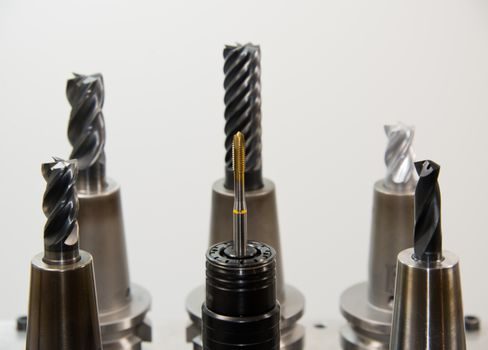
Corded 230 V hammer drills in the 600-850 W input class typically deliver 1.5-3 J impact energy, 0-3000 RPM and up to 50,000 BPM — adequate for 6-12 mm holes in brick, block and unreinforced concrete. The 850-1500 W class lifts impact energy to 3-8 J and pushes the practical hole ceiling to 16-20 mm in masonry and into light rotary-hammer duty for SDS-Plus users. Cordless 18 V brushless hammer drills now sit at 60-130 N·m hard torque and 0-2.5 J impact energy depending on model — usable for 6-10 mm masonry holes but not a substitute for an SDS-Plus rotary hammer on 16 mm+ rebar-bearing concrete [S2].
RPM and BPM must be looked at together. A high RPM with low BPM is essentially a fast drill with weak hammering; high BPM with low RPM is a slow chipper. The functional sweet spot for 6-10 mm masonry bits is roughly 1500-2500 RPM with 40,000-50,000 BPM. Variable-speed triggers and mechanical two- or three-speed gearboxes let the operator trade speed for torque. Cordless impact wrench/driver SKUs frequently quote 2500 RPM no-load speed at 20 V, which is consistent with the 2026 budget tier [S1].
Selection Criteria: Corded vs Cordless, Hammer Drill vs Impact Driver
For site work above 2 hours/day and any hole over 10 mm in concrete, cordless 18 V / 20 V brushless with a 4.0-5.0 Ah battery is the default — mobility outweighs the small torque loss. For a fixed workshop, a corded 800 W hammer drill gives higher sustained impact energy at lower cost and is the right tool for serial masonry drilling. A SDS-Plus rotary hammer is the correct tool, not a hammer drill, once you regularly drill 16 mm+ in reinforced concrete or do chiseling work. For assembly lines driving hex-shank screws and lag bolts, the air impact wrench or a cordless 1/2 in. impact driver is the correct tool — not a hammer drill. [S1]
Operator-side criteria often get missed: vibration-damped side handles and anti-vibration main housings matter above 4-5 J impact energy; weight above 2.5 kg with a 13 mm chuck pushes you toward a soft-grip D-handle auxiliary handle; brushless motor platforms justify the price premium if duty cycle exceeds 30 min/day because brush wear becomes the maintenance bottleneck. The relevant comparison set, on four decision criteria, is: corded 800 W hammer drill — best sustained impact energy, worst mobility, lowest cost; 18 V cordless hammer drill — best mobility, mid impact energy, mid cost; SDS-Plus rotary hammer — best impact energy and chiseling, heaviest, highest cost; 1/2 in. cordless impact driver — best fastener-driving torque at low RPM, cannot drill masonry.
Use Cases, Limits and Failure Modes
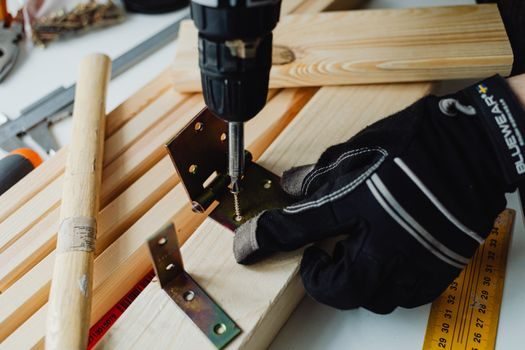
Use the impact drill for: 6-20 mm holes in brick, block and unreinforced concrete; 6-13 mm holes in structural steel with cobalt or carbide bits; repetitive wood boring with auger or self-feed bits where speed matters. Do not use it for: chiseling or light demolition (use an SDS-Plus rotary hammer with chisel mode); large-diameter core drilling above 50 mm (use a diamond core rig); continuous production fastening above 300 fasteners/hour (use a dedicated impact drill stand or auto-feed system); and any application where sustained 100% trigger-on duty is expected — most consumer-grade hammer drills are rated for intermittent duty and will overheat on continuous concrete runs above 5-10 minutes. [S2]
Common failure modes worth designing against: chuck slippage on round-shank bits — usually an under-rated chuck, fix by moving to a 13 mm keyless metal chuck or switching to SDS-Plus; bit jamming in rebar — switch to a rebar-cutting bit or move the hole location; overheating at high BPM — let the tool idle for cooling cycles and keep vents clear. Battery life on cordless platforms drops 30-50% when running in hammer mode versus drill-only mode at the same load, so plan battery count accordingly on site work [S2].
Standards, Ratings and What to Verify Before Purchase
For tradesite use in the EU, a CE mark on the tool and compliance with the Machinery Directive is the baseline; for hazardous-area or wet environments, IP-rating of the tool housing (commonly IP54 or IP20 on consumer units) should match the job. Industrial-spec hammer drills frequently carry an EN 60745 (or the updated EN 62841) hand-held tool safety compliance — confirm the rating in the spec sheet, not the brochure. Brushless motor platforms should carry a stated duty cycle and warranty on the motor windings; the gearbox and chuck are the typical wear parts, not the motor. [S3]
Buy-side checklist: chuck type and capacity in mm matched to the largest bit shank plus 1-2 mm; impact energy in J for the masonry substrate; BPM at the operating RPM band, not the no-load peak; noise and vibration declared values (EN 60745-1, EN 60745-2-1 for hammer drills); battery platform compatibility if going cordless; warranty on the motor and a clear service-channel presence. The headline 1000 N·m torque figure that appears on budget 1/2 in. cordless impact wrench/drill SKUs in 2026 is the stall/breakaway value, not the working torque — treat the working figure as roughly a quarter to a third of the headline unless the spec sheet says otherwise [S1].
For buyers balancing price against spec depth on 18 V / 20 V cordless kits, the linear guide price 2026 cost guide covers a different product class but illustrates the same spec-driven sourcing pattern — material, tolerance and platform compatibility drive the price gap more than brand premium. On the supplier-side, the cut-off machine suppliers 2026 OEM map walks the same cluster-and-spec-band logic that applies when sourcing 18 V hammer drills from regional OEM clusters.
Closing signal: the spec to watch through the second half of 2026 is brushless motor integration at sub-100 USD price points on 18 V platforms — the 2026 budget tier already shows Li-ion plus brushless in the 36-120 USD range on consumer channels [S1], and the next trackable move is whether the 60 USD floor drops further with a third major Li-ion cell supplier entering. Confirm the spec, not the brand, before sign-off.
For component-level specifications, see pressure transmitter.