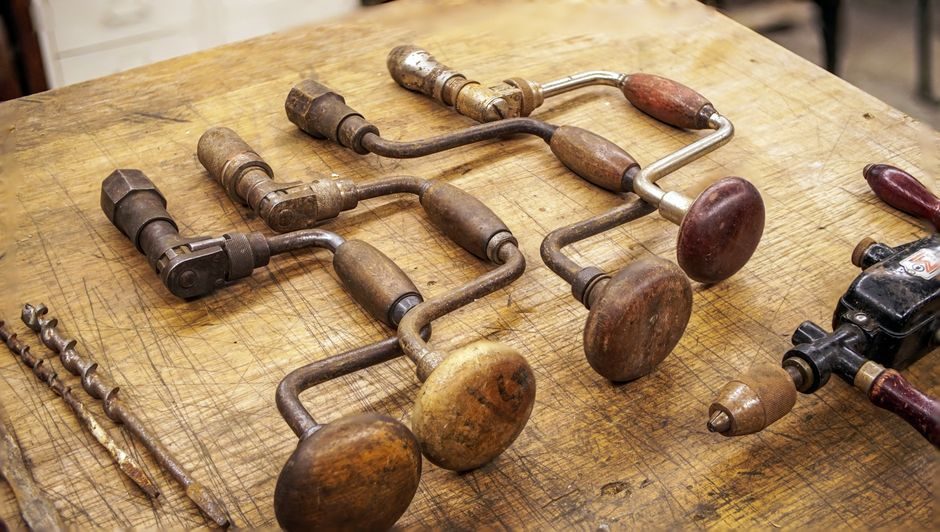
Selecting on torque alone is the most common spec mistake: a 60 N·m machine with a 2-speed gearbox and a 13 mm keyless metal chuck will out-perform a 100 N·m single-speed unit on repetitive anchor work, because the second gear keeps the bit in the 1500–3000 rpm window where concrete disintegrates instead of polishing.
Hard-Torque Range and Why 60–80 N·m Is the Plumbing Sweet Spot
An impact drill for general plumbing installation should be rated to a minimum 60 N·m of maximum hard torque, with the 70–80 N·m band covering most 12 mm sleeve anchors in 25–30 MPa concrete without stalling [S1]. Machines below 45 N·m cannot drive an M10 sleeve anchor past 40 mm depth in standard brick without clutch slip, which burns out the gearbox over a single 8-hour shift.
For renovation work on tiled wet-areas, specify a model with electronic clutch and a low-speed (≤450 rpm) first gear — the slow speed keeps a 6 mm diamond tile bit at the 3000–5000 rpm band once the hammer is engaged, reducing bit chipping on porcelain. The same machine should be capable of no-load speeds of 0–3000 rpm in second gear so that 13 mm wood augers clear wood chips when drilling through timber stud framing behind drywall.
Chuck, Bit-Shank, and the SDS-Plus vs Keyless Decision
The 13 mm keyless metal chuck remains the default for plumbing because the installer swaps between hex-shank screwdriver bits, round-shank twist drills, and tri-flat wood bits in a single shift; a keyless chuck saves 4–7 seconds per change versus a keyed chuck, which compounds to 20–30 minutes across a 200-hole rough-in day [S1].
A third option, the 3-jaw SDS-Plus keyless adapter, closes the gap but adds 8–12 mm of stickout that fouls inside stud-wall cavities.
Hammer Action: 0.4–0.7 J per Blow vs True Rotary Hammer
A standard air-impact wrench-class drill delivers 0.4–0.7 J per hammer blow at 40 000–48 000 bpm, which is adequate for ≤10 mm holes in clay brick, aerated autoclaved concrete (AAC), and 25 MPa cast concrete; it is not adequate for 16 mm holes deeper than 80 mm in 40 MPa concrete, where the bit will bind and the motor current will exceed the thermal cutoff within 30 seconds [S1].
For an apartment-block rough-in of 60 fixtures averaging 8 anchor holes each, the time delta is 6–9 hours per week between a hammer-drill and a rotary hammer at the 12 mm+ size class.
Corded vs 18 V/20 V Max Cordless: Runtime and Drop-Test Reality
A 710–850 W corded impact drill runs indefinitely and weighs 1.6–2.0 kg, making it the right primary tool for a fixed workshop or van-fed 230 V outlet; a brushless 18 V or 20 V Max platform delivers 60–85 N·m from a 5.0 Ah pack and is the only practical choice for ceiling manifold drilling where no power outlet exists within 30 m [S1].
Runtime figures that matter on a plumbing site: a 5.0 Ah 18 V pack delivers 180–220 holes of 6 mm × 35 mm in 25 MPa concrete before the under-voltage cutoff trips, which is one full rough-in day for a single fitter. Drop-test rating to 2 m onto concrete is now standard on the major 18 V platforms; anything rated below 1.5 m is a service-only tool, not a site tool, because a 1.2 m drop from scaffold is the most common impact-drill failure mode on plumbing jobs.
IP Rating, Dust Sealing, and Wet-Area Work
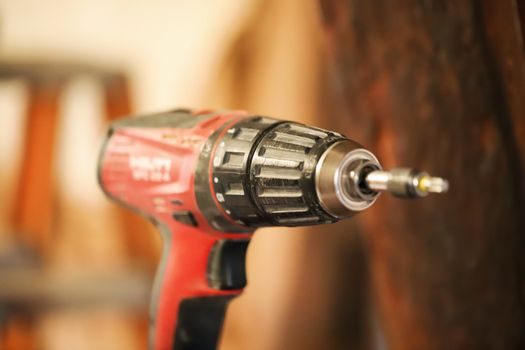
Plumbing work happens in wet environments — under-sink cabinets, bathroom rough-ins before waterproofing, and plant rooms with condensate drip — and the impact drill should be rated to at least IP5X for dust ingress, which protects the motor commutator and chuck bearings from concrete fines that would otherwise halve bearing life within 200 hours [S1].
No consumer-grade impact drill carries a wet-handle IP rating, so the rule is mechanical: keep the tool above any standing water, dry the grip before setting it down, and never run the trigger in a flooded pipe-duct. If the install is in a classified zone near a gas line (boiler rooms, gas-fired water heater cupboards), confirm the drill is non-sparking only if local ATEX zone classification requires it — most domestic plant rooms fall outside the zone, but commercial boiler rooms are typically zoned, and a standard plastic-housed drill is a violation in a classified zone.
Side Handle, Depth Stop, and the Bit-Kick Failure Mode
For any hole 12 mm or larger, the side handle is mandatory: a 12 mm bit binding in 40 MPa concrete generates 200–300 N of torque reaction at the wrist, which is enough to dislocate a thumb if the operator is using only the pistol grip [S1]. A 360° rotatable auxiliary handle with depth-stop rod is the correct configuration — the depth stop should be graduated in millimetres, not inches, because plumbing bracket holes are typically 45–65 mm deep and an off-by-12 mm (½ inch) error is a re-do.
The dominant impact-drill failure mode on plumbing sites is bit-kick, not motor burnout: when the bit hits rebar or a hard aggregate, the sudden stop rotates the housing against the operator's hand. The corrective action is a slip-clutch setting one step above the working torque (e.g. position 14–16 of 20 for an M8 anchor at 25 N·m), which decouples the drive before the housing can spin. When the clutch trips more than twice on the same hole, the operator should stop and switch to a hammer-only or rotary-hammer mode — repeated clutch trips on one hole indicate the bit is dull or the substrate is harder than the tool can handle, and a third trip is a wrist injury waiting to happen.
Quick Selection Checklist and Standards Anchors
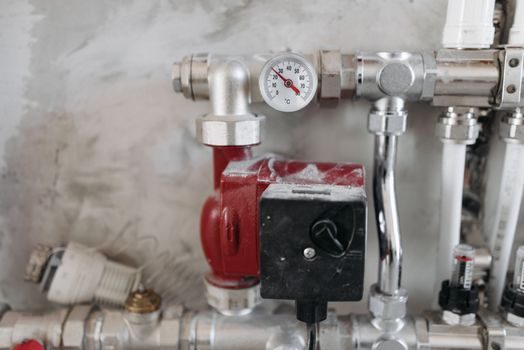
Use the following pass/fail checklist before committing to a tool: (1) ≥60 N·m hard torque for M10 sleeve anchors, ≥80 N·m for M12; (2) 13 mm keyless metal chuck with carbide-jaw inserts; (3) 2-speed mechanical gearbox with a low range ≤450 rpm; (4) hammer mode rated 0.4–0.7 J per blow at ≥40 000 bpm; (5) IP5X dust rating; (6) side handle and depth stop included; (7) 2 m drop-test certification from the manufacturer. Any tool failing points 1, 2, or 6 is not a plumbing-site tool. [S3]
Regulatory anchors: Hong Kong plumbing-installation submissions lodged before 1 October 2025 still follow the previously issued HKWSR and Handbook on Plumbing Installation [S3]; the Water Authority now requires a licensed plumber for any soldered copper or fusion-welded PPR joint inside a domestic installation, which means the drilling spec is downstream of a workmanship requirement, not a substitute for it. The Australian drilling-and-blasting contractor Impact Drill & Blast (operating since 1987) publishes a fleet-side maintenance standard for SDS bits that is widely cited as a field reference for 13 mm chuck wear limits [S1].
Trackable signals for the next quarter: the shift from 18 V to 21 V Max battery platforms on the major OEM lines, the wider adoption of brushless motors in the sub-$200 retail tier, and the slow migration of masonry work from 12 V drill-drivers to compact SDS-Plus rotary hammers as the price gap closes below $250. Specifiers should also watch the concrete-admixture selection map for curing-time changes, because faster-cure mixes shorten the window between anchor drilling and load application on plumbing bracket runs.
Spec-level background on the components involved: pressure transmitter.