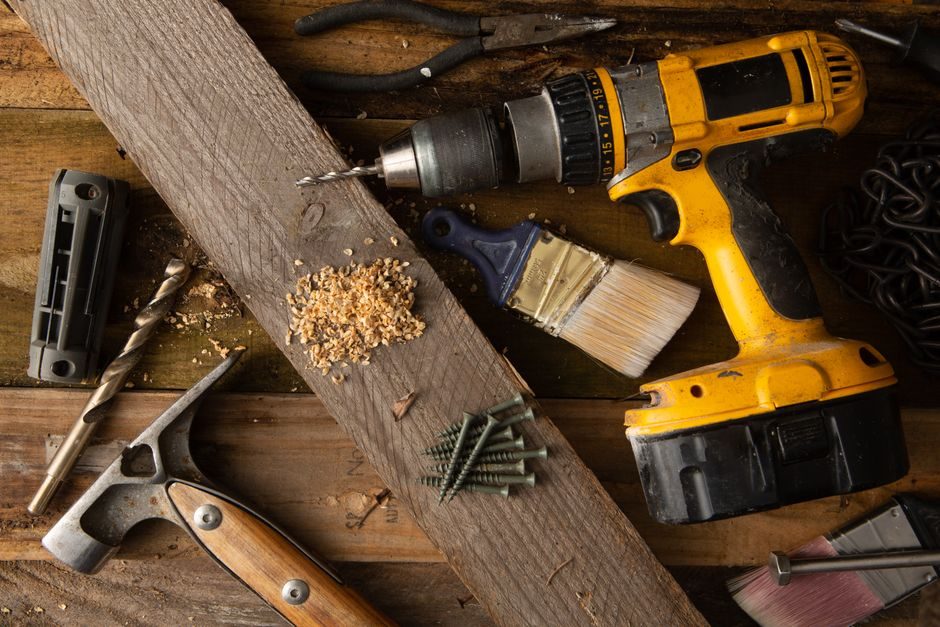
Road-maintenance teams that bolt guardrail anchors, install CFRP dowels on bridge decks, or set sign-post sleeves hit a single decision point: which class of impact drill survives the job, and which spec numbers actually map to FHWA and state-DOT work [S1][S2][S4].
The short answer: an SDS-Plus rotary hammer in the 2.0–3.0 J impact-energy band, 18–20 V cordless or 800–1100 W corded, covers roughly 90% of field drilling on cured concrete, masonry sign bases, and asphalt-embedded hardware. Anything below that band is a drill/driver, not a road tool [S6][S7].
What a "road-maintenance impact drill" actually has to do
TxDOT's 2024 Standard Specifications for Construction and Maintenance mandates a rotary impact drill for CFRP anchor holes in concrete and requires existing reinforcing steel to remain uncut, with holes cleaned by wire hole-brush and oil-free compressed air [S2]. That single sentence defines the tool class: rotation + concussive hammering, not pure rotary drilling, and not a hammer drill's light percussion.
For routine road work the impact drill crosses three duty zones. Light: sign-post sleeves, delineator anchors, and small-diameter (6–10 mm) holes in cured concrete, which an SDS-Plus at 1.7–2.5 J handles. Medium: guardrail terminal-anchor bolts (16–20 mm), bridge-deck CFRP work, and expansion-shell setting at 2.5–3.5 J. Heavy: dowel-bar retrofit (19–25 mm into sound concrete), core-anchor setting, and bridge-rail baseplates, where a 4–8 J SDS-Max rotary hammer is the realistic minimum [S6][S7].
The impact drill category in the tool-press sense overlaps, but does not equal, a rotary hammer. Buying-guide convention separates them by impact energy: under ~2 J = impact drill, 2–5 J = light rotary hammer, 5+ J = full rotary hammer [S7]. Crews that spec one tool to cover anchor work plus occasional chipping should default to SDS-Plus at 2.5 J or higher.
Spec criteria that actually filter the catalog
Five spec values decide a road-maintenance impact drill, and three of them are usually published on the data sheet, while two are not. Impact energy (J) is the make-or-break number. Shank type is the second: SDS-Plus is the default for 6–16 mm bits, SDS-Max for 19 mm and up. Chuck system: a quick-change chuck on top of the SDS-Plus shank adds flexibility for straight-shank twist bits used on steel sign brackets [S6].
Power source and weight matter on the road. Cordless 18 V platforms in the 1.1–1.6 Ah range deliver 1.5–2.5 J and run a full day of anchor work on a 5.0 Ah battery; corded 800–1100 W units push 2.0–3.5 J continuously and are cheaper per joule. A 2.5 J cordless tool typically weighs 2.3–2.8 kg; above 3.0 kg, fatigue becomes a daily limit on all-day sign-post runs. Concrete-road base crews should also verify IP5X dust ingress protection, since aggregate fines and dust are the dominant failure mode for hammer mechanisms in field service [S6].
For the selection logic, treat it as a four-criterion filter. (1) Energy: ≥2.0 J for any cured-concrete work, ≥3.0 J for dowel retrofits, ≥5 J only if chipping is routine. (2) Shank: SDS-Plus for ≤16 mm, SDS-Max above. (3) Source: cordless if the crew walks more than 50 m between holes, corded if a generator truck is on-site. (4) Dust rating: IP5X minimum; many pro-grade SDS-Plus drills now ship with sealed hammer modules specifically for masonry dust [S6][S7].
Matching tool class to specific road-maintenance tasks
Guardrail and terminal-anchor work: 16–20 mm holes at 80–120 mm depth into Class A concrete, 2.5–3.5 J SDS-Plus cordless, 5.0 Ah battery, 1.7–2.5 kg hammer-only weight. Avoid under-2 J models here; blow-out and bit-binding become routine. [S7]
Bridge-deck CFRP anchors: TxDOT specifies rotary impact drilling with hole cleaning by wire brush and oil-free compressed air to remove all drill powder, so the drill must be dry-only (no water feed), and crew should budget 30–60 s of brush-and-blow per 100 mm of depth [S2]. A 2.5–3.0 J SDS-Plus with vacuum extraction fits the spec.
Sign-post and delineator sleeves: 6–10 mm at 50–80 mm depth, 1.5–2.0 J cordless impact drill, multi-position side handle for vertical drilling. This is the only zone where a hammer-drill mode on a combi drill is acceptable [S6][S7].
Ditch cleaning, surface blading, waterbar installation, and dust abatement are the maintenance categories defined under USDA Forest Service T-800 series specs (T-802, T-803, T-806, T-807, T-809) [S1]. Of those, only T-802 (ditch cleaning) and T-803 (surface blading) routinely need drilled anchor hardware; the rest are earthwork, where an impact drill is irrelevant.
Operating limits, failure modes, and when to stop repairing
The two field failure modes that take a road impact drill out of service are brush wear (corded 800–1100 W units typically need brushes at 200–400 h) and chuck shank wear, where SDS-Plus bit retention drops after 1500–2500 hole cycles in aggregate-heavy concrete. Both are repairable; a third mode, cracked field winding from sustained overload, is not cost-effective to repair below the 400-W-class price point [S6].
Stop repairing and replace when: (a) impact energy at rated load drops below 70% of nameplate on a calibrated test block; (b) chuck retention fails to hold a new bit under load; (c) the tool draws current but produces no percussion, which indicates a broken hammer cam. These are the three conditions where rebuild cost approaches 50–70% of new-tool price and replacement is the right call.
Dust and moisture are the dominant field killers. Crews that drill cured concrete without IP5X-rated tools or vacuum extraction can expect hammer-mechanism life to drop by half, and carbon-brush life to fall by 30–40% [S6]. On a maintenance contract, that translates into one extra brush service per 1000 holes versus a sealed unit.
Cordless platform vs corded: the real trade-off
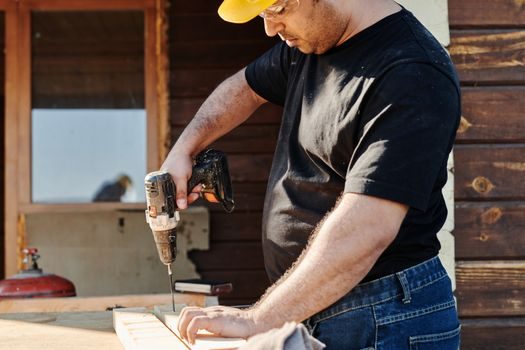
Cordless 18 V SDS-Plus at 2.0–2.7 J covers roughly 80% of road-maintenance drilling by hole count, dominated by sign-post and anchor work. The remaining 20% — large-diameter anchor bolts, bridge-rail baseplates, and continuous dowel retrofits — wants corded 1000–1500 W SDS-Plus or SDS-Max at 3.5–8 J. Crews that run 30+ holes per day on bridge decks should standardize on corded to avoid battery-swap downtime, which typically costs 20–40 s per swap and adds up to 10–15 min per shift at high cadence. [S7]
Battery selection matters more than marketing suggests. A 5.0 Ah 18 V pack delivers about 150–200 holes of 8 × 60 mm in C30 concrete per charge on a 2.0 J drill; a 9.0 Ah pack extends that to roughly 300–350 holes. At below-freezing ambient (winter sign-post runs in northern states), capacity drops 20–30%, so winter crews should derate pack count by a third or pre-warm batteries in the cab [S6].
Standards, references, and what crews should keep on the truck
Three documents govern the spec choices above. TxDOT 2024 Standard Specifications § CFRP anchor drilling defines the rotary-impact-drill requirement, hole-prep procedure (wire-brush + oil-free air), and the no-cut rebar rule for road work in Texas [S2]. USDA Forest Service T-800 series (T-802, T-803, T-806, T-807, T-809) defines the maintenance categories (ditch cleaning, surface blading, dust abatement, vegetation, waterbars) where drilling hardware is installed [S1]. USDA Forest Service Handbook FSH 7709.58 sets the maintenance-level framework that drives which road class gets which level of hardware investment [S3]. FHWA's gravel-roads construction and maintenance guide (Publication No. FHWA-OTS-15002) is the durable-surface reference that defines the road classes — aggregate surface, bituminous surface, and paved — that the impact-drill selection supports [S4].
For catalog matching, the three product families that map to road-maintenance impact drill selection are: cordless SDS-Plus rotary hammers in the 18–20 V, 2.0–3.0 J band; corded SDS-Plus rotary hammers in the 800–1100 W band; and SDS-Max rotary hammers for dowel-bar retrofit and bridge-rail baseplate work above 19 mm hole diameter. Crews should also carry one drill/driver for sign-fastener driving, since driving a 6 mm hex lag into a wood post with a 2.5 J rotary hammer is a slow and bit-destroying exercise [S6][S7].
A 2024-spec Texas bridge-deck retrofit crew running 200 CFRP anchor holes per week needs at least two corded 1000 W SDS-Plus rotary hammers, one cordless 18 V SDS-Plus for set-up holes, and one 1/2 in. drill/driver for sign-fastener driving — plus a vacuum extractor rated for masonry dust. That kit covers TxDOT's CFRP spec [S2] and any guardrail-terminal-anchor work on the same contract.
Spec-level background on the components involved: road roller, and air impact wrench.
This topic is covered further in Ready-Mix Concrete Selection for High-Rise Buildings: Strength, Slump, and PCE Spec Map.