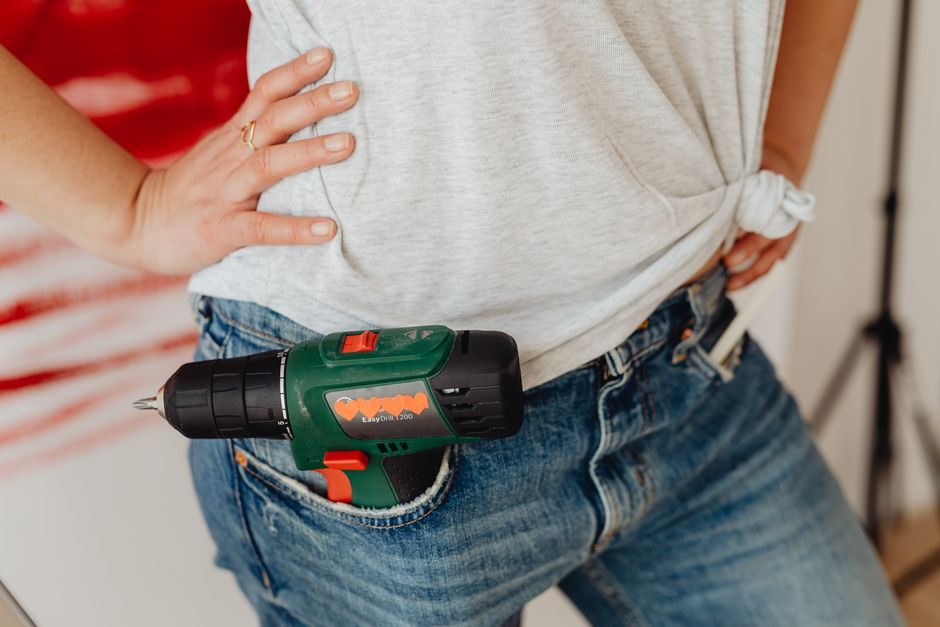
A 500 W impact drill with a no-load speed of 0–2800 rpm and a maximum drilling diameter of 13 mm in steel / 25 mm in wood, such as the BOSS / YUAN DONG BS 13CVR platform, is adequate for anchor and plug holes in plain concrete up to about 10 mm — but the same specification sheet shows why it is NOT the right tool for anchor bolts, rebar-bearing holes, or cored penetrations above 25 mm [S3]. On Made-in-China.com's 87,972-product concrete-drill catalogue (4,630 suppliers, 2026 listing), the price gap between an entry impact drill bit and a wet diamond core machine is roughly 1:600 (US$ 0.142/pc vs US$ 283–350/pc) [S1].
For site engineers, the decision is binary at the low end (impact drill vs cordless drill-driver), three-way in the mid-range (impact drill vs SDS-Plus hammer drill vs rotary hammer), and a different tool category entirely at the top (diamond core drill). The remainder of this article lays out the spec thresholds, the bit geometry, and the standards that govern each band.
Drill Class by Hole Diameter and Substrate
Drilling 4–10 mm holes for plastic anchors or cable runs in C20/25 concrete typically uses a standard 500–750 W impact drill with a 13 mm keyed or keyless chuck; the BS 13CVR spec (500 W, 50/60 Hz, 13 mm steel / 25 mm wood capacity) defines that entry class [S3]. Above 10 mm, a standard impact drill's axial percussion energy becomes the bottleneck — the clutch slips, bit runout grows, and tungsten-carbide tips chip in under a minute.
For 10–25 mm holes — sleeve anchors, through-bolts, rebar-avoidance probes — the working class is the SDS-Plus hammer drill. Made-in-China listings show SDS-Plus tungsten-carbide cross-cutter hammer drill bits at US$ 0.142–7.90/pc (MOQ 500), manufactured to DIN standards, in 110–1000 mm lengths, with a 2-flute geometry for concrete, brick, stone, granite, marble and cement [S1]. For 25–100 mm penetrations, a rotary hammer with SDS-Max shank is the correct tool. Above that — electrical conduit openings, plumbing sleeves, structural test cores — a diamond core drill is mandatory, with wet-cutting models like the Cayken SCY-2550e or OB-255 (255 mm capacity, US$ 283–350/pc or US$ 193/pc respectively) dominating the Chinese OEM catalogue [S1].
Power, Speed, Impact Energy: The Three Spec Numbers
Three numbers separate the categories, and a spec sheet that omits one of them is a red flag. First, rated input power: 500–750 W for the entry impact-drill class, 800–1100 W for SDS-Plus hammer drills, 1200–1500 W for SDS-Max rotary hammers, and 1500–3000 W for diamond core rigs [S3]. Second, no-load speed: 0–2800 rpm is the common impact-drill envelope, with a two-speed gearbox typically offering 0–1100 rpm (high torque) and 0–2800 rpm (high speed) [S3].
Third — and the number that actually cuts concrete — is impact energy per blow, measured in joules. Standard impact drills deliver roughly 1–2 J from a ribbed clutch; SDS-Plus hammer drills deliver 2–4 J; SDS-Max rotary hammers deliver 8–20 J [S5]. The Hitachi DV16V manual, for example, shows the mechanical change lever selecting between pure rotation and impact (hammer) mode with a depth gauge and side handle, illustrating that the impact mechanism on a 500 W-class drill is an assist, not a primary cutting action [S5]. For spec-driven comparison across an impact drill shortlist, the metric that matters is joules per blow divided by bit diameter.
Bit Selection: Shank, Material, Geometry, Standard
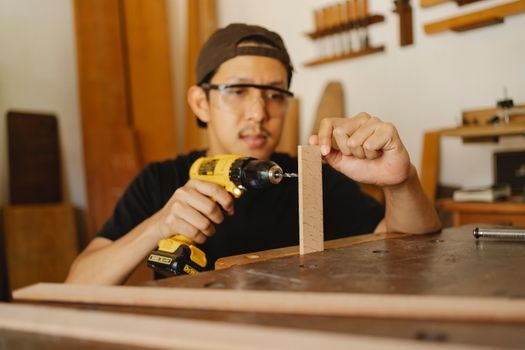
Shank geometry controls what the chuck will accept and, by extension, what energy it can transfer. Three-quarter-inch round shanks, SDS-Plus (10 mm), and SDS-Max (18 mm) are the three production standards. A standard impact drill uses a three-jaw chuck for round-shank bits, while SDS-Plus hammer drills and SDS-Max rotary hammers use the slotted SDS shank for positive mechanical lockup and energy transfer. [S1]
Material is uniform: tungsten carbide (WC-Co) is the only realistic choice for concrete drilling. The current Chinese-OEM SDS-Plus line is dominated by cross-cutter (CT-4) and Y-cutter heads with 2-flute geometry, bright finish, in lengths from 110 mm to 1000 mm, manufactured to DIN 8039 / ISO 5468 geometry — the Made-in-China listings explicitly cite DIN as the standard, with tungsten-carbide as the material and masonry drilling as the application [S1]. For a deeper look at chuck-and-shank conventions, the impact drill encyclopedia entry documents the historical move from keyed to keyless to SDS-Plus over the past four decades. When the substrate is reinforced concrete and rebar contact is probable, specify a 4-cutter head instead of a 2-cutter — the symmetric cutting face reduces snag and tip fracture on the steel.
Diamond Core Drilling: When the Hole Gets Serious
Wet diamond core drilling is the only economical method for clean, round penetrations above 50 mm in structural concrete, and the equipment is a different machine class. A 255 mm wet core rig weighing roughly 25–35 kg, with a 1500–2500 W motor, water feed for slurry and bit cooling, and a 3-speed gearbox (typically 300–900 rpm under load), is the working tool [S1]. Made-in-China's 2026 listings show the Cayken SCY-2550e at US$ 283–350/pc and the OB-255 at US$ 193/pc, both 255 mm-class wet diamond core machines, classified as core drills with impact-drill head, intended for building and industrial applications [S1].
Stand-off, water source, and anchor pattern must be specified at the same time as the drill: wet rigs require a GFCI-protected 220 V supply, a 2–4 L/min water feed, and a vacuum base or mechanical anchor (M12 through-bolt into fresh concrete) — the drill itself is the cheap part of the system. Selection criteria for site planning are covered separately in our Masonry Cut-Off Machine Selection: Blade, Power, and Class Match reference, which applies the same three-band logic to abrasive cutting.
Concrete Substrate, Rebar, and Bit-Life Realities
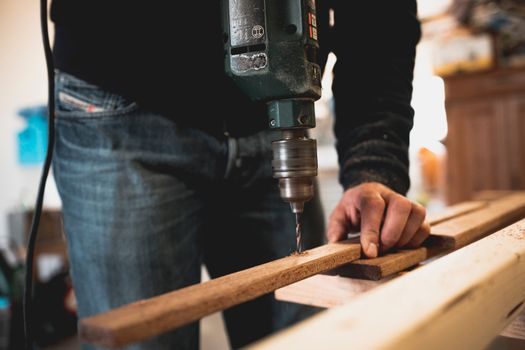
ACI 546.3R-14 (2014) frames the surrounding repair-substrate problem — the base concrete's compressive strength, the depth of carbonation, the chloride profile, and the presence of existing rebar all influence what drill and bit combination will survive the job [S4]. When the repair overlay is thinner than 50 mm, even an SDS-Plus bit can punch through into the substrate and dislodge aggregate, so step-drilling with a 6 mm pilot followed by an 8 mm and then a 10 mm is a common field discipline.
For the OEM cost calculus, the ratio of bit cost to machine cost is decisive: at US$ 0.455–19.32/pc for Y-cutter SDS-Plus bits in 500-piece MOQ [S1] versus US$ 60–150 for a 500 W impact drill, the bit is 0.3–13 % of the tool cost — meaning bit selection (and matching bit to substrate) drives total cost of ownership more than the drill purchase decision. Two related guides on adjacent tooling economics — Alloy Steel Selection for Construction: Grades, Properties, Spec Map and Sprocket Advantages and Disadvantages: A Spec-Based Decision Map for Drive Selection — apply the same life-cycle-cost logic to fastener and drivetrain components.
Standards, Safety, and What a Compliant Spec Reads
A concrete-drilling spec should cite, at minimum: bit shank standard (DIN 8039 for SDS-Plus geometry, or the equivalent ISO 5468), bit material (tungsten carbide K20–K30 grade is the working norm), and the dust-control method. OSHA silica-rule compliance (29 CFR 1926.1153) in the United States — outside the scope of the Chinese OEM listings but binding for U.S. projects — requires either wet suppression or a dust-collector-equipped drill, and the absence of either is now a stop-work trigger on most commercial sites. [S1]
On the machine side, a compliant spec will read: SDS-Plus rotary hammer, 800–1100 W, impact energy ≥ 2.5 J, two-mode (rotation + hammer-drill), dust port, side handle, depth gauge, 3 m oil-resistant power cord, double-insulated to IEC 60745-2-6 (the relevant hand-held drill safety standard) — the Hitachi DV16V manual documents exactly that layout for the 500 W-class impact-drill segment: chuck, chuck wrench, side handle, depth gauge, change lever between impact and rotation, R/L switch, and trigger with push-button lock [S5]. Buyers sourcing from Chinese OEM platforms should request a written confirmation of the IEC 60745 conformance certificate before shipping, because the catalogue spec sheets rarely show it.
Failure Modes and When to Walk Away From the Spec
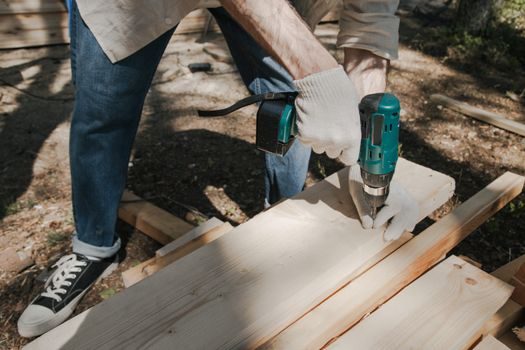
Three failure modes drive 80 % of impact-drill jobsite complaints. First, bit spin in the chuck: a worn three-jaw chuck on a standard impact drill will let the bit slip under load, glazing the hole walls; the fix is a keyless chuck or a chuck replacement at roughly 15 % of the drill's replacement cost. Second, overheating from continuous hammer action: most 500 W-class drills are rated for 50 % duty cycle under impact (15 seconds on, 15 seconds off), and ignoring this halves armature life. Third, rebar snag: a 2-cutter head in 16 mm+ rebar-bearing concrete will catch and snap the bit's leading edge; the field response is to relocate the hole or drop to a 4-cutter head. [S1]
There are also two cases where the impact drill is simply the wrong tool and no amount of spec will fix it. Drilling cured 50 MPa+ structural concrete with any drill smaller than an SDS-Plus 800 W class will burn out the motor within 20–30 holes. Drilling any hole deeper than 150 mm with a standard impact drill is a productivity trap — at 10–15 mm/min, a 200 mm deep anchor hole takes 15+ minutes, versus 2–3 minutes with a rotary hammer. Walk away from the impact-drill spec in both cases.
For procurement tracking, watch two signals: the unit-price spread on Made-in-China SDS-Plus bits tightened through 2026 to roughly US$ 0.14–7.90 across 500-piece MOQ, with the lower band clustered on cross-cutter / 2-flute geometry, suggesting supplier competition is concentrated in commodity diameters [S1]. Separately, the Cayken SCY-2550e and OB-255 listings reappeared in the 2026 catalogue at US$ 193–350/pc, indicating stable 255 mm wet-core pricing after the 2024–2025 freight shock [S1]. Both data points are easy to re-pull on the next quarterly refresh.
The underlying component specifications are covered under aerial work platform, and aerial work truck.