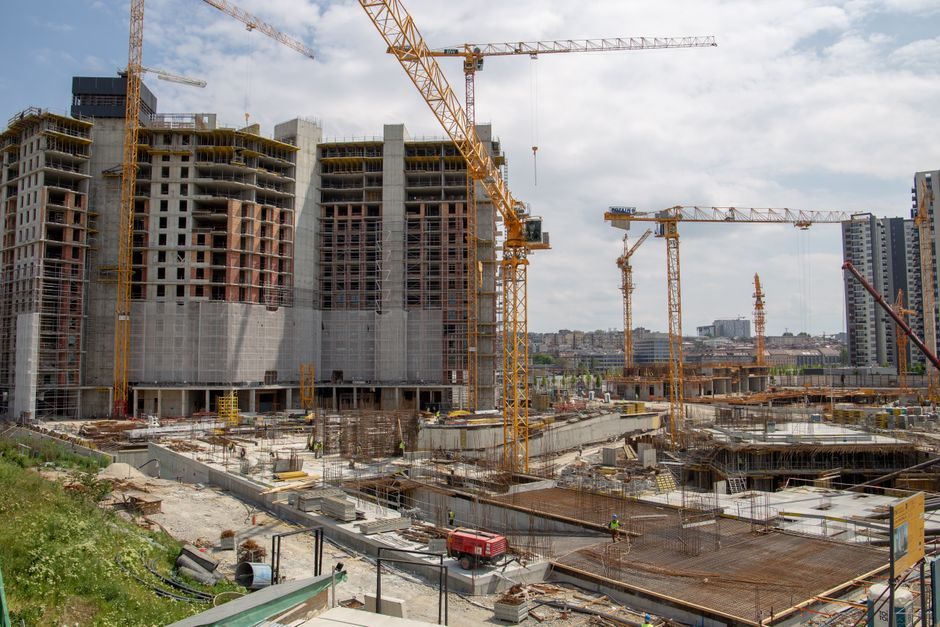
High-rise ready-mix concrete selection converges on C30 to C60 strength classes with 100–150 mm target slump, PCE-type superplasticizers, and ASTM C94 batch tolerances, and these three levers govern more than 80% of pump-line performance outcomes on tower pours [S1][S2][S4][S7].
Specifiers working to ACI 318 building-code requirements for structural concrete in vertical elements typically need to coordinate mix design with ready-mix concrete batch plants, admixture suppliers, and pumping contractors before the first truck rolls, because lead time for high-strength PCE dosing trials can run 2–4 weeks in congested metro areas [S4][S7].
Strength Class Selection by Structural Element
Structural columns below the 30th floor typically use C30 to C40 (≈30–40 MPa characteristic strength) mixes, while columns from floor 30 upward and core walls commonly step to C50 or C60 (≈50–60 MPa) to control section size under axial load, and ACI 318 exposure requirements are layered on top of that structural baseline [S4].
Transfer beams and mat foundations in 200 m-plus towers frequently call for C50 mass concrete with 56- or 90-day acceptance criteria instead of the standard 28-day break, because the low water-to-binder ratio (typically 0.32–0.38) needed for high strength generates heat-of-hydration that the 28-day cube does not yet reflect [S7].
Slump, Workability, and PCE Admixture Dosing
Pumping height drives the slump target: 8–12 inch (100–150 mm) at the truck chute for placements under 50 m line pressure, climbing to 180–220 mm with mid-range PCE superplasticizers for lines exceeding 150 m vertical, and 220 mm-plus with full-range PCE for 250 m-plus supertall placements where line pressure exceeds 20 MPa [S7].
The mix water window for PCE-treated C50–C60 is narrow: a 0.01 change in water-to-binder ratio moves 28-day strength by roughly 5 MPa, which is why batch plants run moisture-content corrections on the coarse aggregate at the loading conveyor and trim water at the concrete admixture dosing stage rather than at the truck [S1][S7].
ASTM C94 Batch Tolerances and Pump-Line Acceptance
ASTM C94/C94M-25 governs ready-mix delivery tolerances: ±1% on cement, ±2% on supplementary cementitious materials, ±3% on aggregate weight, and ±1% on water-batch, with a 90-minute discharge window unless the mix is qualified to a documented concrete admixture retarder regime that the producer signs off against the project specification [S1].
Per ACI 214R, strength acceptance uses the average of any three consecutive strength tests equaling or exceeding f'c, with no individual test more than 3.5 MPa below f'c, and high-rise QC teams typically add a 7-day break as an early-warning trigger before the 28-day acceptance value arrives [S2].
Supplementary Cementitious Materials for Pump and Durability
Specifying 20–35% fly ash replacement or 30–50% slag replacement against total cementitious content lowers pump-line friction, trims heat-of-hydration in mass pours, and improves chloride durability, but each 10% fly ash increment typically costs 1–2 days of early strength gain that form-stripping schedules must absorb [S7].
Silica fume at 5–10% replacement is the workhorse for C70 and C80 mixes used in lower-story mega-columns, and it pairs with PCE at 1.2–1.8% binder dosage because the high surface area of densified silica fume (≈15–30 m²/g) rapidly adsorbs water and starves the mix without the superplasticizer boost [S7].
Pumping Equipment and Pipeline Pressure
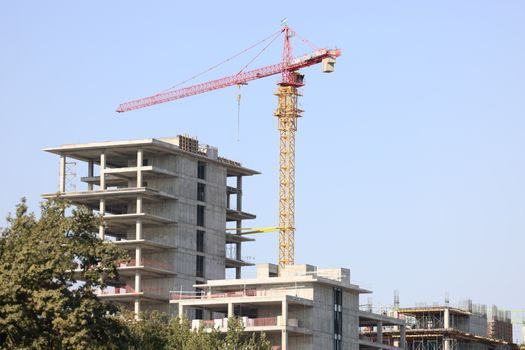
Boom pumps with 50–63 m reach cover floor plates up to about the 18th level of a typical 3.5 m story, and placing booms at the 20th-floor deck with 200 mm-diameter pipeline feeding 8-inch (200 mm) deck loops is the common configuration above 60 m vertical [S4].
Free-end hose pressure on high-rise pours typically runs 8–16 MPa for 100–150 m heads and 18–25 MPa above 200 m, and a concrete vibrator lineup of 38–57 mm-head poker units at 12,000 vpm keeps the column face consolidation tight against form pressures of 60–100 kPa [S4].
Logistics, Plant Siting, and Cold-Weather Pours
Haul time from batch plant to site must be capped at 30–45 minutes in tropical climates or 60 minutes in temperate zones, because PCE slump loss accelerates above 30 °C ambient even with retarder-extended mixes, and NRMCA-certified plants are the default specifying callout in tier-1 North American projects [S1][S2].
Cold-weather pours below 5 °C require ACI 306R hot-water batching and enclosure heating to keep the in-place mix above 10 °C for the first 72 hours, and a similar spec discipline applies to insulated slab pours in cold-storage warehouses as detailed in this cold-storage concrete spec map [S2].
Quality Control, Mock-Ups, and Trial Mixes
A pre-construction mock-up panel of 6–10 m³ at full rebar congestion is standard practice for the first core-wall pour above grade, and the trial mix is pumped through the same 150 m of 125 mm pipeline that will serve the tower, so any slump-loss or block-age behavior shows up before structural concrete is committed [S4][S7].
Mock-up data typically feeds a project-specific QC chart of slump cone readings every third truck, air content every fifth truck, and unit weight at the start of each pour, and the data set is held against the seven-day breaks for trend verification before the 28-day acceptance data is locked [S2][S4].
Limits, Failure Modes, and Project Pitfalls
Ready-mix is the wrong choice for remote sites beyond roughly 1.5 hours haul time, for placements under 1 m³ where truck minimums apply, and for sites without a paved truck stand that can take a fully loaded 9 m³ mixer at 26 t axle load [S1][S2].
Common failure modes in high-rise ready-mix pours are cold joints from line-block delays over 30 minutes, segregation at 90-degree bends where 125 mm pipe steps to 150 mm, and bugholes on architectural columns where the concrete vibrator head spacing exceeded 1.5 times the head radius during consolidation [S4].
Procurement Spec Anchor Points
Anchor the spec on ASTM C94/C94M for delivery tolerances, ACI 318 for structural mix criteria, ACI 214R for strength acceptance, ACI 211.1 for proportioning, and ACI 304R for placing, with project-specific addenda for PCE brand, slag or fly ash replacement percentage, and 56- or 90-day acceptance where mass-concrete heat drives the schedule [S1][S2][S7].
Track ASTM C1012 sulfate-resistance and ASTM C1202 rapid chloride permeability for tower substructure durability, and require the batch plant to publish monthly QC data against the most recent NRMCA checklist before the first pour is scheduled [S1].
Next verification step: pull the most recent NRMCA-certified plant list and the project's geotech report together, and confirm that the chosen batch plant's aggregate stockpile, PCE dosing rig, and haul-time envelope are all inside the spec window before the trial mix is scheduled. Watch the ready-mix concrete supplier's ASTM C94 QC log for the trailing 90 days as a second-order check on delivery-window discipline.