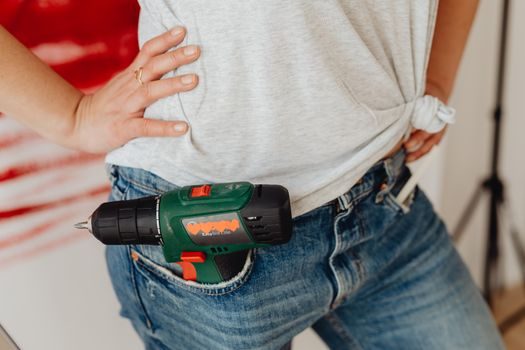
For anchor-bolt holes up to 13 mm in brick, block and C25-C30 concrete, a 500-700 W corded impact drill with a 13 mm chuck, mechanical impact mode and variable-speed trigger remains the default tool in 2026 retail catalogues, with the Bosch Professional GSB 13 RE (600 W, 13 mm keyless chuck, 240 V) sitting at the benchmark mid-tier price point on Amazon UK [S3].
For larger diameters, sustained production use, or repeated holes in cured concrete, a rotary hammer (SDS-Plus) is the correct spec; impact drills top out around 13 mm in steel and 16-25 mm in masonry and stall if asked to do rotary-hammer duty [S2][S5].
Masonry Workloads the 13 mm Impact Drill Actually Covers
Spec sheets in the 2026 wholesale market cluster around three output bands: 500-700 W corded units with 0-2800 rpm no-load speed and 13 mm / 25 mm max drilling diameter (steel/wood or wood/masonry alternate figures, with 25 mm being the typical wood-side number), and 16-32 mm specialty cordless impact driver drills at 16.8-32 V Li-ion [S2][S5]. Concrete drilling beyond 13 mm in C30 mixes is not the design point of any of these.
Impact drills work in masonry by combining rotation with a mechanical ratchet/clutch impact along the bit axis. The Bosch GSB 13 RE lists a maximum masonry drilling capacity of 15 mm in stone and 13 mm in concrete, with a 210 mm depth stop supplied for repeatable anchor depth [S3]. That is the practical ceiling: 6, 8 and 10 mm holes for M8-M10 sleeve anchors, and the occasional 12 mm for M12 wedge anchors, in brick, hollow block, and C20-C30 concrete.
Power, Speed, and Chuck Specs That Decide the Buy
Four numbers decide the buy for masonry duty: input wattage (corded) or voltage (cordless), no-load rpm, maximum drilling diameter in masonry, and chuck capacity. The 2026 spec data on Made-in-China and Mfrbee shows corded impact drills clustering at 500-700 W, 0-2800 rpm, with 13 mm keyless chucks being standard and 10 mm chucks on lighter consumer units [S5]. Cordless impact driver drills in the same listings move in the 16.8-32 V Li-ion range, with 1/4 in. hex quick chucks typical on driver-style tools and 10-13 mm keyless chucks on hammer-drill models [S2].
Comparison for typical masonry tasks (numbers from the 2026 product listings and the Bosch GSB 13 RE datasheet) [S2][S3][S5]:
<b>Corded impact drill, 500 W, 13 mm chuck:</b> 6-10 mm masonry holes, intermittent use, lowest cost (US$ 7-30 export tier).
<b>Corded impact drill, 600-700 W, 13 mm chuck:</b> 6-13 mm masonry holes, all-day light trade use (e.g. Bosch GSB 13 RE at 600 W; Hitachi DV 16V-class units at similar power) [S3][S4].
<b>Cordless impact driver drill, 16-21 V, 10-13 mm chuck:</b> portable anchor work where mains power is unavailable; reduced impact energy vs corded at the same diameter [S2].
<b>SDS-Plus rotary hammer (not in the impact drill class):</b> 6-26 mm masonry/concrete, production volume; for matched reading see the impact drill spec map for road maintenance crews.
On brushless vs brushed motors the 2026 wholesale data is explicit: brushed 500-700 W universal motors dominate the corded impact drill segment, while brushless DC motors have shifted into the 18-32 V cordless impact driver drill segment (Liangye 18 V, AWLOP 20 V brushless, Feihu 21 V) [S2].
Chuck, Shank, and Bit Match for Masonry
Impact drills for masonry use round-shank masonry bits (also called percussion or carbide-tipped masonry bits) with three flats on the shank to keep the bit from spinning in the chuck under impact load. The Hitachi DV 16V handling instructions document the 13 mm keyed chuck, keyless variants are interchangeable on the 13 mm keyless machines like the GSB 13 RE, and the manual specifies a side handle plus depth gauge for masonry mode [S3][S4].
Cordless impact driver drills with 1/4 in. hex chucks (Liangye 18 V, others) cannot take a 13 mm round-shank masonry bit and are therefore not the right tool for anchor holes above 6 mm in masonry — they are screw-driving tools with an impact mechanism, not hammer-drilling tools. The impact drill encyclopedia entry defines the mechanical-impact action and the chuck/bit relationship in more detail.
Corded vs Cordless, and Where Each Makes Sense
At equal rated wattage, a corded impact drill delivers higher continuous impact energy than a cordless unit of the same stated voltage, because battery sag under impact load drops the actual delivered energy. The 2026 export data confirms corded still leads masonry: 600 W GSB 13 RE on Amazon UK competes with 700 W Bosch UniversalImpact 700 and 550 W Bosch PBH 2100 RE (rotary hammer), all with UK three-pin plugs and all listed for anchor work [S3].
Cordless makes sense for site walk-throughs, MEWP work, and any anchor pattern above head height where a trailing lead is a snag hazard. For slab-on-grade anchor grids and repetitive sleeve-anchor patterns, a corded 600-700 W unit at full mains voltage is still the lower-cost, higher-torque choice in 2026 [S2][S3].
Limits, Failure Modes, and When to Step Up to a Rotary Hammer
Three failure modes mark the limit of the impact drill in masonry: clutch slip from sustained impact load (motor stall, bit discolouration), chuck-bit slip on round shanks without three flats (bit spins in the jaws, glazes the hole wall), and overheating on continuous production duty where the duty cycle exceeds the tool's S2-15 min rating. All three are misapplication — they signal that an SDS-Plus rotary hammer is the correct tool, not a bigger impact drill. [S2]
Rotary hammers deliver impact through a pneumatic piston rather than a mechanical ratchet, with impact energy typically 1.5-3 J in the 2-4 kg class, which is several times the per-blow energy of any 13 mm impact drill. For anchor patterns beyond 20 holes per day, or for any hole above 16 mm in C30 concrete, the rotary hammer pays back in time and bit life. Cross-reference use cases for road maintenance crews in the impact drill spec map for road maintenance crews.
Standards, Safety, and Operator Controls
Impact drills for construction sites fall under IEC 60745-1 (hand-held motor-operated electric tools, safety) and IEC 60745-2-1 for drills and impact drills specifically; double-insulated Class II tools (the common 240 V two-pin-plus-earth or two-pin Euro configuration seen on the Bosch GSB 13 RE and similar) carry the square-in-square symbol and require no earthed socket [S3].
Operator controls on the 2026 machines are consistent: reversible variable-speed trigger, mechanical change lever between rotation-only and rotation-plus-impact, locking side handle, depth gauge, and on brushless cordless models an electronic clutch with multiple torque settings plus an impact-only mode for self-drilling screws [S4][S2]. Mandatory PPE — safety glasses, hearing protection above 85 dB(A) sustained, dust mask for silica-bearing masonry — is the operator's responsibility and is not a function of the tool spec.
Selection Criteria Summary for Masonry

1) Diameter and substrate: ≤ 13 mm in brick or C20-C30 concrete → 500-700 W corded impact drill with 13 mm chuck. > 13 mm, or C35+, or production volume → SDS-Plus rotary hammer. [S3]
2) Power source: corded for sustained anchor work, repetitive patterns, and best impact energy per watt; cordless 18-21 V Li-ion for portable, overhead, or lead-free sites.
3) Chuck: 13 mm keyless for interchangeable bit sizes down to 1.5 mm; 1/4 in. hex on impact driver drills is for screwdriver bits only, not masonry bits above 6 mm.
4) Motor: brushed universal for corded, brushless DC for the 2026 cordless segment (Liangye, AWLOP, Feihu and similar export lines) [S2].
5) Ergonomics: side handle, depth gauge (210 mm on the GSB 13 RE), reversible trigger, and change lever between drill and impact modes are non-optional for masonry [S3][S4].
What 2026 Market Data Says About Price and Availability
Wholesale-tier impact drills and impact driver drills in mid-2026 listings range from US$ 0.90 to US$ 99 per piece at MOQs of 1-500 pieces, with cordless 16.8-32 V Li-ion models clustering at US$ 30-39 per piece and bare consumer units below US$ 10 [S2]. Retail-tier on Amazon UK for the Bosch GSB 13 RE Professional (600 W, 13 mm chuck) sits in the mid-£80-90 range, against the lighter Bosch EasyImpact 600 at £42.29 and the rotary-hammer PBH 2100 RE at £59.39 — confirming that corded impact drills and rotary hammers overlap in price once the impact-drill is a branded professional unit [S3].
Alibaba and Made-in-China listings in May-June 2026 list 18,978 impact driver drill products across 903 suppliers, with a clear split between screwdriver-format impact drivers (1/4 in. hex, 6-10 mm spec, ball-type or canines-style clutch) and hammer-drill-format impact drills (10-13 mm keyless chuck) [S1][S2]. Buyer caution: vendor-stated max drilling diameter is often the wood number; the masonry number is 50-60% of that figure on the same tool.
Verifiable Next Signals to Track
Two signals to track through the second half of 2026: the IEC 60745-2-1 amendment cycle (amendment 2 addressed improved dust extraction ports on hammer-class tools and may shift dust-control spec language for masonry impact drills), and the cordless 18 V brushless price floor on Alibaba/Made-in-China, which crossed below US$ 10 in mid-2026 and is the leading indicator of when cordless will fully close the impact-energy gap to corded 600 W units. Also worth monitoring: adoption of integrated HEPA dust shrouds on 13 mm impact drills for silica compliance under tightening European and US construction-dust rules. [S2]
Component reference pages worth checking: air impact wrench, and pressure transmitter.
