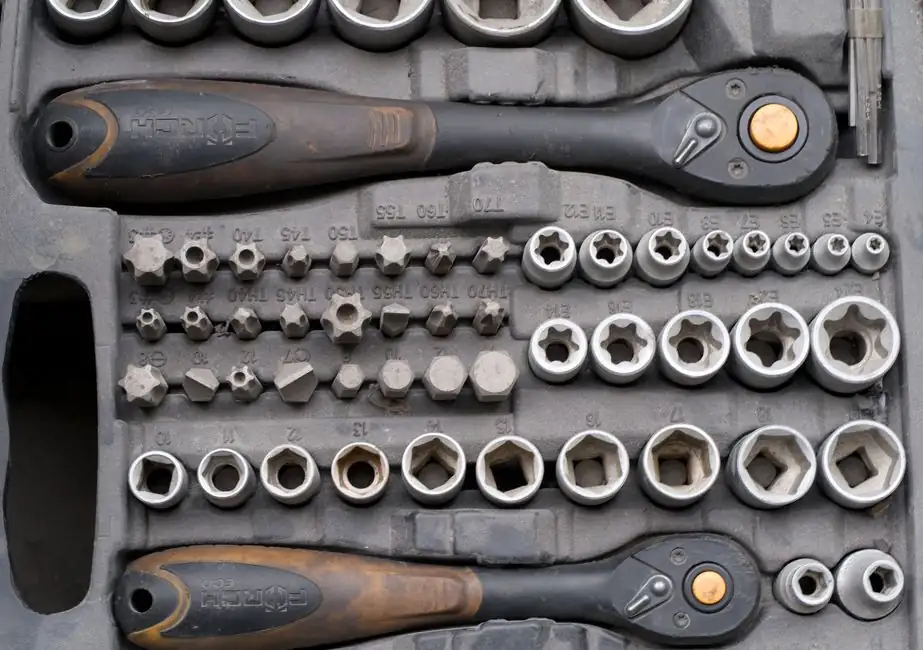
An air impact wrench delivers torque in repeated rotational hammer blows, not smooth rotation, so its socket must be impact-rated Cr-Mo steel with walls 30-50% thicker than a chrome equivalent [S5]. A standard chrome (Cr-V) hand socket on the same tool risks cracking, splitting, or shrapnel ejection under those cyclic shock loads [S5][S2].
Material selection is the decisive variable: Cr-Mo is heat-treated for toughness and ductile deformation, while Cr-V is heat-treated for hardness and behaves in a brittle manner under sudden spikes [S3][S5]. For shop practice the rule is simple: every impact-tool application takes an impact-rated socket; every hand-tool application may safely use either, which makes the impact set the default carry when access is not constrained [S5].
Material and Heat-Treatment Difference Between the Two Sockets
Impact sockets are forged from chrome-molybdenum (Cr-Mo) steel and heat-treated for toughness so the metal flexes microscopically under a hammer blow instead of holding rigid until fracture [S5]. The same source notes the inverse trade-off: pushing an alloy toward maximum hardness yields a socket that shrugs off scoring but cracks or shatters without warning under shock, which is exactly how chrome-vanadium (Cr-V) chrome sockets fail in the field [S5][S6].
Standard chrome sockets are made from Cr-V steel heat-treated for high hardness and wear resistance, giving the crisp hex geometry that hand-ratchet work demands [S1][S3]. ACT's published guide frames the two families as "chrome sockets are made to be hard, impact sockets are made to be tough," with hardness preserving fit accuracy under steady force and toughness surviving sudden, repeated blows [S3]. That material logic is why no chrome socket, regardless of brand or price tier, is rated for impact-wrench service.
Wall Thickness, Mass, and Retention Geometry
On a 1/2" drive 19 mm socket, an impact version typically has walls 30-40% thicker than its chrome equivalent, and across the Teng Tools comparison the impact family runs 30-50% thicker overall with proportionally higher mass [S2][S5]. The added material is not just bulk; it is distributed to absorb both torsional stress and the hoop stress generated when the tool hammers against a seized fastener [S2].
Impact sockets also carry a cross-drilled through-hole plus a retaining groove for a pin and O-ring or pin-detent anvil, so the socket cannot fly off the drive during overhead or high-reaction work [S1][S3]. Chrome sockets rely on a simple detent groove with ball-bearing retention only, which is sufficient for hand tools that do not generate shock loads [S1]. Finishes track the same split: matte black manganese phosphate or black oxide on impact sockets (porous enough to hold shop oil against corrosion), polished nickel-chrome plating on chrome sockets (easy to wipe clean, rust-resistant in storage) [S1][S2][S3].
Why Chrome Sockets Fail Catastrophically on Impact Tools
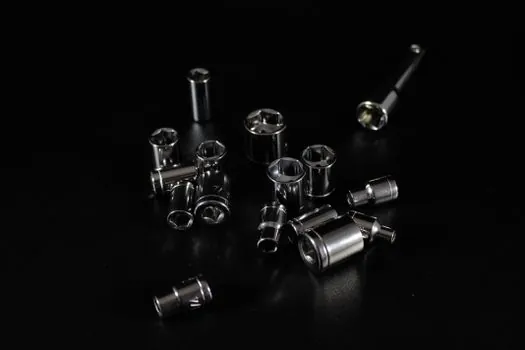
An impact wrench's internal hammer strikes the anvil in rapid rotational bursts rather than applying continuous torque, and each strike is a stress spike the Cr-V alloy is not designed to absorb [S2]. Under those cyclic loads the harder but more brittle steel can crack, chip, or fragment, and in documented shop cases a chrome socket has shattered into flying shrapnel when run on an impact gun [S5][S6].
Repeated misuse can also seed invisible micro-fractures inside a chrome socket that survives a visual inspection, then fails suddenly in a high-torque event [S2]. Cr-Mo impact sockets fail more safely: a socket under extreme abuse typically shows visible wear or slight oval distortion first, giving the technician a retire-cue before any loss of containment [S5]. The Capri Tools safety note captures the same logic, that point count (6- vs 12-point) does not change whether a socket is impact-rated and the brittleness of chrome hand sockets under repeated hammering is a structural, not cosmetic, problem [S7].
Selection Criteria: Match the Socket to the Tool, Not the Finish
The decision rule is the tool's drive mechanism, not the socket's appearance. Pneumatic or cordless air impact wrench service, including any task driving lug nuts, suspension hardware, rusted fasteners, or large bolts, requires a Cr-Mo impact socket with thicker walls and pin/O-ring retention [S1][S3]. Hand ratchet, breaker bar, or torque wrench work, especially where access is tight and the torque build-up is slow and controlled, takes a Cr-V chrome socket for its slimmer walls and corrosion-resistant plating [S1][S3].
Three decision criteria from the sources line up cleanly. First, alloy class: Cr-Mo for impact duty, Cr-V for hand duty, with no exceptions for short bursts on an impact gun [S2][S5]. Second, wall geometry: 30-50% thicker walls and a through-hole retention feature are the visible markers of an impact-rated part [S5]. Third, access: where a recessed bolt pocket rules out a thicker impact socket, drop down to a smaller drive size (e.g. 3/8" impact) rather than substituting a chrome socket, because the brittleness penalty does not go away with drive size [S4]. For routine auto and truck work, the practical default is to keep both sets on the bench and reach for the impact set first whenever a powered tool is in play, then switch to chrome only for clearance-limited final torque.
Workshop Scenarios and Failure-Mode Boundaries
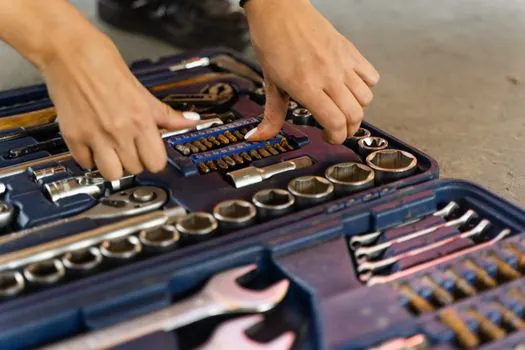
Wheel-lug service, suspension overhaul, and any seized or large-diameter fastener should always be on impact sockets, with a torque wrench step on chrome sockets for the final spec value if the spec demands controlled clamp load [S1][S3]. For under-hood trim, interior work, HVAC equipment, and machinery panels, chrome sockets remain the first choice because the thinner wall reaches recessed bolt pockets and the polished finish cleans up fast in fluid-exposed bays [S3][S4].
The one safe direction of substitution is impact-on-hand-tool: an impact socket is perfectly acceptable on a ratchet or breaker bar, so when the application is ambiguous, grabbing the impact-rated part is the conservative move [S5]. The reverse is never acceptable: a chrome socket on an impact gun is a documented shatter risk even if it survives one job, because fatigue damage accumulates invisibly between events [S2][S6]. Capri's safety guidance reinforces that the point count (6- vs 12-point) is independent of impact rating, so a 12-point chrome socket is not a softer target than a 6-point chrome socket on the same gun [S7].
Buying, Inspection, and Maintenance Signals
When sourcing impact sockets, look for the stamped "IMPACT" mark, a black oxide or phosphate finish, visibly thicker walls than a chrome counterpart of the same drive and size, and a through-hole plus groove for pin/O-ring retention [S5]. Size coverage should match the anvil and fastener range of the air impact wrench on the bench, since a 1/2" drive impact wrench on a 1/2" drive impact socket is the matched pairing for lug and suspension work [S1][S3].
Inspection discipline: retire any socket that looks "sprung" or slightly oval instead of round, since visible deformation is Cr-Mo's designed-in warning before catastrophic failure [S5]. For shop air tool fleets that cycle through hundreds of impacts per shift, the same rule applies to the anvil and retainer, because a worn anvil magnifies the shock a socket sees and accelerates the very fatigue Cr-Mo is built to absorb [S2][S5]. For related reading on sizing the wrench itself, see the air impact wrench free-speed ratings and the breakaway torque specs for rusted fasteners reference sheets, which sit alongside the socket-alloy question on the same bolting jobs.