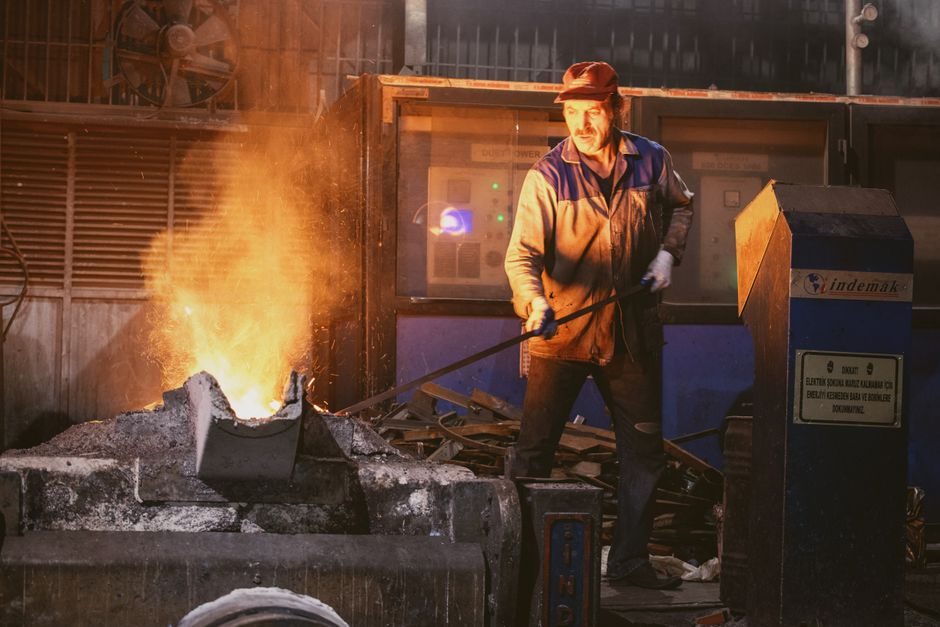
Alibaba's 500 kg-class index surfaces the densest single search for induction furnace vendors worldwide, with multi-supplier RFQ routing in a single buying-request hub [S1].
Made-in-China's directory counts 58 electrical induction furnace manufacturers offering 174 product lines, dominated by induction melting, vacuum melting and precision casting variants [S2]. Intermediate-frequency (IF) models from Gold-tier audited suppliers such as Xi'an Sanrui Electric Furnace carry a 1-piece MOQ and a US$100,000-1,000,000 indicative price band per unit [S6].
Capacity Tiers and What Buyers Actually Spec
Alibaba's product index resolves around the 500 kg per-batch node, the size most requested for ferrous and non-ferrous job-shop work in both 50 Hz and 60 Hz markets [S1]. Made-in-China's wholesale index shows the "medium frequency" segment dominated by tilting steel-shell 500 kg-class furnaces used for iron, copper, aluminium and steel melting, with a reducer-tilting body and a 500 kg nominal charge [S7]. Made-in-China's manufacturer directory spans small (≤1 t), mid (1-5 t) and large (≥5 t) single-channel IF units, with the medium-frequency topology defined as three-phase mains rectified to DC and inverted to adjustable AC through a capacitor-and-induction-coil tank that drives eddy-current heating in the charge [S2][S8].
Where the Makers Are: Jiangsu and Shandong Concentration
APS Induction Furnace (Taizhou) is registered in Area A, Building 1, No. 100 Century Avenue, Jiulong Industrial Park, Hailing District, Taizhou, Jiangsu, a typical footprint for a small-to-medium induction melting OEM [S3]. Shandong Kehua Intelligent Equipment is anchored in the Weifang Economic Development Zone, with explicit export coverage of South America, Eastern Europe, Southeast Asia, Africa and Eastern Asia, which sets the standard distribution pattern for Shandong-based IF makers [S5]. SG Furnace (sgfurnace.com) markets itself as a one-stop induction furnace project supplier, with an open-furnace-body / furnace-rack / dust-cover / furnace-cover product family typical of the 0.25-2 t IF segment [S4].
Spec Criteria: Frequency, Power Density and Cooling
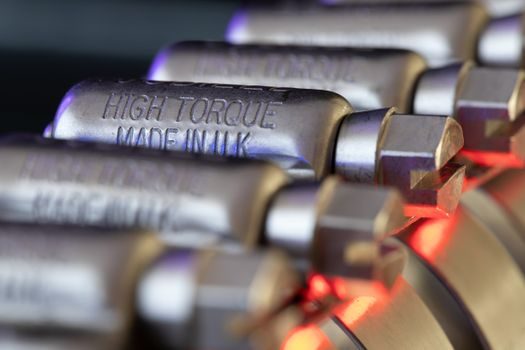
Medium-frequency IF furnaces operate by rectifying three-phase mains to DC and inverting it to an adjustable AC that drives a capacitor-inductor tank, generating high-density magnetic flux that cuts the metal charge to produce eddy-current heating [S8]. Practical selection criteria on the Made-in-China index include tilt mechanism type (reducer-tilting or hydraulic), shell material (steel or aluminium), refractory lining (silica, alumina or magnesia), cooling (water-cooled copper coil or dual-station heat exchanger), and matching IGBT vs SCR rectifier topology [S7][S6]. Buyers comparing options against industrial melting furnace spec lines should weight frequency band (1-10 kHz IF vs <1 kHz mains-frequency), nominal charge, and inverter topology first, because those three parameters determine electrical infrastructure and per-ton energy cost.
Price, MOQ and Lead-Time Bands in 2026
Xi'an Sanrui's IF units are listed in a US$100,000-1,000,000 per-piece band with MOQ 1 piece, the standard Gold Member Audited Supplier envelope on Made-in-China [S6]. A 500 kg reducer-tilting steel-shell medium-frequency induction furnace for iron, copper, aluminium and steel melting is one of the top-listed wholesale products on the platform [S7]. Made-in-China's index of 58 IF manufacturers with 174 SKUs puts the catalogue ratio near 3 SKUs per maker, indicating broad product spread rather than single-SKU shops [S2]. For buyers comparing against other capital-equipment lines such as those mapped in the industrial pump suppliers 2026 maker map, the IF furnace segment behaves similarly: a long tail of small Jiangsu and Shandong workshops plus a tier of audited exporters.
Comparison: Main IF Furnace Options by Decision Criteria
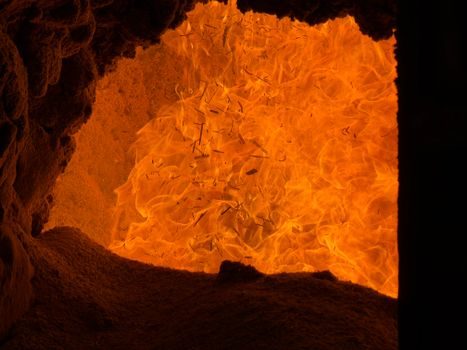
The four common induction melting topologies line up as follows: small IF (≤500 kg, 1-3 t/h melt rate, low capex, foundries and job shops) vs medium IF (0.5-2 t, 2-5 t/h, the workhorse 500 kg-class tilting steel-shell design) vs large IF (≥2 t, used in steel mills) vs vacuum induction melting (VIM) units for nickel-based superalloys and aerospace-grade alloys. SG Furnace and APS Induction Furnace both supply the IF core range, while Shandong Kehua's catalogue includes vacuum induction melting and electric furnace variants as a separate product family [S3][S4][S5]. Buyers in the broader steel suppliers 2026 maker density and MOQ bands context will recognise this same tiering pattern.
Limitations: Quality Variance, After-Sales and Compliance
Not every Chinese induction furnace maker is suitable for a regulated process plant: small workshops dominate the 58-maker list, and only a fraction carry the Gold Member Audited Supplier badge that requires on-site verification by Made-in-China inspectors [S2][S6]. For a heat-treatment furnace line supplying aerospace or oil-and-gas end users, the practical constraint is certification (CE for EU, ASME pressure-bound where applicable, and IEC electrical compliance) rather than raw melt capacity. Smaller induction melting vendors without an export-records track record into South America, Eastern Europe, Southeast Asia, Africa or Eastern Asia should be treated as domestic-grade unless the buyer audits the shop floor in person [S5].
Sourcing Levers and What to Track Next
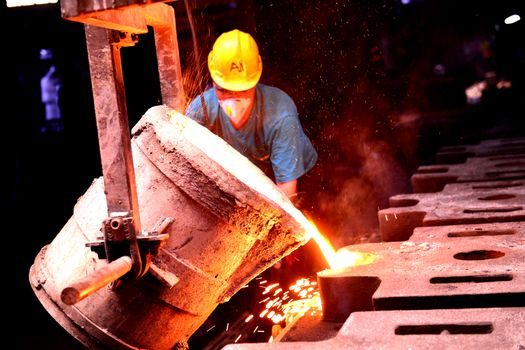
The most cost-effective 2026 lever is to shortlist 3-5 Gold-tier audited IF suppliers from Made-in-China, request a 500 kg-class tilting steel-shell quotation with explicit inverter topology (IGBT preferred for energy efficiency at >1 t/h melt rates), and confirm after-sales commissioning in writing. Two trackable signals for the next quarter: changes in MOQ terms on the Alibaba and Made-in-China wholesale indexes, and any new Gold-tier promotions for IF makers exporting to South America or Eastern Europe, both of which would shift per-unit pricing in the US$100,000-1,000,000 band. [S1]