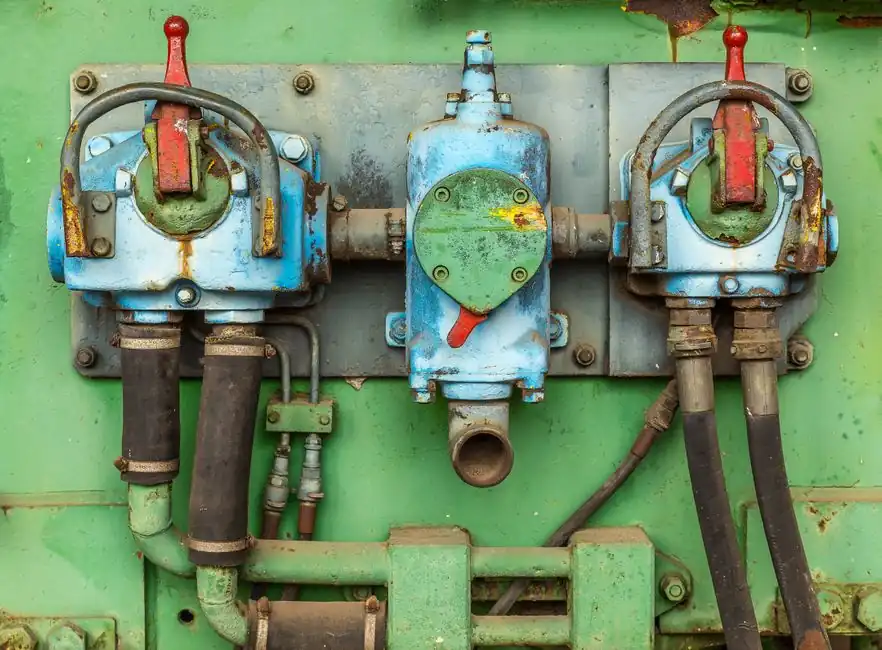
Industrial boiler tube and header supply starts with the service envelope: design pressure, steam or water temperature, corrosion exposure, tube geometry, and governing material specification.
Qualified suppliers combine code-compliant tubing, large-diameter header fabrication, material traceability, inspection, and emergency inventory rather than treating all boiler pipe as interchangeable commodity stock.
Boiler Tubes and Headers Serve Different Flow Functions
Boiler tubes transfer heat to convert feedwater into steam or hot water, with material and wall thickness selected from the expected temperature, pressure, and corrosion conditions [S2]. Baolai's product navigation identifies boiler tubes as a product category [S2].
Headers are large cylinders with multiple connections that collect or distribute the working fluid connected to a group of tubes [S4]. A boiler header serves as a distribution manifold that collects and distributes steam or hot water to different parts of a heating system [S5]. A header therefore requires different fabrication, inspection, opening, and connection controls from a tube selected only by nominal diameter and wall thickness.
Repair specifications must identify the component by function rather than applying a generic pipe description.
Material Selection Follows Pressure and Corrosion Exposure
These designations cover distinct combinations of manufacturing route, chemistry, mechanical properties, and application, so the purchase specification must name the exact standard and grade rather than accepting a general description of carbon steel.
These options support different combinations of pressure class, fabrication method, elevated-temperature service, and corrosion resistance.
Boiler Tube Company of America manufactures replacement pressure boiler components and related auxiliary industrial boiler parts and maintains a large inventory of boiler tubing [S1]. Overlay or finned construction changes the procurement object, so drawings must distinguish the base tube, deposited alloy, fin geometry, and any post-weld heat treatment.
Headers Need Fabrication Control Beyond Pipe Dimensions
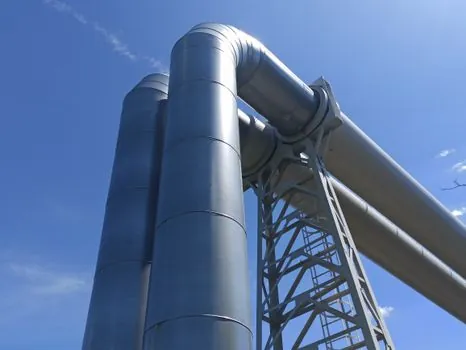
Header sizing begins with total heating load, distribution-line flow, required temperature, operating pressure, acceptable pressure drop, and the resistance added by fittings and valves [S5]. Header diameter must then be selected for the calculated flow and fluid type, while length also affects pressure loss [S5]. For large industrial equipment, the boiler drawings and governing design code remain controlling because a building-heating sizing method is not a substitute for pressure-boundary design.
Header material selection is driven by operating temperature and pressure, with steel used as the typical baseline for common steam and hot-water systems [S5]. Tioga identifies the boiler industry, fabrication industry, and global power generation among its markets [S3].
Header manufacture belongs in a pressure-boundary fabrication package rather than a pipe-cutting package. BTA operates an ASME-certified boiler fabrication shop in Lyman, South Carolina, and a specialty tubing shop in Wellford, South Carolina, supporting replacement pressure parts regardless of the original equipment manufacturer [S1]. Header submittals should identify applicable design conditions, material grade, joint method, branch reinforcement, dimensional tolerances, NDE requirements, and coating or overlay limits before fabrication begins.
Standardized Grades Reduce Ordering Errors
Boiler tube procurement can use ASTM/ASME grades such as A178 for welded boiler tubing [S7]. A purchase order that says only “boiler tube” leaves material grade, dimensions, manufacturing method, and inspection scope open.
The appropriate grade must be checked against the service design rather than substituted for a visually similar tube. WARE likewise describes boiler tubes as the transfer points between a boiler’s water supply and heat supply, reinforcing the need to map replacement parts to their actual circuit [S8].
Traceable purchasing should request the applicable material standard, grade, ordered dimensions, heat-treatment condition where applicable, manufacturing method, surface condition, inspection records, and marking. Full traceability supports fabrication review and prevents a mixed inventory of superficially identical carbon, low-alloy, or stainless components from entering the same work package.
Inventory and Lead Time Affect Repair Strategy
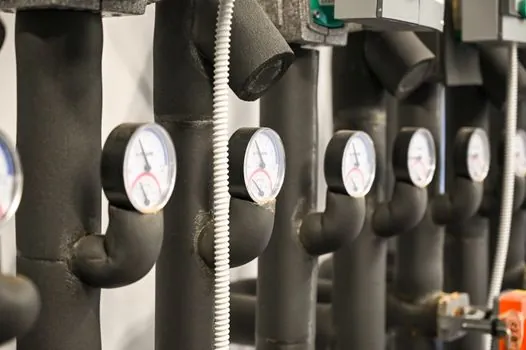
BTA maintains straight-tube inventory in a computerized 700,000-cubic-foot warehouse and positions spiral-fin tubing, overlay work, and engineering services for emergency as well as routine replacements [S1]. The stored stock changes continuously, so availability must be confirmed against tube diameter, wall thickness, material, length, and end condition rather than inferred from a general product listing [S1].
Tioga combines stocked boiler materials with mill relationships for longer-lead projects, covering burndowns, revamps, and new construction [S3]. That dual structure is practical for repairs because an outage may require one specified tube size while a planned header package allows procurement planning. For project work, shipping chokepoints can still extend industrial lead times, so header drawings and approvals should be closed before a mill begins fabrication.
Inventory claims should also be converted into a controlled bid request. Include the applicable tube or header standard, grade, outside diameter, wall thickness, length, quantity, heat treatment, end preparation, branch layout, coating, NDE, documentation, and delivery destination. Emergency supply adds another layer: confirm whether the item is a stock length, a fabricated assembly, or a modified tube with overlay, spiral fins, bends, or welded terminations [S1].
Buyer Responsibilities Span Design, Fabrication, and Inspection
Industrial boiler tube and header supply is suitable for utilities, HRSG operators, chemical and petrochemical plants, pulp and paper mills, and industrial steam users, provided the supplier can match the governing design and inspection package [S1][S4]. These users need tubing that carries water or steam at specified conditions and headers that connect multiple flow paths without introducing unacceptable pressure loss or structural loads.
The approach is not suitable for unqualified replacement buying. A generic carbon steel tube is not automatically interchangeable with an alloy tube in a corrosive circuit, and a pipe section is not automatically a code-compliant header. The buyer also remains responsible for defining operating temperature, design pressure, allowable stress, corrosion allowance, tube arrangement, support conditions, and applicable fabrication requirements.
Inspection plans should distinguish examination needed for raw material from that required for finished welds, bends, overlays, and headers. BTA lists flow modeling, 3-D modeling, stress analysis, finite element analysis, piping design, and structural analysis among its engineering capabilities [S1]. Those services are relevant when dimensional fit, flow behavior, thermal expansion, or branch loading needs verification, but they do not replace the purchaser’s code basis or operating data.
Procurement Should Separate Tube, Header, and Assembly Scope
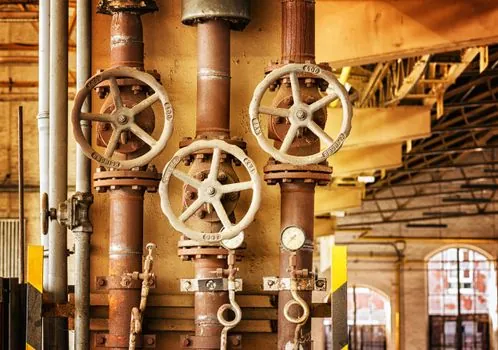
The procurement decision is straightforward: specify boiler tubes by exact grade, dimensions, material standard, manufacturing route, heat treatment, surface condition, inspection, and end preparation; specify headers separately by design conditions, material, branch geometry, fabrication method, structural and pressure-boundary requirements, and NDE. [S2]
Two measurable signals will show whether the supply chain is aligned: a tube inquiry that resolves to a single compliant grade and dimensional record, and a header package that closes drawing, code, welding, inspection, coating, and delivery requirements before fabrication release. Emergency orders should be checked against the same list, with stock status and any spiral fin, bend, overlay, or assembly operation stated explicitly [S1][S3].