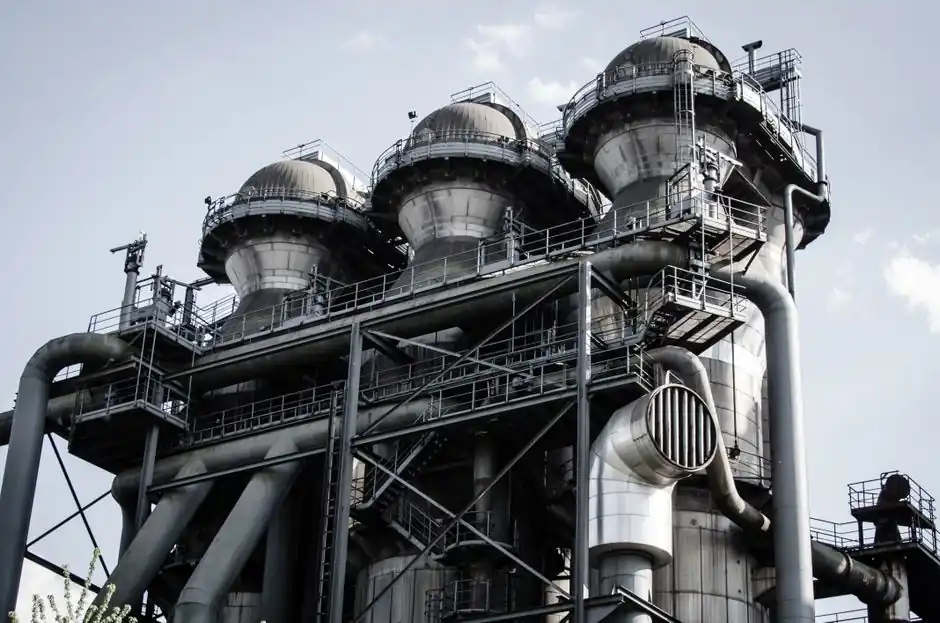
BASF, Johnson Matthey, Clariant, W.R. Grace, and Albemarle collectively control more than 50% of the global industrial catalyst market in 2026, with Sinopec, Haldor Topsoe, SABIC, Linde, Honeywell, and Evonik rounding out the dominant supplier tier [S1][S3].
Aggregate market value is $27.63 billion in 2026, forecast to reach $32.1 billion by 2030 at a 3.8% CAGR, while a parallel forecast from Fact.MR places the 2036 value at $32.46 billion at a 3.6% CAGR and IMARC's 2034 projection reaches $33.5 billion at 3.07% [S1][S3][S4]. Heterogeneous catalysts hold 70.0% of 2026 type share, refining applications hold 35.0% of application share, and Asia-Pacific leads with 36.3% regional share [S3][S4].
Manufacturer Share Concentration: Who Holds the Top Five Slots
The top five manufacturers (BASF, Johnson Matthey, Clariant, W.R.
Sinopec is explicitly named as a key player in the 2026 competitive landscape by The Business Research Company, while Market Research Future's 2025-2035 outlook lists BASF, Haldor Topsoe, Johnson Matthey, Clariant, SABIC, Albemarle, W.R. Grace, Linde, and Honeywell as major players [S1][S2]. GMI's heterogeneous-only roster adds Arkema, Evonik, LyondellBasell, Rio Tinto, and Dow Chemical, indicating the heterogeneous segment alone carries at least 11 named suppliers above the tier-one threshold [S5]. Catalyst procurement managers are extending replacement cycle planning from 2-3 year horizons to 5-7 year horizons as refinery decarbonization roadmaps reshape hydroprocessing demand [S3].
Catalyst Type Segmentation: Heterogeneous at 70%, Homogeneous and Biocatalysts Split the Remainder
Heterogeneous catalysts account for 70.0% of 2026 market value, anchored by metal-based, metal-oxide, and supported catalyst subsegments; the heterogeneous-only market was worth USD 24.6 billion in 2023 and is forecast to reach USD 37.6 billion by 2032 at 4.8% CAGR [S3][S5].
Homogeneous catalysts, covering organometallic, acid-base, and coordination complex variants, occupy the remaining bulk of the non-heterogeneous share, while biocatalysts (enzymes, microbial, cell-based) are the smallest of the three primary type buckets but flagged as the fastest-growing emerging category [S1]. Material segmentation splits heterogeneous catalysts into metal, zeolites, and organometallic feedstocks; zeolites are flagged by Market Research Future as the fastest-growing material subsegment due to versatile applications in FCC and hydrocracking [S1][S2]. Platinum group metal pricing, rare-earth availability, and formulation complexity are explicit cost and supply constraints flagged across the data sets [S3].
Regional Share: Asia-Pacific at 36.3%, North America Holds Largest Single-Market Position Outside Asia
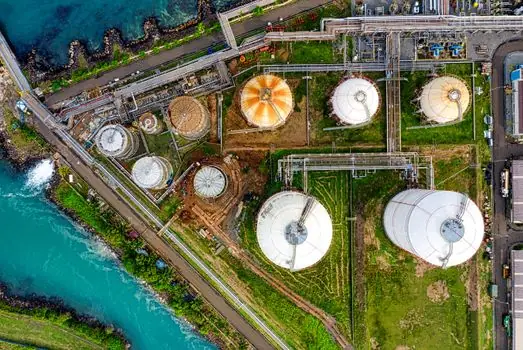
Asia-Pacific is the largest and fastest-growing region, holding 36.3% of 2025 market share per IMARC, with national CAGRs led by India at 5.0%, China at 4.2%, South Korea at 3.0%, and Japan at 2.4% [S3][S4].
North America's industrial catalyst market is sized for USD 8.96 billion by 2034 at a 2.65% CAGR, anchored by US spending on pharmaceutical, specialty chemical, and emissions-control catalyst R&D, and is described as the largest single national market outside Asia by Market Research Future [S2][S6]. Germany registers 3.3% CAGR and Mexico 3.5% CAGR, reflecting European and Latin American refining/petrochemical demand patterns [S3]. New refinery capacity under construction in Jazan, Al-Zour, Duqm, Ratnagiri, Yulong, and Shenghong is the single largest regional catalyst-charge demand driver cited in the public material [S3].
Application Split: Refining at 35%, Environmental Catalysis Is the Fastest-Growing Bucket
Refining applications hold 35.0% of 2026 application share, followed by chemical manufacturing and petrochemicals as the next-largest application buckets per the segmentation data [S1][S3].
Environmental catalysis (SCR DeNOx, VOC abatement, CO2 conversion) and green-chemistry applications are the fastest-growing demand segments, with Euro 7 NOx and particulate matter limits driving higher-performance SCR and diesel particulate filter catalyst adoption for both passenger and heavy-duty vehicles [S3]. Biofuel, hydrogen production, carbon capture, and Fischer-Tropsch sustainable aviation fuel synthesis represent the frontier R&D spend where catalyst suppliers are competing for first-mover position [S3]. Refinery catalyst procurement managers now expect suppliers to bundle transition pathway consulting with product supply to defend margin on standard hydroprocessing portfolios [S3]. For a related view on how spec-driven material selection maps to emerging industrial lines, see this spec-driven medical device material selection reference, which uses the same evidence-first framing for a different process industry. Buyers cross-comparing how to read manufacturer specification sheets for adjacent process equipment can also review measuring-instrument procurement: a spec-first strategy for industrial buyers for a parallel methodology.
Decision Criteria Comparison: How the Top Five Stack Up on Type Focus, Material Specialty, and Regional Footprint

BASF and Clariant anchor the broad-line heterogeneous portfolio with deep material coverage across metal, zeolite, and organometallic catalyst families; Johnson Matthey and Albemarle specialize in precious-metal (Pt, Pd, Rh) and lithium/PGM-intensive catalyst systems; W.R. Grace is the named FCC and refining hydroprocessing specialist among the top five [S3][S5].
Haldor Topsoe is explicitly named as a major heterogeneous and hydroprocessing catalyst supplier, while SABIC, Linde, and Honeywell appear as integrated chemical-engineering OEMs with embedded catalyst offerings rather than pure catalyst specialists [S2]. Sinopec's inclusion as a key player reflects its dominance in China-domestic refining catalyst demand, which dovetails with the 4.2% China CAGR [S1][S3]. The dominant procurement pattern is multi-supplier qualification, with refiners and petrochemical operators typically maintaining 3-5 approved catalyst vendors per process unit to manage PGM price exposure and supply continuity. For a parallel selection framework applied to fasteners (a different but equally spec-driven category), see OEM vs ODM for industrial fasteners: spec-driven selection.
Limitations and Failure Modes: PGM Cost, Catalyst Deactivation, and Substitution Risk
Platinum group metal pricing, rare earth element availability, and formulation complexity are explicitly cited cost and supply constraints for precious-metal-bearing catalyst grades, with the high cost of Pt/Pd/Rh catalysts flagged as a primary adoption barrier in price-sensitive applications [S3][S5].
Catalyst deactivation mechanisms (poisoning, fouling, sintering, and thermal degradation) reduce effectiveness and lifespan, forcing regeneration or replacement cycles that add to total operating cost [S5]. Some heterogeneous catalysts exhibit poor stability under high-temperature, high-pressure, or corrosive operating conditions, requiring structural recovery or full replacement on shortened cycles [S5]. Substitution risk from emerging catalyst classes (nanostructured, multifunctional, biomass-derived, and CO2-to-fuel catalysts) is the structural threat to incumbent hydroprocessing portfolios, and suppliers unable to offer transition pathway consulting face commoditization pressure on standard grades [S3][S5].
Forecast 2026-2030: Revenue Trajectory and the Trackable Signals Worth Watching

Market value will rise from $27.63 billion in 2026 to $32.1 billion in 2030 at a 3.8% CAGR per The Business Research Company, while the Fact.MR model projects $32.46 billion by 2036 at 3.6% CAGR and the IMARC model projects $33.5 billion by 2034 at 3.07% CAGR, an aggregate disagreement of roughly $1.4 billion at the 2030-2034 horizon that procurement teams should track rather than resolve [S1][S3][S4].
The next-trackable signal is the Euro 7 enforcement timeline for heavy-duty NOx and particulate limits, which will determine whether European refining catalyst demand tracks the 3.3% Germany CAGR or accelerates; the second is the India refining and petrochemical buildout at Ratnagiri, which will set the pace for South Asian catalyst-charge demand against the 5.0% India CAGR [S3]. The third signal is whether Sinopec's domestic catalyst share materially reshapes the top-five concentration ratio, currently above 50% in aggregate, as Chinese refining capacity at Yulong and Shenghong comes online. For a parallel view on how regional capacity and process mix reshape a different industrial commodity market, see steel rebar 2026: capacity, process mix, and where the dollars sit.
Component reference pages worth checking: industrial adhesive, industrial borescope, and industrial buzzer.