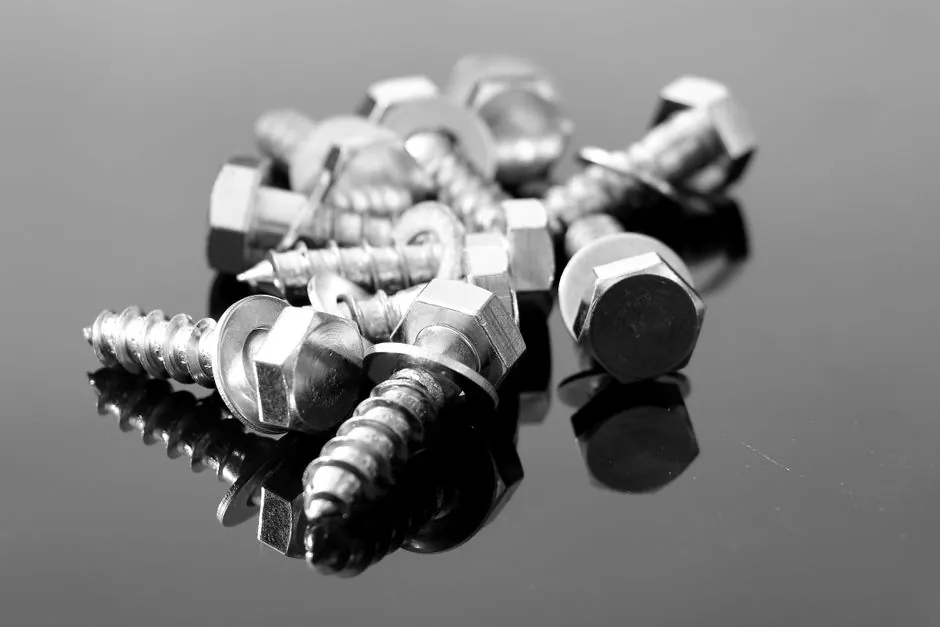
OEM fastener production means the buyer controls the print, the alloy, and the heat-treatment recipe, and pays for it in longer lead times and higher upfront tooling; ODM production means the supplier owns the print and lets the buyer rebrand, which collapses lead times but caps how much the buyer can deviate from the platform design [S1][S2].
For hex bolts, studs, structural anchors, and high-strength threaded rods, this trade shows up in grade specification (ISO 898-1 property classes 8.8, 10.9, 12.9), in thread form (ISO 261 metric, ASME B1.1 UNC/UNF, DIN 13), and in corrosion-protective surface engineering such as zinc-flake, hot-dip galvanizing to ISO 1461, or PTFE/Xylan topcoats [S2].
OEM Model: Full Print Ownership, Higher Upfront Cost
Under OEM the buyer submits the part drawing, CAD data, and acceptance criteria, and the factory runs the job to those documents, which keeps the buyer in control of every line on the print, including thread class (e.g. 6g for external metric threads per ISO 965-2) and proof-load testing per ISO 898-1 [S1][S2].
Engineering work, custom tooling, and sample qualification sit on the buyer's side of the ledger, so the OEM path is the standard route for safety-critical joints where the buyer must own the design and the IP, such as wind-turbine tower flange bolting, pressure-equipment stud bolts per ASME PCC-1, or high-strength structural assemblies for bridges and offshore platforms [S4].
Switching factories is feasible because the design and IP stay with the brand, but every new transfer means re-qualifying the production process and re-running PPAP-style documentation, which is why OEM fastener programs tend to consolidate around one qualified mill [S1].
ODM Model: Platform Design, Faster Lead Time, Lower NRE
ODM fastener supply starts from the manufacturer's existing tooling library: a stock die set, a calibrated thread-rolling machine, and a proven heat-treatment cycle that the supplier already runs in volume, which removes the buyer's tooling spend and cuts development from months to weeks [S1][S2].
Customization typically stays within bounded options: head marking, packaging, plating color, and a small set of dimensional tweaks such as length or thread pitch variants, while the metallurgical recipe and the core thread geometry stay locked to the ODM's platform [S2][S5].
The cost advantage is real when the application accepts a standard property class such as 8.8 or A2-70 stainless and a common coating such as zinc-plated clear-chromate, which is why ODM is the default for high-SKU industrial distribution, MRO assortments, and construction fastener programs where speed outweighs design uniqueness [S4][S5].
Decision Matrix: OEM vs ODM on Real Spec Criteria
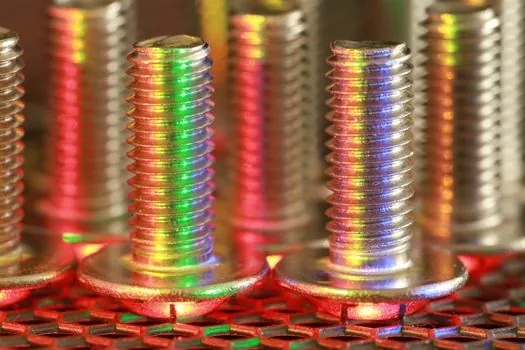
Across the four criteria that drive fastener sourcing, the split is clear. On design ownership, OEM gives the buyer full control of print, tolerance, and IP while ODM locks the design to the supplier's platform with cosmetic-level customization [S1][S2].
On upfront investment, OEM carries tooling, sample qualification, and PPAP cost on the buyer's side, whereas ODM amortizes those costs across multiple customers using the same die and heat-treat recipe [S1][S5].
On lead time, OEM programs typically run longer because of design freeze, sample approval, and first-article inspection, while ODM programs are limited mainly by raw-material and plating capacity, often shaving several weeks off the critical path [S2][S4].
On supply-chain resilience, OEM allows a qualified-mill transfer with re-qualification, whereas ODM ties the buyer to a single design platform hosted at the supplier, so an alternate source requires the buyer to accept a different part number on the print [S1][S2].
Which Model Fits Which Fastener Program
OEM is the right call for safety-critical or specification-critical fasteners: high-strength 10.9/12.9 structural bolts, PVF/PVDF-grade stud bolts for sour service per NACE MR0175, custom thread-forms, or parts called out under ASME B16.5 / B16.47 flanges where the buyer must sign off on every dimension and test report [S2][S4].
ODM is the right call for high-volume commodity fasteners, hex nuts, washers, anchor bolts, and standard machine screws, where the buyer's main lever is brand, packaging, and price, not the underlying thread geometry [S1][S4].
For related hardware programs that sit between these poles, buyers often split the scope: OEM for the load-bearing structural fastener, ODM for the associated hardware such as washers and standard nuts, which keeps engineering effort on the parts that actually carry the joint load [S4].
Limitations and Common Failure Modes
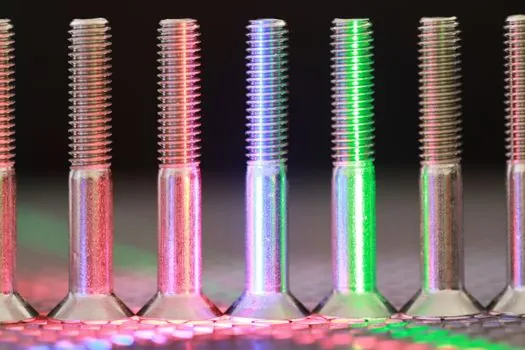
The OEM failure mode is over-engineering: the buyer funds a fully custom fastener when an ODM platform part would have passed the same service duty, which inflates piece price and locks the program to a single mill with no commercial leverage [S1][S4].
The ODM failure mode is under-specification: the buyer accepts a platform design that is close but not identical to the requirement, so a minor deviation in thread class, proof load, or coating thickness slips through incoming inspection and shows up as a field issue [S2][S5].
For buyers running hybrid lines, a useful guardrail is to demand the same inspection regime on both paths, including ISO 898-1 mechanical testing, thread gauging per ISO 724 / ISO 965, and coating-thickness verification, so OEM and ODM lots are interchangeable on the receiving dock and downstream assembly line [S2][S4].
Sourcing Standards Buyers Should Anchor To
Regardless of OEM or ODM route, the receiving documents should reference the controlling standards: ISO 898-1 for carbon-steel bolt mechanical properties, ISO 3506-1 for corrosion-resistant stainless fasteners, ISO 261 / ISO 965-2 for metric thread geometry, ASME B1.1 for inch threads, ISO 1461 for hot-dip galvanizing, and ISO 4042 for electroplating, so acceptance criteria are unambiguous on the print and in the PO [S1][S2].
For sour-service or marine fastener programs, NACE MR0175 / ISO 15156 and ASTM A193 / A194 grades are the typical call-outs, and the contract must make clear whether that material requirement travels through the OEM's custom recipe or the ODM's existing platform [S2][S4].
Comparable spec-driven logic applies in adjacent process equipment: linear module selection for packaging lines and aluminum die casting machine selection for hardware both reduce to the same OEM-vs-ODM question, who owns the design and who pays for the tooling.
Trackable signals for the next sourcing cycle: whether mills publish updated PPAP templates aligned to AIAG-style requirements, and whether ODM suppliers begin offering traceable lot-level certificates for property class 10.9 and above rather than only generic 8.8 platform data [S2][S5].
For the relevant spec sheets and selection criteria, see additive manufacturing material, industrial adhesive, and industrial borescope.