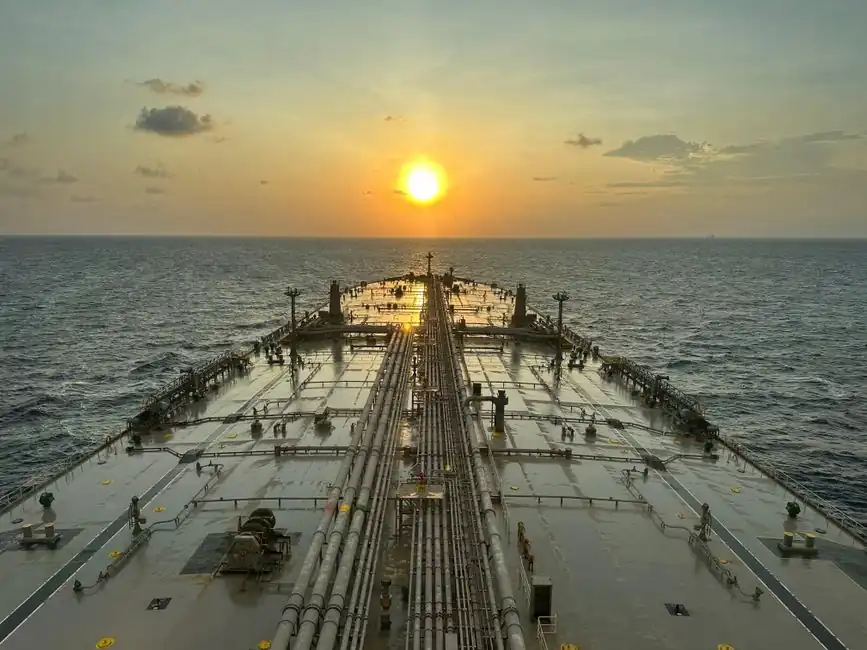
Marine engineering drives ceramic selection harder than nearly any other industrial service, because seawater, splash-zone oxygen, UV, cavitation, and galvanic couples hit the same component simultaneously. In practice, the marine ceramic toolbox separates into four distinct material families: structural oxides (alumina, zirconia-toughened alumina, zirconia), structural non-oxides (silicon carbide, silicon nitride, boron carbide), ceramic-filled polymer coatings (surface-tolerant epoxies loaded with ceramic fillers), and thin-film ceramic coatings cured at 0.5 to 2 mils (Cerakote) for galvanic isolation [S3][S4][S5].
Bulk structural ceramics (machined tile, sleeves, hydrocyclone liners, valve seats, pump bearings) are typically alumina-rich; ceramic-filled epoxies handle in-service hull and rudder repair; thin-film ceramic coatings protect fastener assemblies and instrument housings; and hollow alumino-silicate microspheres (FILLIT-class fillers) lighten marine putties and naval-grade cements without sacrificing spreadability [S1][S5][S4]. For a working primer on the material families themselves, see the industrial ceramic reference.
Material Map: Alumina, Zirconia, SiC, Si3N4, and B4C on Marine Duty
Alumina (Al2O3) is the workhorse structural ceramic for marine service, and the commercial purity ladder maps directly to operating conditions: 92 percent Al2O3 is the common wear-grade, 95 to 96 percent is the standard mechanical/electrical grade, and 99 to 99.5 percent is specified where seawater purity, chemical resistance, or high dielectric strength is critical [S3]. Alumina's corrosion mechanism in seawater is essentially negligible oxide dissolution, and its PREN (pitting resistance equivalent) is reported well above any stainless steel commonly specified for seawater pumps, which is why alumina sleeves, tile liners, and grinding media routinely replace 316L in chlorinated and brackish service [S3].
Zirconia (ZrO2), particularly yttria-stabilized tetragonal polycrystal (Y-TZP) and magnesia-partially-stabilized grades, is chosen where fracture toughness matters more than raw hardness: it sees service in marine valve components, oxygen sensor housings, and precision bearing balls where alumina would be too brittle [S3]. For a side-by-side material comparison covering wear grades and selection logic, the automotive ceramic selection map walks the same Al2O3 / ZrO2 / SiC / Si3N4 / B4C decision tree from a different end market, and most of the selection logic carries over to splash-zone and pump service. For the broader non-oxide family, SiC and Si3N4 dominate the high-temperature and high-erosion end: SiC's thermal conductivity and corrosion resistance make it the standard for marine heat-exchanger tubes and seal faces, while Si3N4 covers high-shock rolling-element bearings; B4C is reserved for abrasive slurry nozzles and ballistic panels, not bulk marine hardware [S3].
Belzona offers surface-tolerant epoxy and ceramic-filled coatings engineered for in-service hull repair, ballast tank lining, and cavitation damage on rudders and propellers, applied cold on-site with no hot work. Thin-film ceramic coatings, such as Cerakote®, are applied at 0.5–2 mils to create a molecular-level barrier against saltwater corrosion, UV degradation, and galvanic attack in maritime environments.
Ceramic-filled cold-cure epoxies are specified for in-service hull, ballast tank, and cavitation-damage repair where hot work is forbidden and the substrate is damp, oily, or only manually prepared: Belzona 1212 (surface-tolerant epoxy) bonds to wet or oil-contaminated steel, Belzona 1321 (Ceramic S-Metal) and Belzona 1341 (Supermetalglide) provide ceramic-filled erosion-corrosion protection on hulls, ballast tanks, rudders, and bow thrusters, Belzona 1311 (Ceramic R-Metal) rebuilds lost material under elastomeric topcoats, Belzona 2141 (ACR Fluid Elastomer) absorbs the implosion energy that spalls rigid ceramic coatings on cavitation zones, and Belzona 5811 / 5811DW2 carry NSF/ANSI 61 approval for potable water and CHT (sewage holding) tanks [S5]. This stack is engineered for the actual decision problem on a vessel: not which coating wins on a clean substrate, but which cures correctly on a damp, oil-contaminated, partially prepared steel surface between port calls [S5].
Thin-film ceramic coatings (Cerakote-class) cover a different duty cycle and are not a substitute for the cold-cure repair stack: they are oven-cured at 0.5 to 2 mils (roughly 12.7 to 50.8 micrometres), isolate substrates from salt spray, humidity, and direct immersion, and are verified to 3,000+ hours of ASTM B117 neutral salt-spray resistance, with the supplier holding AS9100, ITAR, and ISO 9001 certifications for traceable marine hardware [S4]. The application window is small enough to preserve dimensional fit on threaded fasteners, instrument housings, and bronze deck fittings, where marine paint builds too thick and anodizing only works on aluminum [S4]. The two systems are complementary, not competing: ceramic-filled epoxy rebuilds geometry and handles wet substrates in dry-dock windows, while thin-film ceramic coating protects finished assemblies in service. For context on how a different surface-engineering family, polymer coatings and structural adhesives, is selected for similar harsh service, the industrial adhesive overview covers the wider polymer-side decision space.
Lightweight Filler Duty: Hollow Ceramic Microspheres in Putties and Naval Cements
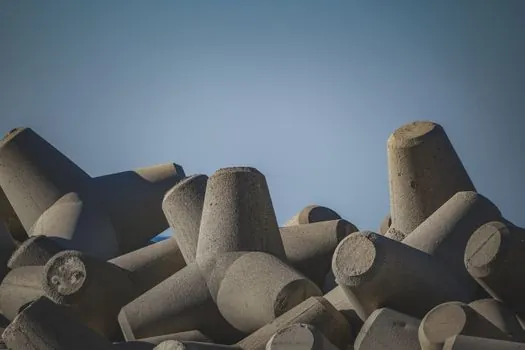
Hollow ceramic microspheres (FILLIT-class alumino-silicate spheres) are the lightweight filler track inside the marine ceramic toolbox, and they target a different problem: reducing putty and naval cement density without losing compressive strength or thermal stability [S1]. The spheres are spherical, primarily alumino-silicate, hollow, and pack uniformly into the resin or cement matrix, so the formulator gets lower density, better spreadability, lower transportation cost per cubic meter of repair, and stable performance under thermal cycling; manufacturers cite easier handling, reduced storage cost, higher formulation efficiency, better coverage, and optimized material consumption as the direct consequences of cutting putty density [S1].
Selection on this track is mostly about true density (typically 0.6 to 0.9 g/cc for the lightest grades, against roughly 2.6 to 2.8 g/cc for conventional mineral fillers), particle size distribution (typically 10 to 200 micrometres for putty work, narrower cuts for spray-applied fairing compounds), crush strength (the minimum needed to survive mixing and application without collapsing the hollow shell), and chemical compatibility with the host resin or cement system [S1]. Microspheres are not a structural ceramic and should not be confused with bulk alumina or SiC; they sit one tier below the matrix, modifying the putty rather than carrying load. For adjacent process-engineering context on bulk fillers and binders, the engineering plastic reference covers the polymer-side selection logic that these microsphere-loaded putties feed into.
Selection Criteria: Corrosion, Abrasion, Temperature, Galvanic Isolation, and Weight
(1) Corrosion resistance in seawater and chlorinated service, where high-purity Al2O3 (99 to 99.5 percent), SiC, and Si3N4 score best, and where 316L and FRP routinely underperform [S3]. (2) Abrasion and erosion-corrosion, where Al2O3 tile, SiC, and ceramic-filled epoxy rebuilds (Belzona 1321) are standard, and where elastomeric topcoats (Belzona 2141) are required when cavitation implosion is the failure mode rather than straight erosion [S5]. (3) Operating temperature, where SiC and Si3N4 extend the envelope to roughly 1,400 to 1,600 degrees Celsius in oxidizing atmosphere, well above any stainless steel; alumina is serviceable to roughly 1,700 degrees Celsius in clean air but drops off under thermal shock [S3]. (4) Galvanic isolation, where thin-film ceramic coatings (Cerakote-class) physically separate dissimilar metals such as bronze fittings on steel fasteners or aluminum housings on stainless brackets, and where the cited 3,000+ hours of ASTM B117 resistance is the relevant qualification number [S4]. (5) Weight, where hollow alumino-silicate microspheres are added to putties and naval cements to cut density without sacrificing workability [S1].
A useful spec shortlist for the most common marine ceramic decisions, scored on the criteria above, runs as follows: for pump sleeves and valve seats, 92 to 95 percent Al2O3 is the default; for high-purity seawater or pharmaceutical-grade piping, 99 to 99.5 percent Al2O3 or SiC; for rudder and bow-thruster cavitation zones, a Belzona 1311 ceramic-rebuild base under Belzona 2141 elastomer; for instrument housings and bronze deck fittings subject to galvanic attack, Cerakote-class thin-film ceramic at 0.5 to 2 mils; and for marine fairing putty and naval cement where weight is tracked, FILLIT-class hollow ceramic microspheres at 0.6 to 0.9 g/cc loading [S1][S3][S4][S5].
Alumina is hard and corrosion-resistant but brittle: impact loading, point loads, and bending stresses fracture it before the seawater ever gets a chance to corrode it, so it is a poor choice for unsupported structural panels or anywhere steel would be specified for ductility [S3]. Zirconia buys fracture toughness but trades away part of the chemical resistance envelope, and in hot aqueous service grades must be selected carefully to avoid low-temperature degradation. SiC and Si3N4 resist corrosion and temperature but are expensive and difficult to machine, and any section size above roughly 100 mm tends to push lead time and cost up sharply [S3].
Ceramic-filled epoxies are only as good as their surface preparation tolerance, and the Belzona 1212 / 1321 / 2141 stack is engineered for damp and oily substrates, not for use as a permanent substitute for full PSPC (Performance Standard for Protective Coatings) ballast tank specifications on new-build; PSPC-grade systems from major coatings suppliers still dominate new-build and dry-dock, and the ceramic-epoxy stack is the in-service and local-repair overlay [S5]. Thin-film ceramic coatings require controlled application and oven cure, and the 3,000-hour ASTM B117 number is for the coating system as qualified on a properly prepared substrate, not for field-applied patches [S4]. Hollow ceramic microspheres collapse above their crush-strength rating, so aggressive high-shear mixing and high-pressure spray can crush a fraction of the population, lifting putty density back toward the unfilled baseline [S1]. Across all four families, the most common misapplication is using a marine-grade product outside its qualified substrate list, e.g. specifying an aluminum-only anodizing on steel hardware or specifying a general-purpose epoxy where surface tolerance is the actual constraint.
Sourcing, Standards, and What to Verify on the Datasheet
Marine ceramic datasheets vary widely in what they actually prove, and a defensible procurement document should pin four items. Second, the test method and rating that the corrosion claim is based on, with ASTM B117 neutral salt-spray hours the most commonly cited number for thin-film ceramic coatings (Cerakote-class: 3,000+ hours) and the relevant ISO 28765 or PSPC reference for ballast tank systems [S4][S5]. Application thickness matters for thin-film ceramic coatings, because the 0.5–2 mil range maintains the dimensional precision that marine hardware requires for proper fit and function in structural and mechanical assemblies. Fourth, for lightweight fillers, the true density (g/cc), particle size distribution, crush strength, and host-resin or host-cement compatibility, since a 0.6 g/cc microsphere loaded into an incompatible resin system is a density penalty without a processing benefit [S1].
Trackable signals worth watching over the next reporting cycle: AS9100 / ISO 9001 documentation and Certificate of Conformance with batch traceability on coating shipments, which is now standard on marine ceramic coating lines [S4]; NSF/ANSI 61 listing for any coating specified in potable or CHT service, which is what the Belzona 5811DW2 stack carries and which most generic ceramic-filled epoxies do not [S5]; and ASTM B117 hour ratings above the 3,000-hour baseline, where any 5,000-hour+ qualified system would be a meaningful jump for splash-zone fastener assemblies [S4]. On the bulk ceramic side, watch for explicit Al2O3 purity, SiC reaction-bonded versus sintered grade, and any vendor disclosure of PREN or seawater-immersion test data, since the published datasheets that omit these numbers are the ones that tend to fail in field service [S3].