
A 2026 industrial coating is specified as a system: substrate prep, primer, build coat, topcoat, cure schedule and field QA — not a single paint SKU. Spec writers at utilities, pulp and paper mills, chemical plants and mechanical contractors now lead with substrate profile, exposure class, required DFT in mils, and the certification stack (NSF/ANSI 61, UL, NACE/AMPP) before they open a product catalog [S2][S5].
Industrial Technical Coatings (ITC, Pooler, Georgia) lists surface preparation, structural steel painting, specialty floor coatings, line stripping, tank linings, ceramics and secondary containment as the same job scope, and treats them as one procurement decision [S2]. Curtiss-Wright EM Coating Services in the UK runs an in-house design and manufacturing line for bespoke protective coating systems, signalling that the 2026 buy is solution-engineered, not catalog-pulled [S5].
Substrate and Surface Prep: The First Gate
Substrate dictates profile, primer chemistry and the acceptable prep standard. Steel, concrete and wood each land on a different branch: Industrial Coatings Ltd (UK) splits its catalog into Steel & Metal, Building Maintenance and Concrete, and explicitly tags Jotun StEELMASTER fireproof coatings as a separate SKU family from its maintenance line. Kelly Industrial Coatings frames its 1992-founded distribution model as a "thorough evaluation of the challenges and goals" per project — substrate identification is gate zero. [S1]
Profile targets follow the SSPC/NACE/AMPP language used across ITC's blast yard and EM Coating Services' metal-treatment line: white metal, near-white, commercial, industrial and brush-off grades are the five reference points that the 2026 spec sheet lists before any chemistry is named [S2][S5]. Concrete substrates shift to ICRI CSP profiles (typically CSP 3–7 for coating acceptance) and require moisture-vapour testing before primer selection; wood substrates move to a separate stain/sealer branch with different mil-build targets.
Exposure Class and Chemistry Family
Exposure drives chemistry. Atmospheric, immersion, chemical splash, abrasion, high-temperature and fire-protection each map to a different resin family. EM Coating Services' portfolio is built around specialist metal and material surface treatments "for key industries" — a deliberate split by service environment rather than by brand [S5]. ITC runs ceramics, tank linings and secondary containment as discrete service lines, which only makes sense if the resin (vinyl ester, novolac epoxy, glass-flake polyester, furan) is selected per exposure rather than per asset [S2].
Decision matrix practice — a quantitative grid of weighted criteria — is the documented engineering method for converting exposure class into chemistry choice, and the same approach is applied to coating selection when multiple environments and substrates are in scope. For 2026 chemical-plant and pulp-and-paper work, the typical resin-to-exposure map is epoxy or novolac epoxy for chemical splash, vinyl ester for strong acid/alkali immersion, polyurethane or polysiloxane for UV-exposed atmospheric, and ceramic-filled inorganic zinc for high-temperature zones above 400 °F [S2][S5].
Film Build, DFT and Cure Window

DFT (dry film thickness) is the single number that ties chemistry to service life. Most 2026 industrial coating specs call out minimum and maximum DFT per coat, total system DFT, and a re-coat window in hours — three values that go on the data sheet before the brand is named. Industrial Coating Concepts and EM Coating Services both list "durable, long-lasting flooring" and "high quality coating applications" as the headline deliverable, but the underlying contract value rides on the DFT callout [S3][S5].
Specifying the wrong cure window is the most common 2026 coating failure mode on tank-lining and secondary-containment jobs, because field conditions rarely match lab-cure rates.
Certification Stack and Documentation
Certification gates the bid on potable-water, food-grade, fire and rail assets. Industrial Coatings Ltd (UK) leads with Jotun StEELMASTER fireproof coatings as a separately certified line, distinct from its general maintenance stock, because intumescent fireproofing carries its own third-party approval chain that generic epoxy does not. For tank linings and chemical containment, NSF/ANSI 61 and FDA 21 CFR compliance are the gate; for offshore and marine, NACE/AMPP CIP and ISO 12944 corrosivity categories apply; for flammable atmospheres, ATEX or IECEx equipment-group rules govern the application tools, not the coating itself [S2][S5].
Documentation is the line item that often decides between two otherwise equal bids: a full data sheet, SDS, application procedure, batch traceability, hold-point QA and post-cure inspection record are now standard on chemical-plant and utility jobs. ITC and EM Coating Services both list QA and surface-prep hold points in their service descriptions, signalling that the 2026 contract is documentation-heavy by default [S2][S5].
Who Should Spec a 2026 Industrial Coating and Who Should Not
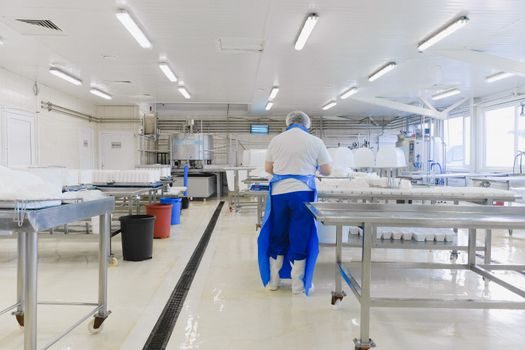
Spec the coating in-house if the asset is a single substrate under one exposure class, the shut-down window is fixed, and an SSPC-certified inspector is on staff. Outsource the spec to a coating contractor or engineering house when the asset spans multiple substrates, holds multiple certifications (fire + chemical + potable), or sits in a regulated space (food, pharma, nuclear) where audit trail is critical [S2][S5]. Do not let a brand-only distributor pick chemistry on a multi-exposure asset; Kelly Industrial Coatings describes itself as a "distributor, supplier and expert problem-solver," and that hybrid model only works when the buyer has already locked the spec gates.
For a quick substrate-driven check, the industrial coating reference page lines up resin families, DFT ranges and prep standards against substrate type, and the waterproof coating reference covers the immersion and secondary-containment branch specifically. Field verification of DFT, adhesion and holiday detection is the job of the coating thickness gauge on every job.
Comparison: Five Coating Systems on Five Decision Criteria
For a 2026 chemical-plant or structural-steel spec, the five mainstream systems line up against substrate tolerance, chemical resistance, UV durability, max service temperature and cure window. Epoxy (ambient-cure) handles steel and concrete, resists splash from broad pH ranges, is poor in UV, caps near 250 °F dry and 180 °F immersion, and cures in 7 days full. Polyurethane topcoat over epoxy adds UV durability and keeps chemical resistance from the epoxy underlayer, with the same thermal ceiling. Novolac vinyl ester lines tanks and secondary containment, tolerates strong acid and alkali immersion, needs UV topcoat, runs to 220 °F, and post-cures at elevated temperature for full properties. Inorganic zinc (IOZ) primer under epoxy or polyurethane is the standard for structural steel in high-heat zones, survives 750 °F dry service when topcoated, and cures by moisture. Ceramic-filled novolac or glass-flake polyester is the heavy-chemical branch, rated for 95–98% sulphuric and aggressive solvents, and is shop-applied with force cure [S2][S5].
Failure Modes and Field QA Hold Points
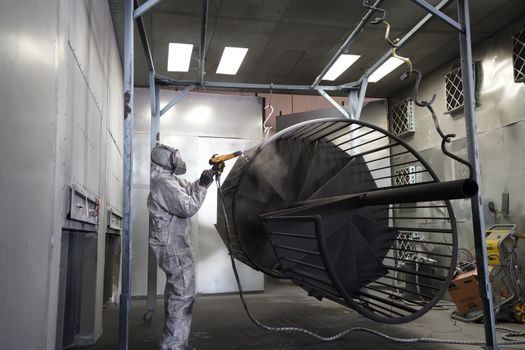
Coating failure in 2026 typically traces to one of five root causes: inadequate surface profile, moisture in concrete substrates, re-coat-window miss, DFT under-spec, or cure-temperature drop. ITC's service scope — surface preparation, line stripping, tank linings, secondary containment — is structured around these exact failure modes, not around product lines [S2]. Field QA hold points are: profile verification (replica profile or comparator), dew-point check before paint, wet-film thickness during application, DFT after cure, and holiday/spark test on immersion linings at 100 V per mil [S2][S5].
Buyers sourcing fire-rated boards or insulation behind a coating system should run the same five gates on the substrate behind the paint — see the rock wool selection guide for the density and fire-class gates that pair with intumescent and cementitious coating systems.
Track two signals over the next buying cycle: (1) whether the bid sheet asks for substrate profile, exposure class, DFT range, cure window and certification stack as separate line items, or rolls them into a single product SKU — the former indicates a mature spec, the latter indicates a brand-driven buy; (2) whether the contractor offers documented hold-point inspection or only final DFT — the former is a 2026 baseline, the latter is a 2023-era practice that is being priced out of chemical-plant and utility work [S2][S5].