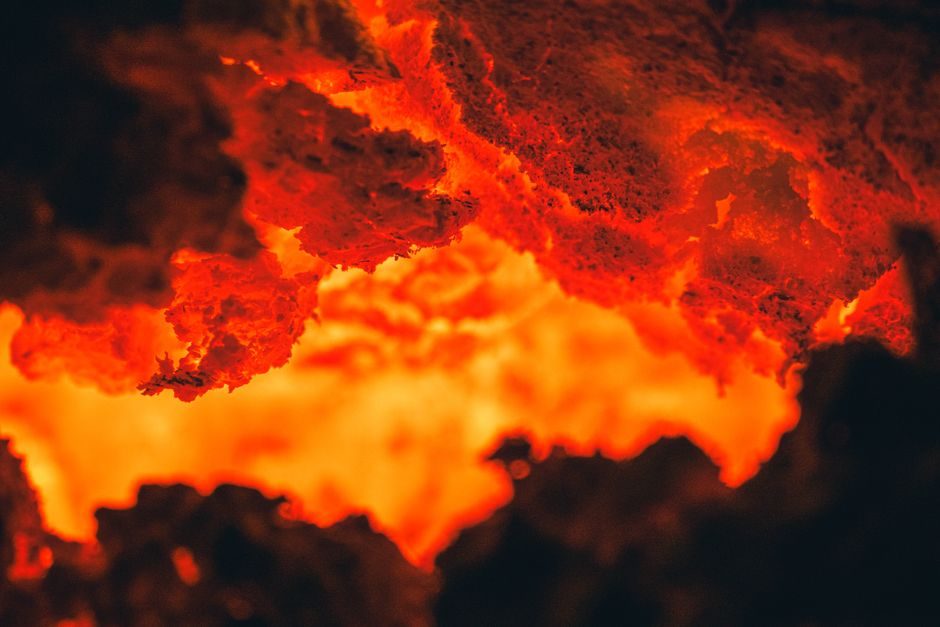
Rock wool (stone wool) is a mineral-fibre insulation made by spinning molten basalt and slag at roughly 1400-1500 °C into fine fibres bound with a thermoset resin, and 2026 selection is dominated by four spec gates: declared density, Euroclass fire rating, declared thermal conductivity (λD), and binder/hydrophobic treatment [S1]. Buyers who treat rock wool as a commodity and shop on €/m³ almost always over-spec on density or under-spec on fire class, and the penalty shows up either in project cost (40-100 % of the cheapest board is not unusual) or in failed inspection.
The category overlaps several industrial insulation formats: rigid slab, lamella (wire-structured), loose granulate, and continuous sandwich-panel core. Sandwich-panel line builders now ship turnkey rock wool production lines for capacities in the 1500-4000 t/yr band, reflecting how deep the format has pushed into steel-structure industrial buildings [S2]. For process engineers this matters because the rock wool slab you bolt to a vessel is not the same product you bond to a sandwich-panel face sheet — the binder, density, and surface finish are deliberately different.
Density and Fire Class: The Two Non-Negotiable Gates
Declared density (kg/m³) is the single most important selection lever because it drives compressive strength, fire performance, and acoustic absorption in one shot. Standard product bands run roughly 40-60 kg/m³ for light partition and HVAC, 80-120 kg/m³ for general building envelope and acoustic ceilings, and 140-200 kg/m³ for structural decks, tank, and pipe insulation where point loads matter [S1]. Rock wool's passive fire-protection role is that the fibre matrix resists temperatures above 1000 °C without combusting, slow flame spread, and contains fire locally, which is the spec angle engineers use when they need to hit a fire-resistance rating (e.g. EI 60 / EI 120) on a wall or deck assembly [S1].
For European projects the binding fire classification is EN 13501-1, where rock wool slabs typically land in A1 (non-combustible) or A2-s1,d0, and that classification must appear on the CE/UKCA label alongside λD and thickness. North American projects run parallel logic through ASTM E136 (non-combustibility) and CAN/ULC-S102 surface burning. The frequent failure mode in 2026 is specifying an A1 board for the wall but accepting a faced A2-s1,d0 laminate for the deck — once you glue aluminium foil or glass cloth to an A1 core you may have changed the surface classification, so the faced product must carry its own Euroclass certificate. Insulation formats are covered in the rock wool encyclopedia entry, which lists the density/fire-class combinations most stockists keep on the shelf.
Thermal and Acoustic Targets: λD and NRC Across Formats
Declared thermal conductivity (λD, W/m·K at 10 °C mean) for 2026 production falls in a tight 0.032-0.040 W/m·K band for most rock wool slabs, with denser products at the low end of the band and lighter products at the high end. The mechanical and acoustic reason: a denser fibre matrix has shorter air paths and lower radiative transfer, so at the same thickness a 150 kg/m³ slab can land near 0.034 W/m·K while a 50 kg/m³ cavity batt is closer to 0.040 W/m·K. Spec writers should not chase single-decimal λD without checking the design thickness — a 10 mm thickness delta at 0.035 W/m·K changes R-value more than the λD spread itself. [S1]
For acoustic assemblies, the selection lever is again density and thickness together. 50-70 mm at 40-50 kg/m³ gives a weighted sound reduction improvement in the 5-8 dB range on a standard partition, and 100 mm at 70-100 kg/m³ pushes NRC (noise reduction coefficient) into the 0.85-1.00 band when used as a porous absorber behind perforated metal. Misapplication here is common: thin, low-density rock wool on its own is a poor low-frequency absorber, and below 50 mm even at 100 kg/m³ the 125-250 Hz octave barely moves. When the partition is also a fire-rated wall, you need an A1-rated board of the correct density *and* the tested assembly — the acoustic and fire ratings come from the system, not the slab alone [S1].
Application Matrix: Slab vs Lamella vs Sandwich Core
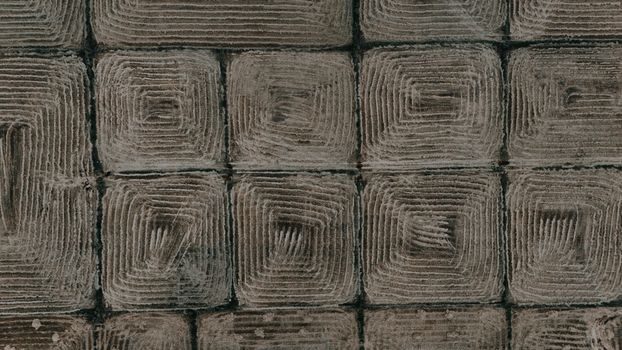
Three rock wool formats dominate 2026 procurement, and each has a defensible use case. (1) Rigid slab (40-200 kg/m³) is the default for flat surfaces — walls, decks, vessels, tank shells, acoustic baffles — where a flat, square-edge board can be pinned, mechanically fixed, or impaled on studs. (2) Lamella boards are strips of slab cut perpendicular to the surface and re-bonded, which puts the fibres running vertically; this gives higher compressive strength at a given density and is the right pick for large-diameter pipe, duct, and curved tank where a flat slab would bridge and gap. (3) Sandwich-panel core is a continuous bonded rock wool layer between two metal faces, produced on dedicated lines; for industrial buildings it cuts site labour dramatically and the rock wool core can hit EI 60-EI 120 fire ratings on the panel alone [S2].
A simple selection rule used by European process contractors: pick lamella for any curved surface with radius under 2 m, rigid slab for flat surfaces where mechanical fixing is straightforward, and sandwich panel for industrial envelope where speed of erection and fire rating are both contracted. For thermal-only applications on flat ductwork, rigid slab in the 60-80 kg/m³ band is the lowest installed cost. Buyers also see "wired mat" — a rock wool blanket stitched to galvanised wire mesh — which is the right pick for high-temperature pipe and equipment where the surface exceeds 250 °C and the insulation has to carry its own weight between supports.
Health, Binder Chemistry and Facing Choices
The biosoluble fibre debate has been settled at regulatory level for over a decade, and 2026-compliant rock wool is classified as a biosoluble man-made vitreous fibre (MMVF) under EU Nota Q / German TRGS 905. That means the binder and fibre chemistry together determine whether a product carries a hazard label at all; pre-2000 rock wool with alkaline-earth silicate content below the threshold is the regulated outlier, not 2026 production. Buyers still see "bio-soluble" / "note Q compliant" printed on the datasheet — treat this as a baseline, not a differentiator. [S2]
For most outdoor industrial applications the binder is irrelevant; for office, school, hospital, and food-processing interior envelopes it can be the gating spec. Facings (aluminium foil, glass cloth, black veil, wired mesh) each change surface temperature limit, water-vapour transmission, and fire classification independently, so the facing must be specified in the same line item as the core — a common RFQ error is "rock wool slab, 80 kg/m³, with foil" without naming whether the foil is pure Al, FSK (foil/scrim/kraft), or FSK-foil with a 25 mm flap for joint sealing.
Common Misapplications and Field Failure Modes
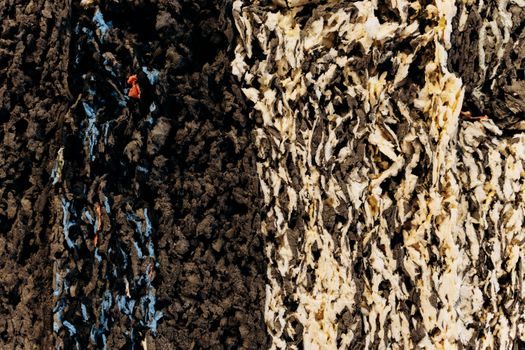
Three failure patterns account for most rock wool field problems in 2026. First, using a low-density cavity batt (40-50 kg/m³) where fire or structural duty demands 80+ kg/m³ — the board sags, the facing delaminates, and the fire rating drops below the certified assembly. Second, allowing rock wool to run wet: while modern products carry a water-repellent additive (silicone oil) for short-term exposure, prolonged water ingress permanently degrades λD and corrodes the metal fixings and facings. Specify hydrophobic grade (water absorption ≤ 1 kg/m² by EN 1609 immersion) for any outdoor or humid service. Third, ignoring vapour drive — installing foil-faced rock wool on the warm side of a wall in cold climate is correct, on the warm side in hot-humid climate is a condensation trap; the facing direction must match the vapour-pressure gradient, not the drawing. [S3]
Process engineers also over-rely on rock wool for very high temperature service. Standard phenolic-bound rock wool tops out around 700-750 °C continuous service; above that, the binder carbonises and the board shrinks. High-temperature work above 750 °C needs alkaline-earth silicate (AES) wool or calcium-magnesium-silicate (CMS) wool, which is a different chemistry and a different price band. Calling for "rock wool" on a 900 °C reformer skirt is a spec error even if the local stockist hands you a slab — verify the upper service temperature in the datasheet, not on the brochure.
Supplier Landscape and Lead-Time Signals
Global supply is dominated by the original European mineral-wool majors (the ROCKWOOL group, founded 1937 and now operating multiple plants and brands across continents) with a long tail of regional producers in India, China, the Middle East, and Eastern Europe [S4]. For buyers the practical 2026 implications are: (a) brand-aligned products (e.g. the major's own branded product codes) carry a 10-20 % price premium over equivalent-spec regional slabs but arrive with full EN 13501-1 / EAD test dossiers; (b) regional producers can match fire and density specs at lower price but documentation gaps show up in third-party testing; (c) container-direct orders of generic slab from regional mills now have a 4-8 week lead time from order to European port in mid-2026, against 2-4 weeks for stock at a European distributor.
For a related comparison of lightweight envelope panels and how their core spec gates interact with fire class and scale, see the lightweight partition panel 2026 cost guide, which sits one step downstream from this rock wool selection logic. Buyers weighing the broader B2B catalogue of industrial sensors and instruments alongside the building envelope should also note that pressure transmitter and flow meter projects often commission in the same building envelope, and the same fire-rating audit logic applies to the cable and conduit penetrations in those assemblies.
Specification Checklist Before RFQ

With these ten items fixed, price comparison between suppliers becomes apples-to-apples. [S4]
The next 3-6 months will tell whether binder-bio reformulation spreads from premium office spec down to industrial grade, and whether EU CPR revision revises the AVCP (Assessment and Verification of Constancy of Performance) class for high-risk fire-rated rock wool applications. Watch the EAD documents for the relevant product families and the 2026 EN 13501-1 revision work for any change in surface-product classification when facings are applied.