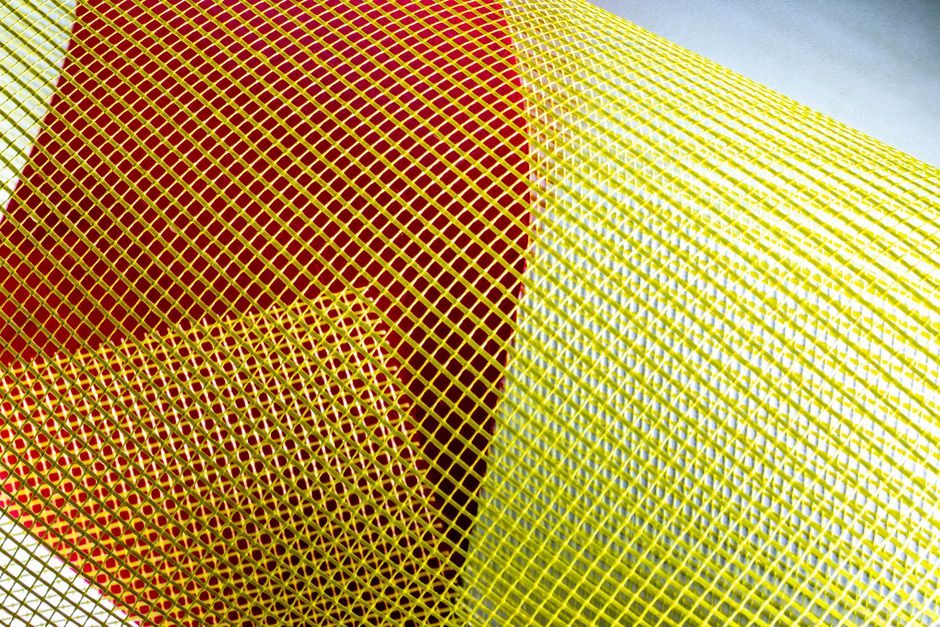
For LNG-project service, the same filament-wound FRP/GRP pipe class is offered in 10-pc minimum order quantities with 200,000 pc/month supply capability out of Shanghai, indicating a mature, large-volume manufacturing base that has already absorbed the offshore/onshore cryogenic-adjacent specs [S1].
Where FRP Wins: Corrosion, Weight, Thermal and Electrical Behavior
FRP composites do not rust, do not need cathodic protection, and tolerate chloride, dilute acid and brine media that would perforate carbon steel within a few service years — the FRP composite chemistry is the spec driver, not the fiber alone [S1].
Thermal conductivity of filament-wound FRP/GRP pipe sits around 0.25-0.35 W/(m·K), roughly 1/200 of carbon steel, which makes it useful for cold service and for low-temperature LNG-line sections where parasitic heat gain matters [S1]. The material is also electrically non-conductive, eliminating stray-current corrosion and the need for bonding across flange joints, a recurring headache on buried metallic pipelines.
In construction-rehab work, externally bonded CFRP and GFRP plates are used to strengthen bent reinforced-concrete elements such as bridge girders and floor slabs, with the literature noting that approximately 70% of all reinforced-concrete constructions are bent elements that benefit from such external reinforcement [S2].
Where FRP Loses: Temperature, Fire, Permeation and UV
Polyester and vinylester FRP lose stiffness above ~80°C and continuous service on most resin systems is capped around 120-150°C, so FRP is rarely the right pick for high-temperature hydrocarbon or steam headers where pressure transmitters may still read on metal impulse lines. Fire performance is resin-dependent: standard polyester FRP will burn without flame-retardant additives and has a high smoke/heat-release profile compared to fire-retardant epoxy systems. [S1]
Thermoplastic resin systems soften in the 80-110°C range, so any process line that sees excursions past that — even briefly during a steam-out — needs either a derate or a switch to lined metal, and design verification is typically required before approving such a duty [S1].
Single-wall FRP also permits some permeation of small molecules over time, which is why double-wall or permeation-resistant liner constructions are commonly specified for chemical waste and fuel service. UV exposure degrades the outer resin veil if a topcoat is not maintained, so outdoor FRP needs a gel-coat or UV-stabilized paint system on a 5-10 year repaint cycle.
Material Selection Map: Resin, Fiber, Liner and Pressure Class
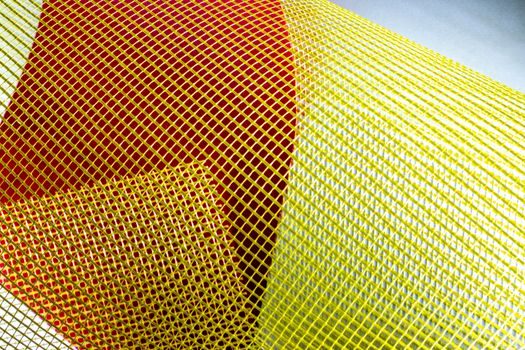
Resin choice dominates chemical and temperature behavior: isophthalic polyester handles mild acid and salt water at the lowest cost; vinylester bridges the gap to stronger oxidizing media and hot wet service; epoxy is the premium pick for higher temperature and better fatigue life. Glass fiber is the workhorse reinforcement — E-glass is the cost-default, while the C-scan and L-scan imaging literature explicitly identifies GFRP (glass-FRP) as the standard composite for rehabilitating columns, beams, slabs and walls by surface bonding [S3].
For higher modulus and lower creep, aramid or carbon fiber can be substituted, but carbon introduces galvanic concerns against metallic fittings and is typically reserved for structural-strengthening plates and rebar rather than pipe. Liner selection mirrors resin selection: a corrosion liner of vinylester or furan plus a structural wall of chopped or continuous glass gives the standard dual-layer construction used in chemical and offshore service [S1].
Pressure class is set by the filament-wound angle, the glass-to-resin ratio, and the pipe diameter — the higher the operating pressure, the steeper the winding angle, and the thicker the structural wall. A typical chemical-service FRP pipe is rated around 10-25 bar at 80-150°C depending on diameter, with derating curves published by the manufacturer per ASME B31.3 or equivalent process-piping rules.
Comparison vs. Carbon Steel, Lined Steel and Steel-Plastic Composite
FRP beats carbon steel on corrosion resistance and weight, ties on first cost at small diameters, and loses on temperature ceiling, fire rating and impact toughness. Lined steel (rubber, PTFE, glass) wins back the high-temperature and impact performance but adds a bond-line failure mode and a higher installed cost, especially at large diameters where lining field-joints are quality-critical. Against steel-plastic-composite-pipe, FRP trades higher chemical resistance and zero corrosion risk for lower mechanical impact tolerance and the need for careful support spacing. [S1]
Specification logic is straightforward: pick FRP for chloride, acid and brine duty below ~120°C where weight or non-conductivity is a hard requirement; pick lined steel for hydrocarbon, hot oil or any service above ~120°C with flame or impact exposure; pick steel-plastic composite for water service with mixed steel-fitting and plastic-pipe economics. Diameter matters too — FRP cost advantage widens above DN300 because support steel and field-handling cost dominate metallic alternatives.
Real Use Cases: LNG Adjacent, Chemical Plant, Seawater and Rehab
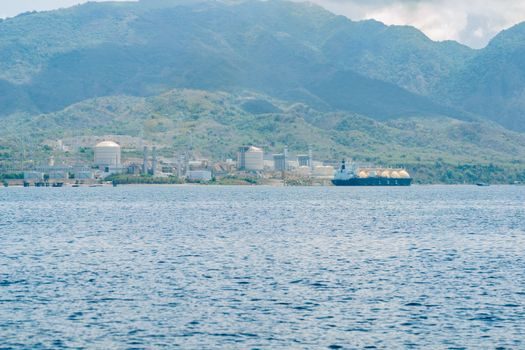
LNG-plant and -adjacent services are a documented growth area for filament-wound FRP/GRP, leveraging its cryogenic-friendly low thermal conductivity, light weight for offshore-module integration, and corrosion resistance against chloride-bearing seawater cooling and firewater [S1]. Chemical plant FRP is widely used for HCl, NaOH, brine and bleach headers, where the same supply capability of 200,000 pc/month reflects the depth of the Chinese and Asian manufacturing base [S1].
Seawater cooling, desalination intake and outfall lines are now a default FRP application because the alternative — coated or rubber-lined carbon steel with cathodic protection — has a lifecycle cost penalty. In civil rehab, externally bonded GFRP and CFRP plates strengthen existing bridge girders and floor slabs, with ultrasonic C-scan and L-scan imaging used to verify the concrete/GFRP interface bond before the structure is returned to service [S3].
One concrete example from the research: C-scan imaging can detect debonded zones between a GFRP plate and the concrete substrate, and the same scanning approach is used to check repair quality on FRP-strengthened columns, beams, slabs and walls [S3].
Inspection, Codes and Field Acceptance
FRP field acceptance relies on visual, dimensional and hardness checks plus a hydrostatic test at 1.5× design pressure (or per the governing code). Codes most commonly cited are ASME B31.3 for process piping, AWWA C950 for water transmission, ASTM D2992 and ASTM D3517 for the pipe itself, and ASTM D2583 for Barcol hardness verification of cure. For external strengthening of concrete, ACI 440.2R governs design and ACI 440.2M governs field installation of CFRP/GFRP systems [S2].
For chemical-service pipe, the long-term cyclic pressure rating is typically established by ASTM D2992 Procedure A or B (10 000-hour regression analysis), with the manufacturer's published pressure-rating tables derived from that dataset. Field jointing uses butt-and-wrap, socket-and-laminate, or flanged connections, with the laminate schedule matching the pipe class — a 10-bar pipe laminate is not interchangeable with a 16-bar schedule. Process instrumentation on FRP lines still uses standard pressure transmitter and flow meter hardware, but the impulse lines and fittings are often FRP too, with chemical isolation handled at the diaphragm seal.
Failure Modes and Limits Engineers Should Plan For

Common failure modes for in-service FRP are: (1) blistering or delamination of the corrosion liner due to chemical attack past the resin's rated envelope; (2) joint leakage from inadequate wrap or cure during field jointing; (3) axial cracking from support spacing that exceeds the manufacturer-published value, especially on hot service; (4) UV/weathering degradation of the outer surface without a maintained topcoat; (5) impact damage from dropped tools or forklift strikes on exposed pipe. Inspection should target these modes — visual and Barcol hardness for surface cure, ultrasonic or acoustic emission for through-wall delamination, and coupon testing for chemical resistance on aged or suspect pipe. [S1]
Spec boundary in one line: FRP is the default for low-to-moderate temperature, highly corrosive, electrically sensitive service, and it is the wrong pick for high-temperature, fire-rated, vacuum-without-stiffener, or pure hydrocarbon-permeable service without a verified liner. For LNG-adjacent lines it pairs well with industrial valve bodies in corrosion-resistant alloys, where the FRP runs the line and the metal handles the trim and seat duty [S1].
Trackable signals to watch: published revisions to ASTM D2992 and AWWA C950 pressure-rating methodology, expanding LNG-module orders out of Asian fabricators with FRP/GRP skids [S1], and any move by AWWA or ASME toward higher-temperature FRP classes, which would shift the cost crossover with lined steel at the ~DN300 diameter band. Field ultrasonic imaging of the concrete/GFRP bond will also become more routine as the bridge-rehab market ages its first generation of externally bonded composite plates [S3].
For related coverage, see Eye Wash Station Advantages and Disadvantages: Spec, Compliance, and Cost Map.