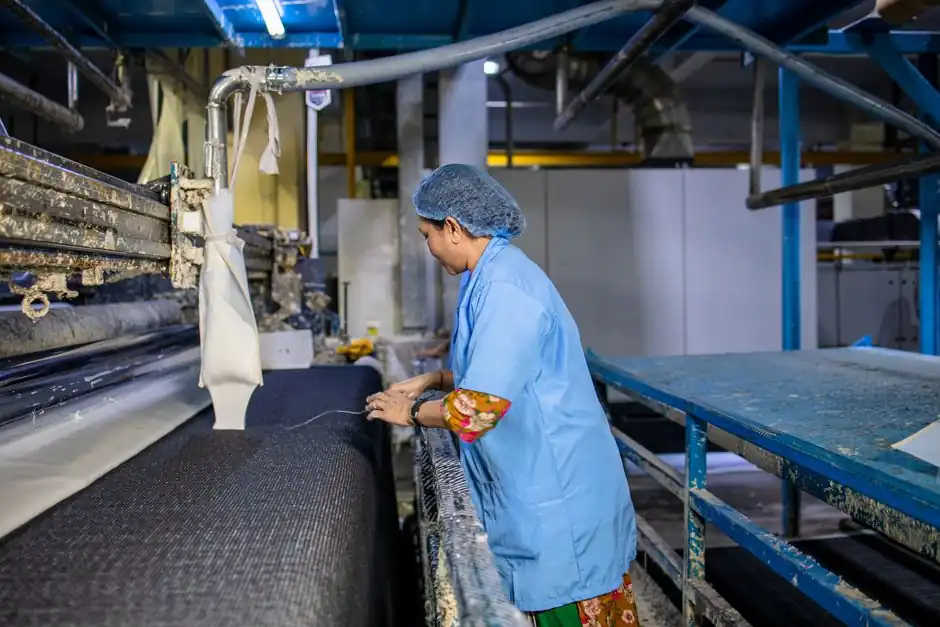
Plant-floor industrial Ethernet deployments must satisfy both IEEE 802.3 electrical performance and the environmental severity levels defined in IEC 61918, with shielded Cat6A (F/UTP or S/FTP, 500 MHz, 10GBASE-T to 100 m) acting as the de-facto minimum baseline for new Industry 4.0 builds [S3].
The 2026 procurement reality is straightforward: roughly 72% of unplanned industrial network downtime traces back to OSI Layer 1/2/3 faults, so specifying the right cable construction (conductor, jacket, shielding, connector) and the right code compliance (UL, CE, ATEX, IEC 60332-1, NEC Article 800) is a production-continuity decision, not a commodity purchase [S1][S3].
IEEE 802.3 vs IEC 61918: Two Standards Stacks, One Cable
IEEE 802.3 governs the electrical layer: signaling, bandwidth, and protocol. Cat6A channels must support 10GBASE-T to 100 m at 500 MHz, with maximum channel insertion loss of 20.9 dB at 100 MHz and a permanent-link cap of 90 m to leave 10 m for equipment and patch cords [S3]. Power over Ethernet under IEEE 802.3bt Type 4 pushes up to 90 W down the same twisted pair, which is why thermal derating inside the jacket now matters as much as crosstalk.
IEC 61918 layers on top of IEEE 802.3 the environmental severity that an office-grade patch cord cannot meet: EMI from variable-frequency drives, oil splash, UV, drag-chain flexure, and ambient temperatures that regularly exceed 60°C. A commercial Cat6 patch cord rated for 60°C can fail within months in a stamping cell running at 75°C ambient, which is why IEC 61918 is treated as the binding reference for harsh zones rather than a recommendation [S3].
Companion standards fill the gaps: TIA-568.2-D sets the balanced twisted-pair performance classes (Cat3 through Cat8) and alien-crosstalk margins; ISO/IEC 11801-3:2017 defines industrial premises classes EA through FA and fiber grades OM1 through OM5 plus OS1/OS2; NEC Article 800 and NFPA 79 govern installation, plenum (CMP) and riser (CMR) listings, and hazardous-location markings; and ANSI/TIA-942-B applies where edge-compute closets anchor the OT network [S3].
Copper Category Comparison for Plant Floors
Category rating controls both bandwidth and headroom for PoE. Cat5e (100 MHz, 1 Gbps) remains acceptable for general sensor and low-speed I/O links, but the procurement trend in 2026 is to skip it on new runs and step straight to Cat6A, because the same cable covers 1G today and 10G uplinks tomorrow without re-pulling [S2][S3].
Concretely: Cat6 runs 250 MHz and 10 Gbps to 55 m, suitable for short vision-system links; Cat6A runs 500 MHz and 10 Gbps to the full 100 m channel and is the recommended industrial baseline where EMI is moderate; Cat7 runs 600 MHz with full shielding and GG45 or TERA terminations, mostly confined to data-center-on-plant-floor applications rather than typical cell-level cabling [S2].
Shielding Construction: From UTP to S/FTP

Shielding class is the single biggest determinant of survival near VFDs, welding inverters, and large motor starters. Unshielded (UTP) is only acceptable in clean, climate-controlled panels; on the plant floor, expect noise. FTP adds an overall foil and handles moderate EMI; STP adds individual pair foil plus an overall braid and is the minimum for motor-control centers; S/FTP adds a second shield layer and is the go-to for high-noise cells [S2][S4].
The numerical target is concrete: industrial-grade cable should deliver shielding effectiveness above 100 dB and braid coverage above 85%, with controlled pair twist pitch (tolerance under 1 mm) and characteristic impedance held to 100 Ω ±2% per IEC 61158, so that bit error rate stays under 10⁻¹² even in field strengths of 600 V/m [S4]. A floating shield acts as an antenna and makes the noise worse, which is why shield continuity and bonding to building ground per NEC Article 250 is non-negotiable [S3].
Jacket, Flex, and Connector Ratings
Jacket material sets the chemical and thermal envelope. PVC (≈ -20°C to +80°C) is the cost baseline but offers low oil resistance; PUR (≈ -40°C to +90°C) is the workhorse for oil, abrasion, and UV exposure and pairs naturally with IP67 M12 connectors; TPE (≈ -40°C to +105°C) covers cold-flex and high-heat cells; LSZH (≈ -20°C to +75°C) is required in confined spaces where low smoke and zero halogens matter for personnel safety [S2].
Mechanical ratings translate directly into MTBF. High-quality industrial cable sustains over 10 million bend cycles at a 5× cable-diameter bend radius and 80 N continuous tensile load without performance loss, and a German automotive assembly case showed annual robot-cable failure rates falling from 15% to under 0.5% after such cables were specified, recovering more than 60 hours of uptime per line per year, roughly €100,000 in avoided cost [S4]. Drag-chain and robotic applications should also be specified to a flex-cycle rating above 1 million cycles [S2].
Connectivity follows the environment. RJ45 with a positive lock is acceptable inside enclosures; outside the cabinet, the default is M12 or M8 circular connectors coded for data (D-coded for 100 Mb, X-coded for 10 Gb) at IP65, IP67, or IP68 ratings matched to washdown, dust, and temporary immersion exposure [S2][S4].
Environmental Severity, Hazardous Locations, and Certifications

Plants are not uniform. IEC 61918 maps zones by mechanical, chemical, climatic, and electromagnetic severity, and a cable listed for Zone 1 in a paint shop is not the same as one listed for an outdoor cabinet. Common benchmarks engineers verify: signal attenuation below 0.5 dB per 100 m across -40°C to +85°C, with 95% relative humidity tolerance; oil resistance to at least 1000 hours; chemical immersion survival at pH 3 to pH 11 for 168 hours; IP67 protection with PUR jacket to cut the roughly 30% of signal interruptions that trace back to environmental ingress [S4].
Codes and listings are the audit trail. Fire performance is covered by IEC 60332-1 (single-cable flame retardant), CM/CMR (general/riser), CMP (plenum), and FT4 (Canadian vertical flame). Hazardous locations in oil and gas or chemical plants require Class I Division 2 or ATEX-zone-rated cables with the appropriate markings [S2]. Manufacturer certifications worth requiring on the data sheet: UL, CE, RoHS, plus ATEX or IECEx where explosive atmospheres exist, and A Fortiori Bilbao's case data shows that switching to PUR-jacketed, IP67 cable in coastal port automation lifted component MTBF by roughly 300% versus legacy cabling [S4].
Who Industrial-Grade Cabling Is For, and Where Standard Cable Still Fits
Industrial-grade Cat6A with S/FTP shielding, PUR jacket, and M12 X-coded connectors is the right call for any cell with VFDs, motor starters, robotic welders, drag chains, oil splash, ambient above 60°C, or washdown cleaning; that is, the majority of a discrete-manufacturing or process plant floor, and it lines up with the cabling described in our ruggedized plant-floor Ethernet guide for Industry 4.0 [S3][S4].
Commercial-grade Cat6 patch cords remain acceptable inside sealed control panels, in climate-controlled operator cabins, in office-to-cabinet patch fields, and in any link that stays inside the NEC-defined plenum/riser envelope without chemical or mechanical abuse. The mistake is to use them at the cell edge, where temperature swings, vibration, and EMI make them the leading root cause of OT network faults [S1][S3].
Procurement Checklist: What the Data Sheet Must Show
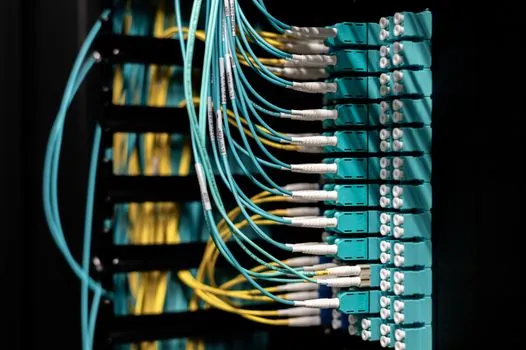
A 2026-compliant industrial Ethernet cable data sheet should list, at minimum: category and frequency (Cat6A, 500 MHz); 10GBASE-T support to 100 m; construction (F/UTP, S/FTP, or S/FTP with braid coverage ≥85%); characteristic impedance 100 Ω ±2% per IEC 61158; shielding effectiveness ≥100 dB; jacket material and temperature range (PUR, -40°C to +90°C typical); oil resistance rating (≥1000 h); flammability listing (IEC 60332-1, CM/CMR/CMP/FT4 as applicable); connector IP rating (IP65, IP67, or IP68); flex-cycle rating (>1 million for drag chain, >10 million for high-flex); and certifications (UL, CE, RoHS, plus ATEX/IECEx for hazardous zones) [S2][S3][S4].
Trackable signals to watch: formal adoption of IEC 61918 severity-level mapping into EPC cable schedules (currently inconsistent across system integrators), the spread of M12 X-coded 10 Gb connectivity into brownfield cells previously limited to 100 Mb D-coded, and a measurable reduction in Layer 1 fault tickets as PUR-jacketed S/FTP Cat6A replaces legacy PVC Cat5e in food-and-beverage and automotive cells. For adjacent selection logic that follows the same spec-driven approach, see our walkthrough on mounting and wiring best practices for vibratory feeders.
For the relevant spec sheets and selection criteria, see additive manufacturing material, air quality monitor, and power quality analyzer.