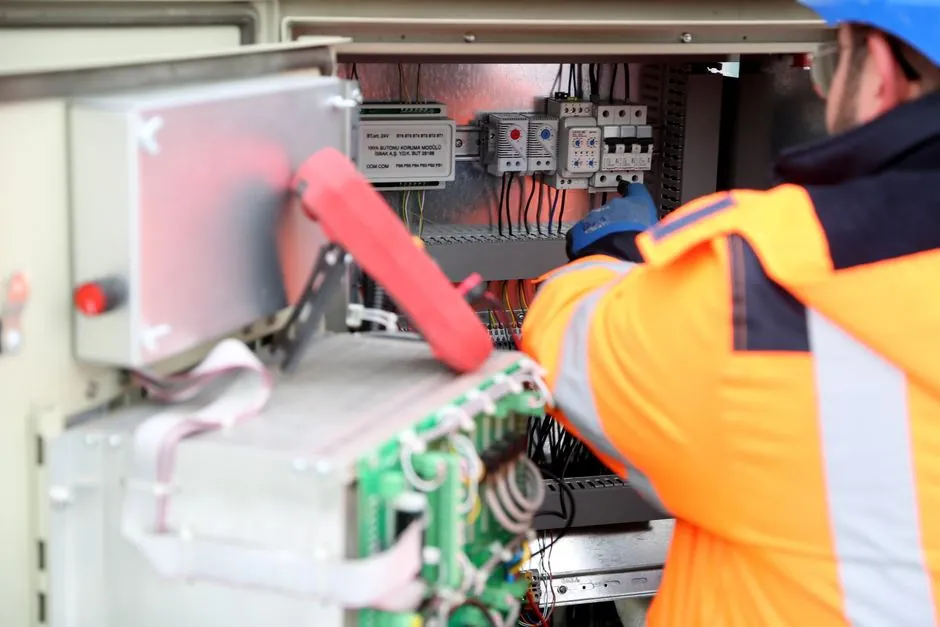
Circuit breaker TCO is calculated as initial cost plus operation, maintenance and downtime costs, less residual value, covering the asset life cycle rather than the invoice price alone [S3].
The comparison is practical for facilities, procurement and plant electrical teams deciding among circuit breakers, fuses and protection-system designs, including initial engineering, commissioning, inspection, replacement and production-loss exposure [S1][S7].
What Circuit Breaker TCO Actually Measures
A complete circuit breaker TCO covers every ownership phase from acquisition through replacement or upgrade, including purchasing and operating costs rather than only the product price [S1]. A workable structure is TCO = I + O + M + D - R, where I is initial cost, O is operation and installation, M is maintenance, D is downtime and R is residual value [S3].
For circuit breakers, I should include the breaker, accessories, enclosure or panel modifications, shipping, taxes and engineering. O should include installation, protection coordination, testing and commissioning. M should cover inspection, thermal-imaging checks, trip-event investigation, parts and preventive maintenance. D must reflect lost production, labor and supervisory exposure when an interruption affects operations. R is the remaining value at the end of the selected ownership term [S3].
Mitsubishi Electric states that TCO analysis can be used to validate or exclude design variations for a data-center UPS over a specified time.
Cost Drivers That Move the Price
Breaker hardware is only the visible component of capital cost. Installation complexity can add more than the unit price through enclosure work, cable sizing, busbar changes, labor and commissioning, while engineered protection features add certification, coordination and documentation costs [S3][S4].
Volume tier changes the unit price, but it does not establish the lower TCO. A lower-cost breaker that requires more panel space, larger cable, additional accessories or additional testing can carry a higher installed cost.
For industrial buyers, the applicable circuit protection standards and site rules should be confirmed against the exact ratings, installation method and application before pricing is accepted.
Maintenance and Testing Must Be Counted
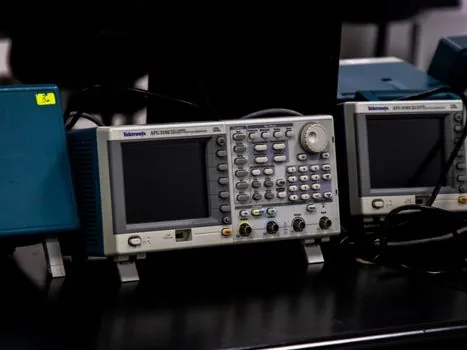
Maintenance is a recurring TCO component, not a discretionary add-on. Eaton's fuse-versus-circuit-breaker ownership example uses a qualified testing and engineering rate of $80 per hour and 19 hours per year, producing $1,520 in annual maintenance cost for the circuit-breaker equipment [S7].
That calculation demonstrates the labor sensitivity of preventive work: every additional hour changes the annual amount by $80, while a two-year interval doubles it to $3,040 before parts or travel. Apply the actual site's test duration, labor rate, travel policy, outage plan and thermographic scope rather than reusing the example as a universal rate [S7].
Labor can be reduced through design choices.
Circuit Breaker versus Fuse: Decision Comparison
Compare protection options against installation, interruption lifecycle, maintenance labor and operational disruption. Circuit breakers provide resettable protection and can reduce recurring replacement work, while fuses remain simple sacrificial elements with no reset function. The commercial choice still depends on fault-current duty, coordination, accessibility and plant maintenance capability. [S3]
For the criterion of maintenance labor, Eaton's example assigns the circuit-breaker option 19 testing or engineering hours per year at $80 per hour, or $1,520 annually [S7]. For capital and installation, count the breaker or fuse, holder or panel changes, wiring, protection coordination and commissioning. For interruption consequences, use the affected load and production value rather than a generic outage rate. For replacement exposure, compare the frequency and difficulty of restoring protection after an operation.
The comparison should not treat a lower acquisition price as decisive. Total cost includes direct and indirect costs over the asset life cycle, including maintenance, support, installation and opportunity cost from downtime [S2][S3]. For the physical protection component, the circuit breaker specification should be checked against the protection function, coordination study and installation arrangement.
Downtime and Production Loss Dominate High-Criticality Loads
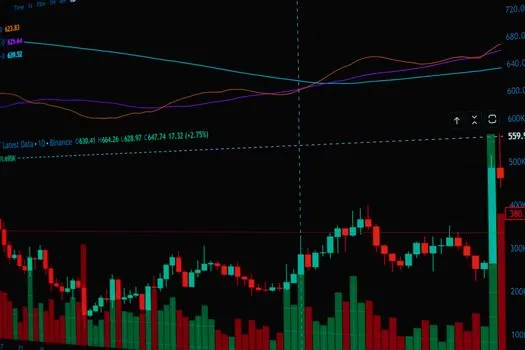
A structured downtime input can use critical load in kilowatts, lost hours per event, annual event frequency, contribution margin per kilowatt-hour, restart labor and supervisory hours, plus customer or contractual penalties [S3]. Use event-specific evidence where available, such as the breaker trip record, incident reports, repair logs and production-restoration records.
Residual value must be treated consistently. It is the value remaining after a predetermined ownership period, and its deduction lowers TCO [S3]. Do not assign the same residual percentage to a new thermal-magnetic breaker and an older molded-case breaker without supporting market or asset-condition evidence. A defensible model records age, condition, installed base, useful remaining life and expected reuse or disposal route.
Where Circuit Breaker TCO Applies Best
Circuit breaker TCO is for asset owners, design engineers, procurement teams and maintenance planners who must compare protection alternatives over a defined period. It is particularly useful where outages affect production, equipment condition, data centers, transport systems or critical services [S3][S4].
It is not a substitute for protection coordination, fault analysis or code compliance. A low-TCO breaker with an unsuitable interrupting rating, inadequate short-circuit withstand or incompatible accessories can create safety and availability risks that are not valid savings. The industrial relay and contactor functions should be separated from the breaker itself so that each item's scope and replacement cycle can be priced.
A simple manual model can work for a small panel, but a spreadsheet or maintained calculator is more suitable for fleets of breakers. The International Council on Clean Transportation provides an interactive TCO calculator for a different asset class, with adjustable inputs for purchase price, maintenance, infrastructure life, residual value and analysis period, demonstrating the value of exposing assumptions rather than hiding them inside one price [S5].
Build a Comparable, Auditable TCO Model

Lock the analysis period, discount rate, currency, labor rate and outage assumptions before comparing bids. TCO is a life-cycle calculation that supports direct comparison of two or more assets, so changing assumptions between options creates a false cost advantage [S4].
Record three cost layers for every option: CAPEX, OPEX and avoided risk. CAPEX includes the breaker, panel changes, installation, testing and engineering. OPEX includes inspections, maintenance, parts, energy associated with any powered accessories and replacement work. Avoided risk includes reductions in downtime, labor and temporary protection arrangements. Mitsubishi Electric classifies a complete critical-power TCO into reduced first cost, improved airflow, cable and installation effects, conductor reduction and breaker-count reduction among its assessed items [S4].
Track four outputs after approval: TCO in present-value terms, cost per protected circuit, annual maintenance hours and cost per hour of avoided downtime. A practical next review point is the end of the first 12 months of operation, when actual trip events, test hours, corrective work and outage losses can replace estimated assumptions.