The total cost of ownership for a surge protective device extends beyond its purchase price to include installation, maintenance, failure response, downtime, replacement and end-of-life disposal [S1][S5][S8].
Because the price of installing an adequate surge protective device is relatively small compared with the potential costs of electrical failures, equipment damage, troubleshooting, downtime and ongoing maintenance over a building's life, a construction saving on protection can create a larger operating expense later [S3].
What Surge Protective Device TCO Includes
Surge protective device TCO is the sum of acquisition and operating costs across every ownership phase, including purchase, installation, operation, preventive and corrective maintenance, software or component updates, replacement, upgrades and disposal [S1][S8].
The calculation should also record avoided failure costs rather than treating them as a generic contingency. Relevant avoided-cost categories include service calls, diagnostic work, labour, replacement of sensitive electronics, equipment downtime, emergency repairs, operational disruption and premature replacement of electrical equipment [S3].
A practical total-cost model uses the structure: TCO = Acquisition Cost + Operating Cost + Maintenance Cost + Disposal Cost + Hidden Cost, with preventive and corrective costs separated for management review [S8]. For surge protection, the hidden-cost category should include failures that interrupt building or production operations and the labour needed to diagnose them [S3][S8].
Purchase Price Is Only One Cost Driver
Residential installation pricing provides a broad benchmark of USD 200–800 for a whole-house surge protector including the device and professional installation, but this figure is not a valid industrial SPD budget [S6].
A higher price may reflect higher surge-current capacity, broader protection modes, coordination, enclosure, certification, monitoring or installation requirements rather than a simple product markup.
Other acquisition drivers include the number of protection stages, required current ratings, installation labour, cabinet space, cable routing, coordination with existing circuit breakers, and engineering or power-quality survey work. TCO should also include owner training, spare parts, planned replacement, and disposal or recycling at the end of service life [S1][S7][S8].
Type 1, Type 2 and Type 3 Options Compared

Type 1, Type 2 and Type 3 SPDs serve different protection scopes, so the lowest purchase price does not necessarily produce the lowest lifecycle cost. The global surge protection device market was valued at USD 3.10 billion in 2025, is projected to reach USD 3.34 billion in 2026 and is forecast to expand to USD 7.01 billion by 2036 at a 7.7% CAGR [S4].
Rising power-quality disturbances across industrial and commercial facilities, together with grid-modernization investments in emerging economies, are driving procurement cycles for advanced surge-protection hardware [S4]. A more complete comparison of Type 2 SPD advantages, limits and selection criteria can support panel-level decisions, but the correct choice must follow the facility exposure and equipment risk.
Who Benefits From SPD TCO Analysis
SPD TCO analysis is for owners, facility managers, electrical engineers, procurement teams and insurance or risk functions that control both capital expenditure and operating budgets. Chaffey applies total cost of ownership primarily to initial and ongoing operating costs in its facilities and technology planning and budgeting [S1].
The method is less suitable for a purchase made without defined equipment exposure, installation conditions or operating consequences. A low-risk single-office load with no sensitive electronics does not justify the same protection architecture as a healthcare facility, data centre, manufacturing line or building with an outdoor surge protector installation.
For owners, the comparison is between a contractor’s project-price saving and a 10-, 20- or 30-year operating obligation. For engineers, the key output is not merely a lower bid but a defensible architecture linking transient exposure, circuit breakers, distribution equipment and protected loads [S3].
Installation, Maintenance and Downtime Shape TCO
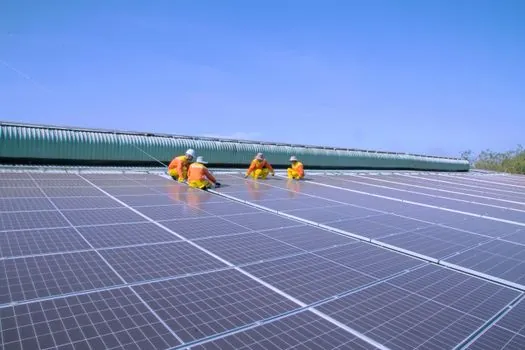
Installation labour is not a minor accessory to SPD TCO because a device with correct ratings can still add little value if it is installed with unsuitable conductors, long lead lengths, poor bonding or no coordinated upstream protection. TPD lists service-entrance and distribution-panel solutions as industrial solution categories [S2].
Maintenance and inspection should cover device condition, replacement intervals, replacement parts and the labour needed to isolate and restore affected circuits. The potential cost of omitted or inadequate surge protection includes electrical failures, equipment damage, troubleshooting, downtime and ongoing maintenance over a building's life [S3].
Total cost therefore combines acquisition, installation, inspection, repair, replacement, disposal and downtime. Where sensitive equipment or business interruption dominates, labour and lost operations can outweigh the hardware price. The economic case should be recalculated whenever an asset is upgraded, a production line changes, occupancy rises or a facility adds networked and electronic controls.
Failure Avoidance Changes the Purchase Decision
Three catastrophic electrical failures at southern Ontario facilities were linked to inferior or inadequate surge protection; in one case, reduced or omitted SPD protection was followed by electrical maintenance issues within the first year, and the expected payback on adding SPDs was under one year [S3].
The value of protection is strongest where the consequence model includes diagnostic labour, replacement electronics, emergency repairs and operational disruption. A building-owner decision should therefore compare the SPD package against a documented failure history, not against the SPD invoice in isolation [S3].
Three cost inputs need separate treatment: an event frequency estimate, an average consequence per event, and the protection effectiveness assumed for the selected architecture. The calculation should avoid assigning a universal savings figure without site evidence, because exposure, response time and equipment mix differ by facility [S1][S3].
Standards, Documentation and Procurement Evidence

IEC 61643 is the governing SPD product and application-series reference identified for coordinated protection architectures, while Type 1, Type 2 and Type 3 classifications distinguish different installation roles [S4]. Procurement files should record the applicable device type, voltage system, surge-current or charge requirements, protection modes, short-circuit withstand data, connection method and coordination assumptions.
A complete tender comparison should request separate prices for the SPD, enclosure or DIN mounting, installation labour, power-quality survey, commissioning, documentation, training, warranty and replacement terms. One further line should value inspection and test labour, another should record end-of-life disposal, and the final total should reconcile with the owner’s approved asset life [S1][S7][S8].
For baseline market context, the global SPD market was valued at USD 3.34 billion in 2026 and is forecast at USD 7.01 billion by 2036, a 7.7% compound annual growth rate from 2026 to 2036 [S4]. Market growth does not prove a project return, but it confirms that surge protection is a specified infrastructure category rather than an occasional commodity purchase.
Building the Business Case
The strongest SPD business case combines a documented asset-life period, current failure and maintenance data, the protected-equipment inventory, expected installation labour, disposal cost and a transparent avoided-loss model. This approach also supports vendor comparison because all proposals can be evaluated over the same 10-, 20- or 30-year horizon rather than at purchase order value alone [S1][S3][S5].
Track three signals after installation: the frequency of transient events and protective-device status indications, the number and cost of equipment failures and service calls, and changes in downtime, labour and replacement spending. If failure costs or critical-equipment exposure change, recalculate TCO using the same acquisition, operating, maintenance, disposal and hidden-cost structure [S1][S7][S8].