
Industrial Ethernet switches are classified into four management levels: unmanaged, lite-managed, Layer 2 managed, and Layer 3 managed devices, with selection determined by network complexity, port speed, environmental exposure, redundancy, and security requirements [S2][S5].
Industrial versions are built for manufacturing, railway, power utilities, oil and gas, and intelligent-transportation networks, with features suited to demanding industrial environments [S5][S7].
Industrial Switch Definition and Management Levels
An industrial Ethernet switch connects controllers, PLCs, sensors, HMIs, robots, cameras, and other Ethernet equipment while forwarding frames toward their intended destinations using learned MAC addresses [S2]. Unlike an Ethernet hub, which repeats traffic to every connected port, a switch directs traffic rather than flooding it indiscriminately [S2].
Unmanaged models provide basic connectivity with minimal configuration, while lite-managed models add functions such as port-based VLANs, basic QoS, port monitoring, SNMP monitoring, or web-based configuration [S2][S5]. Fully managed Layer 2 switches add operational capabilities including VLANs, advanced QoS, access control lists, network monitoring, and redundancy protocols, while Layer 3 managed models add routing functions for wider OT network segmentation [S2][S5].
The four-level industrial classification is explicit: unmanaged, lite-managed, Layer 2 managed, and Layer 3 managed [S5]. This management-level model is more useful for procurement than treating “industrial” as a single product category, because two DIN-rail switches can differ by an entire control plane.
Management Options Compared by Control and Complexity
Unmanaged switches are the simplest option, requiring no configuration and minimizing installation effort, but they provide little visibility and normally omit VLANs, QoS, traffic monitoring, and network segmentation [S2]. They fit small, non-critical machine connections where basic frame delivery is enough, not a mission-critical OT segment that needs controlled access or rapid fault isolation [S2].
Industrial Ethernet switches are classified into four management levels—Unmanaged, Lite-Managed, Layer 2 Managed, and Layer 3 Managed—each suited to different network complexity, scale, and feature requirements [S5]. Layer 2 managed switches provide deeper control for switched Ethernet networks, while Layer 3 managed switches add routing and are better suited to scale, segmentation, and OT-to-IP connectivity [S2][S4][S5].
Industrial Ethernet switches are divided into Unmanaged, Lite-Managed, Layer 2 Managed, and Layer 3 Managed levels for different network complexity, scale, and feature requirements, with Layer 3 Managed switches providing inter-VLAN routing [S2][S5]. However, the more capable class also demands configuration, operational monitoring, security governance, and a qualified commissioning process [S2][S5].
Port Speed, Media, and Configuration Architecture
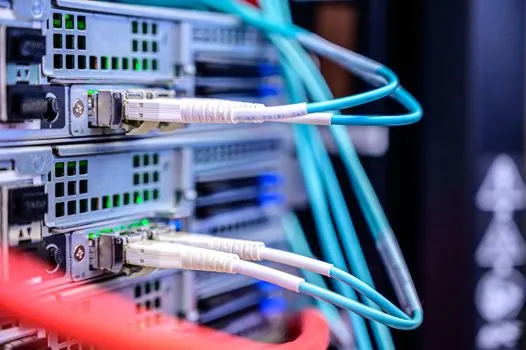
Auto-negotiation must also be checked during model selection, alongside the intended link rate and duplex mode [S6].
Form Factor and Environmental Qualification
Industrial Ethernet switches are available as DIN-rail, compact cabinet, 19-inch rack, field-installation, and application-specific forms, including railway and hazardous-area products [S1].
Environmental requirements can separate industrial equipment from office switches. Compared with commercial switches, industrial models may offer extended temperature ranges of -40°C to 75°C, dual DC power inputs, and metal enclosures [S5].
For substations and other critical infrastructure, selected products are designed against IEC 61850-3 and IEEE 1613, while railway applications may require EN 50155 qualification [S4][S5]. IEC 62443-4-2 is identified as an industrial cybersecurity criterion in industrial switch guidance, but certification alone does not replace network segmentation, access control, configuration control, or commissioning tests [S5].
Power over Ethernet and Redundancy Options
PoE combines data and power over the same Ethernet cable, reducing separate power wiring for compatible devices. Phoenix Contact states that one unmanaged PoE series can power up to eight end devices, illustrating why PoE port count and per-port power budgets belong in the switch schedule rather than being treated as a generic convenience feature [S4].
Industrial redundancy commonly includes MRP, RSTP, O-Ring, O-Chain, and G.8032 ERPS, with ring protocols supporting continued operation after a link or device failure [S5]. Phoenix Contact additionally identifies optional redundant power supplies on its high-port-density managed switch family, separating power redundancy from topology redundancy [S4].
A managed design is not automatically redundant, and an unmanaged switch can still use a suitable redundancy mechanism if its hardware supports one. Specify independently the topology protocol, recovery behavior, power architecture, bypass or restoration requirements, and monitoring method. The same applies to PoE: confirm supported port speed, power budget, and end-device class before installation.
Application Fit and Failure Constraints
Industrial switches fit machine cells, factory automation, robot and automated guided vehicle communication, machine vision, industrial IoT, SCADA access, power substations, rail systems, and intelligent transportation [S2][S5][S7]. Managed and unmanaged switches remain the two core procurement groups in transportation networks, but the required operational detail determines whether a lightly managed or fully managed model is justified [S7].
The main failure mode is not the Ethernet frame itself but loss of visibility, inappropriate segmentation, environmental mismatch, unsupported redundancy, or an unverified power budget. Commercial switches may fail around temperature extremes, vibration, humidity, dust, and electromagnetic interference, while industrial equipment can also be over-specified when advanced routing or monitoring is unnecessary [S2][S5].
The purchasing mistake to avoid is selecting by the label “industrial.” The defensible comparison is management capability against required traffic control, media and speed against connected equipment, environmental qualification against the installation site, and redundancy against the network’s tolerated outage [S2][S4][S5][S6].
Specification Checklist for Industrial Network Procurement
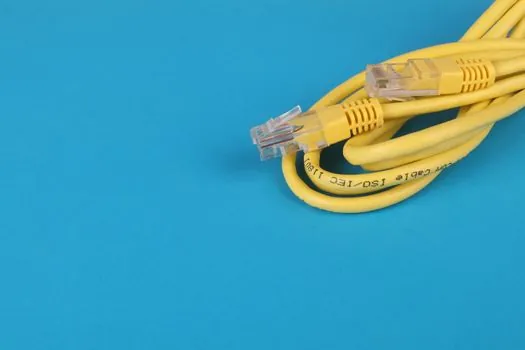
A complete switch specification should record management class, supported port speeds, copper and fiber port counts, uplink arrangement, DIN-rail or 19-inch mounting, enclosure protection, and operating-temperature range [S1][S2][S4]. The same schedule should state the power input range, redundant DC supplies, PoE budget, supported ring or spanning-tree protocols, VLAN and QoS requirements, and the security functions actually licensed or enabled [S4][S5][S6].
For 19-inch high-density installations, Phoenix Contact lists flexible port options, precise time-synchronization functionality through TSN mechanisms, compatibility with its 2000-series managed switches, and optional redundant power supplies on the 5900 series [S4]. For cabinet networks, its 2000, 2100, 2200, and 2300 families support DIN-rail mounting, while the 2600 and 2700 families provide IP67 versions for field deployment [S4].
Track three signals before approval: the exact environmental and certification requirements of the installation site, the device-level media and PoE requirements, and the network-management features needed for fault detection and segmentation [S4][S5][S6]. A pre-acceptance review should then verify every selected port with its intended endpoint, including copper, fiber, power, redundancy, and failure-recovery behavior.