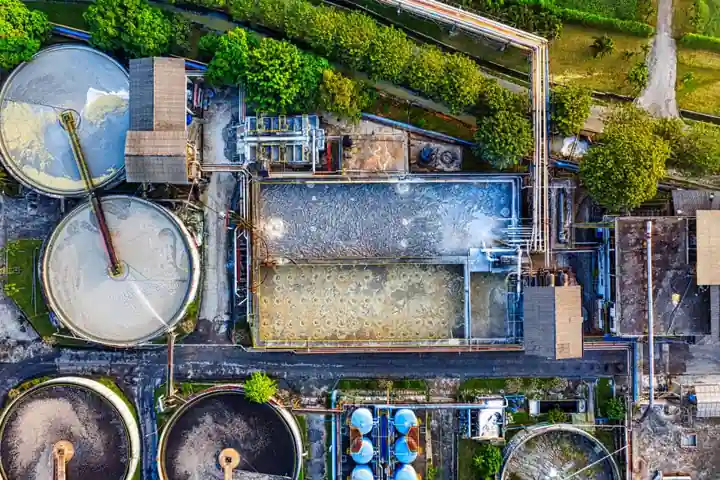
Global industrial filtration was valued at USD 39.65 billion in 2026 and is projected to reach USD 57.69 billion by 2034, a 4.80% CAGR, as high-purity semiconductor and pharmaceutical manufacturing supports demand [S1].
The semiconductor and electronics segment represented 6.6% of filtration demand in 2026, while rising industrial demand for high-purity filtration in semiconductor and pharmaceutical manufacturing was identified as a primary growth driver.
Filtration Market Value and High-Purity Demand
One market estimate places industrial filtration at USD 39.65 billion in 2026, rising from USD 37.83 billion in 2025 to USD 57.69 billion by 2034 at a 4.80% CAGR [S1]. A separate estimate gives USD 42.46 billion for 2026 and USD 54.66 billion by 2033, with a 4.3% CAGR, showing that published market definitions and forecasts differ materially [S4].
Liquid filtration dominated the industrial filtration market with a 58.4% share in 2024, while air filtration was projected to grow at a 7.2% CAGR from 2026 to 2034. Semiconductor and biopharma plants require high-purity depth and membrane filtration capsules, linking equipment selection to contamination control in critical process streams [S8].
Semiconductor and Electronics Segment
Semiconductors and electronics held a 6.6% share of the industrial filtration market in 2026, making high-purity filtration a defined demand pool rather than an unspecified theme [S2]. Cleanroom and high-purity filtration demand is rising across semiconductor, battery, and pharmaceutical production, with product selection driven by airborne particle control, process-liquid purity, and equipment protection [S7].
For semiconductor projects, industrial filter and HEPA or membrane filtration systems must be assessed against the contaminant class and the required cleanliness level rather than selected only by market growth. Industrial air filtration is segmented by dust-collection, fume-collection, mist-collection, HEPA, cartridge, baghouse, and other filters, with filter media including synthetic polymer, fiberglass, metal, activated carbon, nonwoven, and nanofiber and filtration technologies including mechanical, electrostatic, membrane, and nanofiber filtration.
That premium makes total cost of ownership, replacement frequency, and energy use more important than unit price alone.
Pharmaceutical Filtration Expands Beyond Equipment
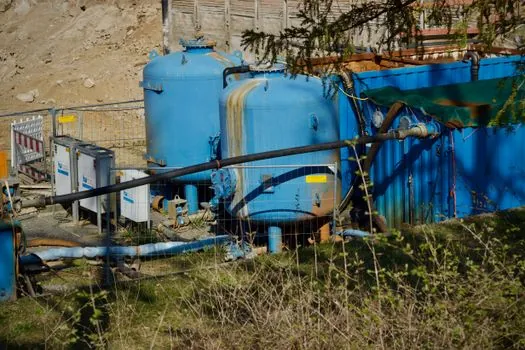
Pharmaceutical filtration was valued at USD 14.27 billion in 2026 and is projected to reach approximately USD 21.23 billion by 2035 at a 4.52% CAGR [S5]. The 2025 market value was USD 13.64 billion, confirming continued expansion through the 2026 estimate [S5].
Membrane filters held the largest product share in 2025, microfiltration led by revenue, and final product processing was the dominant application [S5]. Single-use systems are the fastest-growing product segment, while ultrafiltration is expected to grow significantly between 2026 and 2035 [S5]. These trends support demand for disposable processing assemblies and sterile filtration hardware as well as conventional reusable equipment.
For liquid-side process protection and clarification, bag filtration and depth filtration can address coarse particulate removal before membrane stages. The pharmaceutical specification should still define product compatibility, extractables, integrity requirements, and the validated process sequence, because market growth does not establish suitability for a specific drug or biologic stream.
Filter Technology Selection by Decision Criteria
Industrial filtration options must be compared across contaminant type, purity target, operating mode, and replacement economics. The market data identify mechanical, electrostatic, membrane, and nanofiber technologies, with HEPA and nanofiber formats gaining attention in high-purity applications [S3].
Non-woven media held a 44.7% share in 2026 within one broad filtration-market definition, supported by customization of fiber composition and weave pattern for prefiltration, deep-bed use, clarification, and polishing [S4]. For gases, membrane and electrostatic options can address different separation mechanisms, while high-purity semiconductor applications may justify HEPA or nanofiber formats rather than general-purpose media [S3].
Who Benefits and Who Should Not Generalize

Liquid filtration suits pharmaceutical water, product streams, cell separation, and solvent or process purification, while air filtration addresses cleanroom air, emissions, fumes, dust, and mist [S1][S3][S5]. The semiconductors and electronics segment held a 6.6% market share in 2026, while rising industrial demand for high-purity filtration in semiconductor and pharmaceutical manufacturing was identified as a primary growth driver.
The market is not appropriate for treating every liquid or gas stream as a high-purity application. General industrial facilities with particulate removal or equipment-protection needs can use media bags, cartridges, strainers, or conventional air filters, subject to flow, pressure, temperature, and compatibility data. High-purity systems become justified where contamination directly affects yield, batch quality, operator exposure, emissions compliance, or validated production [S1][S3].
Cleanroom and high-purity capacity can also alter project timing and equipment scheduling. The 2026 cleanroom construction pipeline is therefore a relevant upstream signal for filtration demand because cleanroom qualification depends on reliable air and process-water filtration rather than standalone filter placement.
Procurement and Operating Constraints
Filtration procurement must include operating conditions beyond the pore-size label. For liquid service, verify fluid compatibility, temperature, pressure, flow, particle load, viscosity, and required differential pressure. For air service, include face velocity, filter efficiency, media type, housing pressure drop, seals, and replacement access. A basket strainer or duplex strainer may handle upstream debris, but it does not deliver membrane-grade or HEPA separation. [S3]
Digital monitoring and predictive maintenance are entering industrial filtration, while consumables and regulatory-driven requirements remain central market drivers [S9]. This makes differential-pressure monitoring and filter-life data practical procurement fields, particularly where nanofiber media carry a 25–40% premium and extended service life is part of the economic case [S3].
Regional definitions also need care. North America held 41% of industrial air filtration in 2026, while Asia Pacific was the fastest-growing region because of electronics and pharmaceutical expansion [S3]. In a broader industrial-filtration estimate, North America held 39.6% and Asia Pacific held 36.1% in 2026 [S4]. These are separate market definitions, not directly additive shares.
Standards, Sourcing, and Traceable Signals
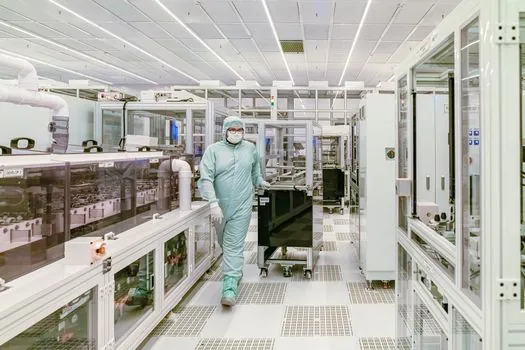
Pharmaceutical filtration projects require product- and process-specific controls, including cGMP and EMA GMP references for cleanroom filtration in the United States, Europe, and South Korea [S3]. Air-filtration purchases affected by occupational or ambient-air requirements may also involve U.S. EPA and OSHA mandates, while the European Union Industrial Emissions Directive is identified as a driver for industrial air-filtration investment [S3].
Supplier qualification should require traceable test data for the selected configuration, not a generic product family. For membrane cartridges, request integrity or compatibility information appropriate to the process; for HEPA media, request efficiency and leakage data; for bags or cartridges, request pressure-drop and service-life curves under representative loading [S3][S4]. Single-use pharmaceutical systems require documented extractables and material-contact information because disposable assemblies are becoming the fastest-growing product group [S5].
Trackable demand signals for 2026 include the 6.6% semiconductor and electronics share, the pharmaceutical segment's 8.1% projected CAGR, HEPA's identification as the fastest-growing air-filtration product, and the single-use systems' lead among pharmaceutical filtration growth areas [S1][S2][S3][S5]. Confirm these market figures against the chosen research scope before using them in a capital plan, since competing 2026 industrial-filtration estimates range from USD 39.65 billion to USD 42.46 billion [S1][S4].