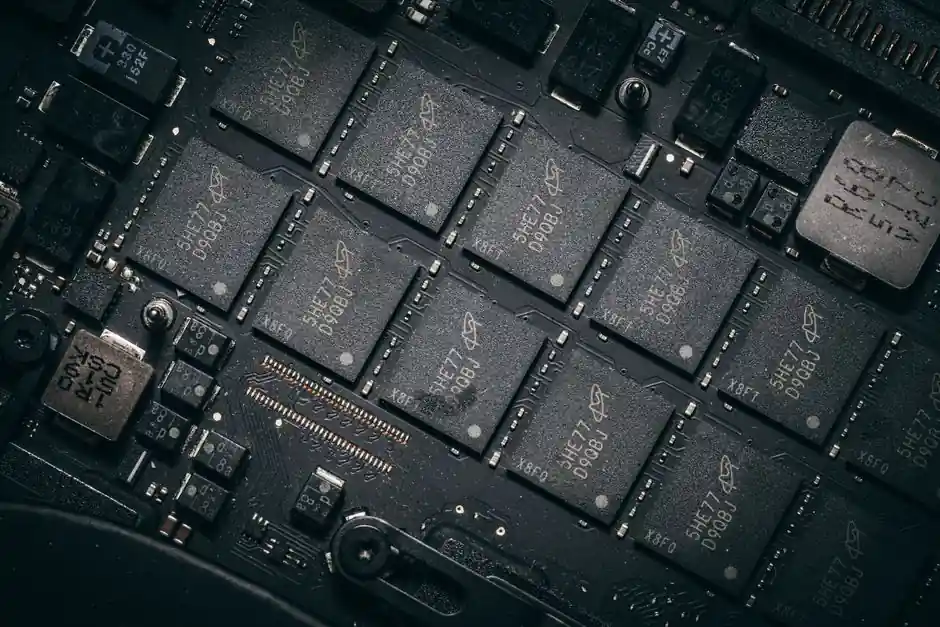
The cleanroom construction market reached USD 7.73 billion in 2026, up from USD 6.94 billion in 2025, and is projected to grow to USD 11.74 billion by 2030 at an 11.0% CAGR, driven primarily by semiconductor fab programs and pharmaceutical-biotech sterile capacity additions [S2][S3].
On the semiconductor side, the narrower cleanroom-construction-for-semiconductor segment is valued at USD 1.83 billion in 2026, with a 3.9% CAGR through 2035 reaching USD 2.58 billion, while the broader cleanroom technologies market is sized at USD 10.12 billion in 2026 with a 6.84% CAGR to USD 18.35 billion by 2035 [S1][S4]. Eighteen new semiconductor fab construction projects were scheduled to break ground in 2025, including 15 × 300 mm and 3 × 200 mm facilities across the Americas, Japan, China, Europe, the Middle East, Korea, Southeast Asia, and Taiwan, the largest single-year construction pipeline since 2021 [S1].
Semiconductor Capacity: ISO 4 Pipelines and Fab-Ready Schedules
Semiconductor fab cleanrooms are predominantly specified to ISO Class 4-6, with the US CHIPS Act alone having created USD 52 billion in incentives that translate to roughly 3 million sq ft of new cleanroom footprint across announced US projects, the bulk of it targeting ISO Class 4 conditions for advanced-node wafer processing [S1][S5]. Global front-end fab equipment spending is projected to reach USD 130 billion in 2026, an investment cycle that operates 12-24 months ahead of tool installation, which means cleanroom-ready facilities must be commissioned before tools arrive, a sequencing reality that has reshaped how contractors scope and price work [S1].
Exyte led the cleanroom-construction-for-semiconductor market with over 11% share in 2025, and the top five players, Exyte, AES Clean Technology, SKAN Group, Jacobs Solutions, and Clean Room International, collectively held 38% market share, indicating a moderately concentrated competitive structure rather than a fragmented one [S1]. Asia Pacific remained the largest regional market for cleanroom construction in 2025, with the Middle East and Africa identified as the fastest-growing region in GMI's 2026-2035 forecast window [S1][S2].
Pharmaceutical and Biotech: Aseptic Capacity and Modular Adoption
Pharmaceutical and biotechnology applications together account for an estimated 34% of the broader cleanroom technologies market in 2025, the largest single end-use share, and are pulling demand for ISO 5-8 (Grade A-D) controlled environments across sterile fill-finish, cell and gene therapy, and vaccine manufacturing lines [S3][S4]. The UK biotech sector attracted USD 4.4 billion (GBP 3.5 billion) in investment during 2024, a 94% year-on-year increase, providing one quantified signal of the capital flowing into facilities that will require validated cleanroom envelopes [S3].
Modular and reconfigurable cleanrooms are the fastest-growing deployment model within the technologies stack, even though traditional stick-built construction still held roughly 44% of the 2025 share, a gap that is expected to compress over the 2026-2035 forecast as biopharma and electronics clients prioritize shorter installation windows and easier re-validation [S4]. The HEPA/ULPA filtration and air-handling unit (AHU) segment held approximately 30% of the cleanroom technologies market by product in 2025, reflecting how much of the project budget is consumed by airside equipment regardless of whether the envelope is stick-built or modular [S4].
Cost Per Square Foot and What Drives the Budget
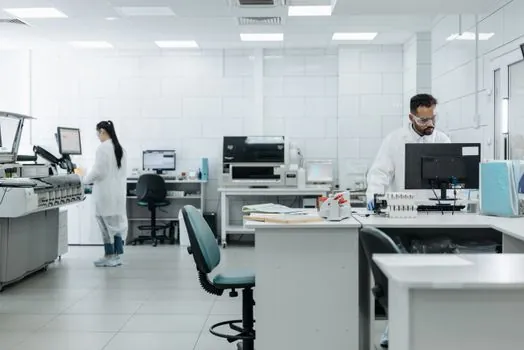
Semiconductor cleanrooms at ISO 4 and stricter classes typically run USD 2,500 to USD 7,500 per square foot, with HVAC and filtration packages alone accounting for 35-55% of the total project budget, a ratio that explains why modular delivery, which compresses field labor for the airside, has become a default option for schedule-constrained fab programs [S6]. Within the broader modular cleanroom solutions market, the segment is estimated at USD 355.57 million in 2026 and is forecast to expand at a 12.7% CAGR, a growth rate that runs ahead of the overall cleanroom construction market's 11.0% CAGR [S8].
Terra Universal, AES Clean Technology, Jansen Cleanrooms and Labs, GCS, and AdvanceTEC (acquired by Equans late in 2025) are among the firms that have pushed modular component launches and full modular system improvements through 2025-2026, a competitive signal that prefabrication is moving from a niche option toward a default procurement route in both US semiconductor and life-science programs [S5]. Air handling and filtration budgets scale non-linearly with cleanliness class, so a spec change from ISO 7 to ISO 5 can shift the airside scope enough to change the project's modular-vs-stick-built decision on its own.
Decision Matrix: Modular vs Stick-Built by Application
For an engineer weighing the two dominant delivery models, the relevant criteria are installation window, reconfiguration frequency, validation burden, and class ceiling. Modular cleanrooms win on installation window, typically cutting field time by 30-50% versus stick-built for comparable ISO 7-8 footprints, and on reconfiguration frequency, since panelized systems can be demounted and re-validated, advantages that show up most clearly in biotech and clinical-trial-scale operations [S2][S4][S7].
Stick-built construction still wins on very large footprints (above roughly 50,000 sq ft), on the tightest ISO 3-4 semiconductor specifications where monolithic slab and ceiling spans matter, and on projects with unusual structural or vibration-isolation requirements, since panelized systems can introduce thermal or acoustic bridges that the cleanest specs do not tolerate [S1][S4][S6]. For ISO 6-8 (Grade C-D) footprints, which represented about 40% of the cleanroom technologies market by class in 2025, modular has become the default in the 2026 procurement cycle, while ISO 4-5 (Grade A-B) remains more frequently stick-built, particularly for semiconductor and aseptic fill-finish scopes [S4].
Who This Market Is For, and Where It Is Not

This market is for semiconductor fab owners, CDMOs, sterile injectable manufacturers, cell and gene therapy developers, aerospace and defense primes, and medical-device makers who need validated ISO 3-8 controlled environments, all of whom are actively commissioning new capacity through 2026-2028 [S1][S2][S4]. It is not for general office, hospitality, or light-industrial builders, since cleanroom scope, validation, and airside commissioning impose cost and qualification burdens (environmental monitoring, particle counting, validation/qualification services) that ordinary commercial construction firms cannot absorb without specialist partnership [S2][S4].
Within the user group, semiconductor clients face the most demanding ISO 4 specifications and the tightest ready-for-equipment schedules, while biopharma clients face the most complex regulatory validation cycles (installation, operational, and performance qualification) under FDA and EMA aseptic guidance, a difference that reshapes the contractor skill profile and the warranty and lifecycle-services terms that get written into 2026 contracts [S4][S5].
Constraints, Failure Modes, and 2026 Watchpoints
The headline constraint is specialized commissioning capacity: with 18 new semiconductor fabs breaking ground in 2025 and roughly 3 million sq ft of US cleanroom demand from CHIPS-Act-funded projects, the available pool of cleanroom designers, balance-of-plant HVAC riggers, and ISO 17025-accredited certifiers is widely reported to be the rate-limiter on the 2026-2028 delivery schedule, not the supply of structural steel or HEPA filters [S1][S5]. Tariff and policy volatility adds a second-order risk, since 100% tariffs on branded or patented pharmaceuticals were instituted at the end of 2025, though companies that had broken ground or were under construction were exempted, and AstraZeneca negotiated a 3-year delay tied to a USD 50 billion US investment commitment, illustrating how policy timing now shapes cleanroom build sequencing [S5].
Three trackable signals for the back half of 2026 are: modular cleanroom solutions revenue growth relative to the 12.7% CAGR baseline [S8]; the share of ISO 4-5 (Grade A-B) build contracts awarded to stick-built versus modular contractors [S4]; and the pace of advanced-node 300 mm fab ground-breakings in the US and Japan relative to the 2025 baseline of 15 such projects [S1]. For a broader sense of how cleanroom temperature and humidity control interacts with the HVAC and filtration scope, see lighting equipment and electric lamps, construction machinery and equipment, and construction tools reference data; for plant-side instrumentation that supports cleanroom validation and pressure cascades, see pressure transmitter and flow meter guidance. Comparative cost analysis for chiller selection under ISO 4-5 heat-load budgets is covered in chiller price per ton 2026.