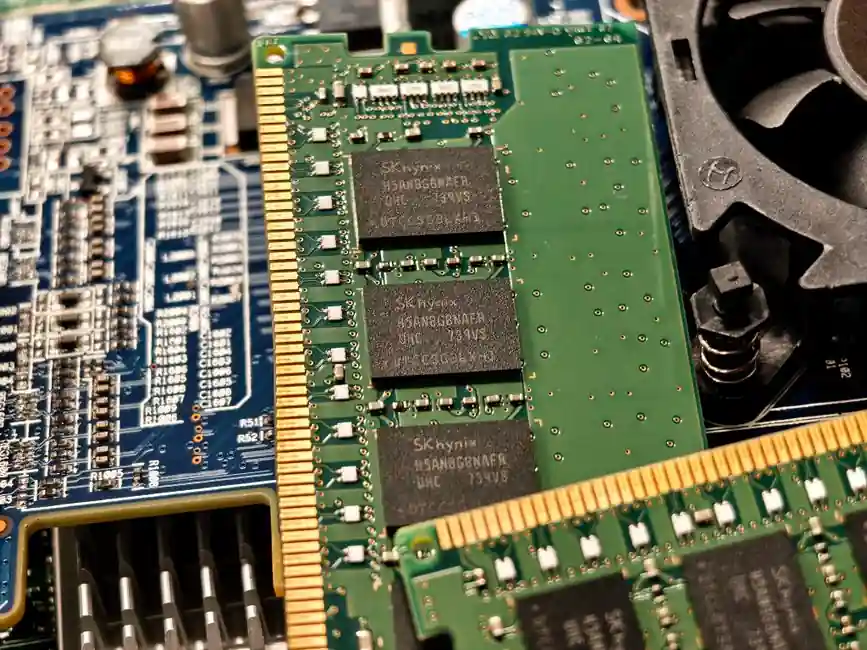
Global semiconductor sales are projected to exceed $1.5 trillion in 2026, while expanded factory automation could multiply semiconductor content per manufacturing operation by as much as ten times [S2][S1].
Industrial automation, renewable-energy systems and digital healthcare are adding broad-based chip demand, even though their growth rates remain below those associated with AI applications [S3].
What 2026 industrial semiconductor demand covers
Industrial semiconductor demand covers analog and mixed-signal devices, power components, sensors, processors, memory and connectivity semiconductors used in manufacturing machinery, robots, industrial IoT equipment, energy systems and control infrastructure [S3][S4].
These devices sit inside four linked functional layers: sensing, processing, communication and power conversion. Silicon remains the primary wafer material, while gallium arsenide and silicon carbide are used in specialized applications [S4]. Manufacturing itself includes wafer fabrication, photolithography, assembly, testing and packaging, so semiconductor demand translates into equipment, materials, process-control and factory-automation demand [S4].
The scope matters because industrial demand is not limited to factory robots. It includes motor drives, process control, predictive maintenance, connected equipment, renewable-energy conversion, grid equipment and the sensors that collect operating data. The 2026 market outlook treats industrial automation and renewable energy as continuing adopters of semiconductors at a steady pace [S3].
How automation expands semiconductor content
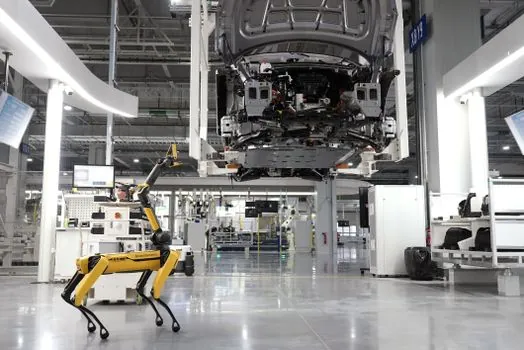
Industrial automation is contributing meaningfully to semiconductor-demand growth [S1]. That relationship is driven by more control points, not simply more production volume.
A modern automated line requires sensing of position, temperature, pressure, speed and flow, followed by signal conversion, edge processing and network communication. Industrial automation therefore consumes several device classes at each machine: sensors, analog front ends, power semiconductors, microcontrollers or processors, communication ICs and memory [S3][S4].
Robotics, IoT devices and smart manufacturing systems depend on semiconductors for real-time data processing and control [S4]. Energy-efficient semiconductor designs also reduce power consumption in electronic devices, which matters when automation equipment operates continuously rather than intermittently [S4].
Automation versus AI and other major demand pillars
Global chip sales are expected to exceed $1.5 trillion in 2026, with AI infrastructure accounting for a large share of incremental value: one AI server rack contains more than 4,500 packaged chips and represents 95% of its value [S2].
The comparison below separates four major semiconductor demand pillars by growth profile, principal hardware demand and operational constraint.
Industrial and renewable-energy demand is less explosive than AI, but its breadth reduces dependence on a single end market. The 2026 outlook identifies data centres, automotive electrification, industrial automation and AI-enabled devices as simultaneous contributors to a more resilient demand structure [S3].
Energy systems create two linked semiconductor loads
Data centres are among the end markets contributing meaningfully to semiconductor-demand growth [S3]. AI is therefore both a chip-demand driver and an electricity-demand driver.
Energy infrastructure creates a separate semiconductor load through power generation, conversion, storage, monitoring and grid control. Data centres, automotive electrification, industrial automation and AI-enabled devices are all contributing meaningfully to semiconductor-demand growth [S3]. This supports power semiconductors, sensors, signal-processing ICs and communications devices rather than only advanced processors.
Electric vehicles and autonomous driving systems have increased demand for power semiconductors and sensors [S4]. In the broader energy transition, the same device families support inverter efficiency, grid stability, asset condition monitoring and demand-response control, although the research does not provide application-specific unit volumes.
Who benefits and where the limits apply
Procurement teams face a harder constraint than simple volume growth. The 2026 market has shifted toward multiple parallel end markets, while capital intensity is increasing and semiconductor manufacturing capacity is becoming more regionalized [S3]. Geopolitical considerations now influence sourcing alongside cost and performance, and export controls are changing design, manufacture and distribution practices [S3].
Digital-healthcare demand is also expanding, but it is not interchangeable with industrial demand because qualification, environmental requirements and installation practices differ. Semiconductor suppliers must forecast, manage lifecycle and excess inventory across distinct end-use markets rather than treat aggregate sales growth as a single demand pool [S3].
Technology and supply risks behind the forecast
Advanced packaging adoption is accelerating as transistor scaling slows, making packaging a primary source of performance improvement [S3]. That shifts procurement attention beyond wafer availability to substrate, assembly, test and packaging capacity.
Supply constraints also extend beyond fabrication. Geopolitical tension and natural disasters can interrupt semiconductor supply chains, while rising cost pressures affect product design and sourcing decisions [S4]. For industrial buyers, regionalized capacity can improve resilience in one program while creating qualification work in another.
Material choice reinforces the same segmentation. Silicon carbide is projected to account for more than 50% of automotive power-semiconductor value by 2030, while gallium arsenide and silicon carbide serve specialized industrial and high-performance uses [S3][S4]. These figures describe value mix, not universal replacement of silicon.
Standards, specifications and sourcing decisions
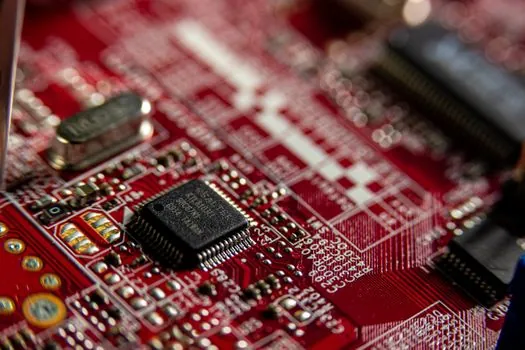
An industrial semiconductor purchase should specify electrical performance, operating-temperature range, package, supply condition, lifecycle status and qualification requirements before comparing unit price. The research identifies lifecycle planning, excess inventory and supply-chain resilience as central procurement concerns, but it does not establish one universal voltage, temperature or package threshold for all industrial semiconductors [S3].
Applications also determine the supporting equipment. Energy meter selection depends on the electrical measurement and communications requirements of the installation; electrical automation design depends on control architecture; and industrial cameras depend on image sensors and edge processing. These are application interfaces, not semiconductor standards.
Standards should be selected at the equipment and installation level rather than assigned to a semiconductor without confirmation. The supplied research identifies ISO 9001-style quality expectations and regulatory, supply-chain and sustainability pressures, but it does not provide a product-specific standard mapping suitable for procurement [S3].
What to track through the rest of 2026
Two trackable signals will distinguish broad demand from a short purchasing cycle: industrial and renewable-energy order growth relative to AI and automotive demand, and the availability of advanced packaging capacity as transistor scaling slows [S3]. The $1.5 trillion global sales threshold and the reported tenfold automation-demand scenario provide scale markers for evaluating those signals [S2][S1].
Buyers should use application-specific lifecycle data, dual-source plans and demand forecasts by end market rather than extrapolate AI growth rates into industrial automation or energy equipment. For broader context on capital spending moving toward infrastructure, see 2026 capex intentions: Growth shifts toward infrastructure.