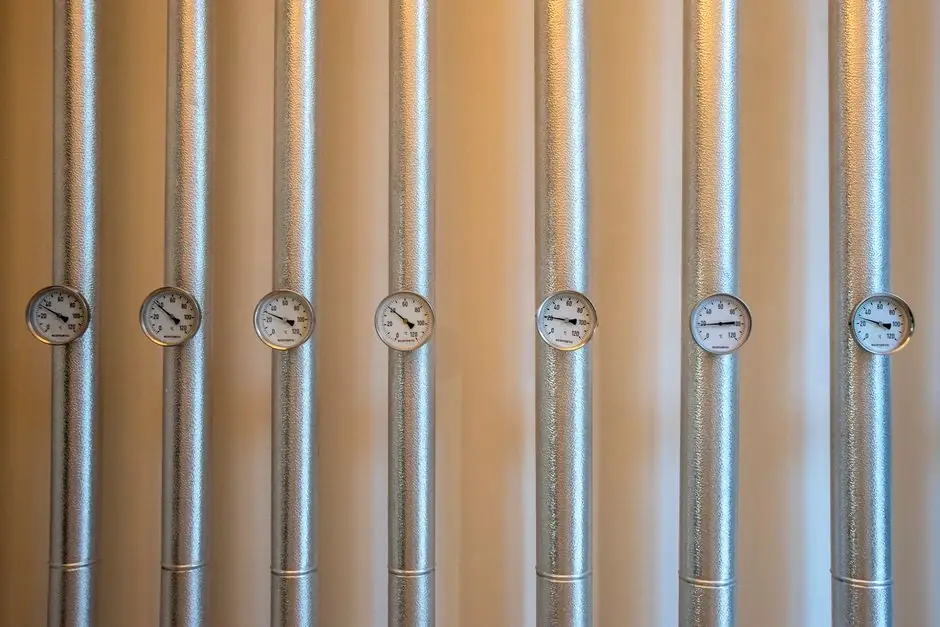
Industrial heat pumps can supply process heat, and the article describes switching factories from boilers to modular, cost-effective heat-pump solutions for lower-temperature processes such as steam production [S4].
The 2026 market is defined less by a single technology breakthrough than by site-specific economics: the U.S. study identified 9,870 MW of potential high-temperature heat-pump capacity and 21,726 MW of potential steam-generating heat-pump capacity across 11 industrial subsectors [S3].
Where industrial heat pumps fit
Industrial heat pumps use electricity, a refrigerant and a compressor to transfer heat from a low-temperature source to a higher-temperature sink. They are most suitable where the required process temperature can be matched with an available waste-heat stream or a usable ambient-air source [S1][S4].
Commercially available systems can supply temperatures up to 165°C, and approximately 35% of industrial heat processes fall within that range [S3]. That makes the technology relevant to boiler preheating, steam production and process heating below the temperature ceiling, but not a universal replacement for high-temperature furnaces, blast furnaces or cement kilns [S3][S4].
The heat source must be evaluated at the individual plant level. Industrial heat demand and available waste heat are site-specific, so a sector-level heat balance cannot replace a process-by-process examination of unit operations [S2]. The selection process should begin with the required temperature, available source temperature, annual load profile, steam pressure and the existing boiler system.
Steam-generation options compared
Three configurations cover much of the industrial opportunity: ambient-air electric boilers with heat-pump compression, waste-heat-fed hot-water systems, and vacuum steam systems that use boiler exhaust or other recovered heat [S4].
For facilities evaluating steam quality and pressure, the mechanical package must be reconciled with the plant’s steam distribution system, including condensate treatment, expansion, and isolation. A steam separator can protect downstream equipment where steam quality or moisture carryover becomes material to the heat-pump design.
Economic screening for process heat
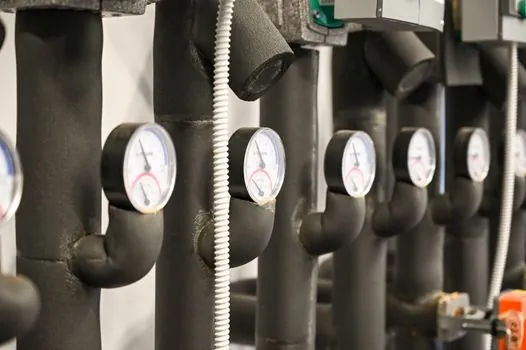
The economic case is dominated by electricity-to-gas price spread, equipment cost, recovered-heat value and operating hours. A bottom-up assessment of high-temperature and steam-generating heat pumps in major U.S. food-manufacturing sectors reported annual technical-potential energy and CO₂ savings [S2].
Those sector-scale figures do not mean every food plant can install a heat pump. A weaker source temperature increases the compressor work needed to achieve the same temperature lift, so the low-temperature end of the heat-demand curve deserves separate scrutiny.
A project screen should calculate electricity consumption, avoided fuel, demand charges, maintenance, refrigerant service, heat-exchanger cleaning, and the value of any recovered heat. Equipment tables and conceptual designs must retain their assumed COP, source temperature and utilization, because changing any of those values changes the operating-cost result [S1].
Industrial sectors and operating loads
The 11 subsectors assessed for the U.S. market included meat processing, dairy, beer, canned fruit and vegetables, cane and beet sugar, corn wet-milling, soybean oil, textiles, pulp and paper, and automotive [S3]. The analysis investigated industrial heat-pump applications across eleven industrial subsectors, including meat processing, dairy, beer, and canned vegetable and fruit processing [S3].
Food manufacturing illustrates the diversity of loads. Evaporation, washing, pasteurization, cooking and sterilization can require different combinations of temperature and steam quality. A bottom-up study investigated the techno-enviro-economic potential of deploying high-temperature and steam-generating heat pumps in major U.S. food-manufacturing sectors [S2].
Continuous duty is not automatically the best application. A system with a flat annual heat profile may achieve better utilization than one tied to a seasonal process, but compressor economics and maintenance access still determine operating feasibility. Industrial heat-pump deployment remains low but represents a key market opportunity for low- and medium-temperature process heat [S5].
Limits, reliability and heat-source constraints
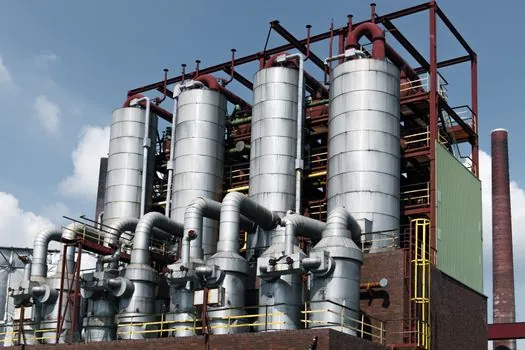
Heat-pump efficiency declines as temperature lift increases, making the available source temperature a hard design constraint [S3]. Waste heat at 70°C, for example, has a different compressor requirement from source heat at 35°C even if the delivered process temperature is unchanged. A low-temperature source can therefore reduce annual efficiency and weaken the economic case.
Reliability must be demonstrated under actual industrial conditions, including sustained cycling, contamination, vibration, ambient conditions and maintenance access. Demonstrating material durability and operability in real settings was identified as a priority for high-temperature industrial heat pumps in U.S. industrial applications [S8].
Industrial steam systems also require controlled separation, pressure relief, condensate handling and protection of downstream equipment. Depending on the installation, a steam trap can remove condensate from steam lines, while an air-release-valve can control non-condensable gases that impair heat transfer.
Water quality, scale, corrosion and refrigerant choice remain equipment-specific engineering issues. They should be resolved through guaranteed duty points, full-load performance at the design source and ambient conditions, and a written turndown range rather than a headline efficiency rating alone [S1][S4].
Market structure and 2026 adoption signals
Less than 5% of process heat uses electricity, and the industrial sector accounts for more than 25% of U.S. greenhouse-gas emissions, with about 50% of thermal energy produced on-site [S3]. Those conditions leave a large addressable transition, but deployment data should not be confused with commercial maturity.
The wider heat-pump market was estimated at USD 58.6 billion in 2025, with a projected 13.8% CAGR between 2026 and 2035 [S7]. This broader forecast includes markets beyond industrial process heat, so it should not be used as an industrial-heat-pump revenue figure. A separate forecast places industrial process heating at 50% of the high-temperature heat-pump market in 2026, but that segmentation remains forecast rather than installed-base data [S6].
Two signals are worth tracking through 2026: utility-funded industrial demonstrations that publish measured operating hours and delivered heat, and project awards that connect heat-pump procurement to verified waste-heat availability. The European Commission’s €1 billion auction for electrified industrial process heat includes heat pumps, electric boilers and other technologies, creating a project pipeline but not guaranteeing commercial operation [S4].
A sound industrial heat-pump decision requires three inputs before equipment selection: a delivered-heat curve at the specified source temperature, a 8,760-hour site energy and cost model, and a mechanical plan for steam quality, controls, maintenance and waste-heat isolation. Where those inputs do not produce a defensible operating advantage over the retained boiler, the boiler remains the more reliable solution.