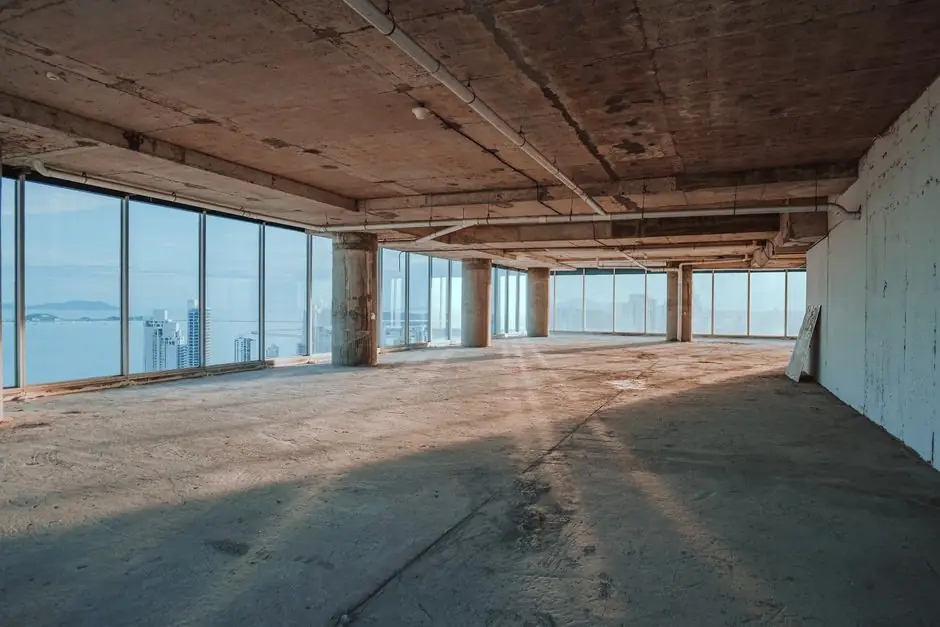
Industrial flooring for renovation projects is selected by overlaying four hard constraints, substrate moisture and alkalinity, mechanical load class, chemical exposure profile, and slip-resistance target, onto a shortlist of resin, tile, and concrete systems [S4][S2].
For most retrofit work, the candidate set compresses to six families: epoxy, polyurethane (PU) cement, quarry tile, vinyl composition tile (VCT) or luxury vinyl tile (LVT), rubber sheet or tile, and polished or sealed concrete [S7][S3].
Substrate and Moisture: The Renovation Gatekeepers
Substrate moisture and alkalinity drive adhesive-system selection on every concrete renovation, and most premature floor failures trace back to a moisture or pH test that was skipped [S4]. Manufacturers validate warranty only when relative humidity, calcium chloride moisture vapour emission rate, and surface pH fall inside published limits, which is why pre-installation moisture testing is treated as a contract requirement rather than a precaution [S4]. For adhesive-bonded systems such as VCT, LVT, and rubber tile, the industrial adhesive class and primer must be matched to the measured moisture profile, not the age of the slab. Renovation projects that ignore this step typically see debonding, telegraphing, or osmotic blistering within 12-24 months of handover.
Mechanical Load and Impact Class
Forklift, pallet jack, and dropped-tool traffic sets the impact and compressive-strength floor for any industrial zone, with PU cement and quarry tile leading for sustained point loads and epoxy close behind where chemical resistance also matters [S2][S7]. PU cement systems typically handle continuous thermal cycling from roughly -40 °C up to about 120 °C in steam-clean areas, while standard epoxy softens above 60-65 °C under sustained service, which rules it out for hot process zones [S2]. For heavy drop zones (stamping, foundry, heavy fabrication), quarry tile at 13-20 mm thickness over a mortar bed is a common retrofit because individual tiles can be replaced without re-pouring the slab. By contrast, industrial flooring systems that rely on a thin resin coating are easier to clean but fail faster where 50-100 kg components are routinely handled.
Chemical and Thermal Exposure Matrix
Chemical resistance dictates the resin choice: epoxy resists a broad acid, alkali, and solvent range but is vulnerable to strong organic acids and hot caustics, while PU cement tolerates lactic, citric, and fatty acids plus hot caustic wash-down that destroys standard epoxy [S2]. Food and beverage plants that use hot caustic cleaning (typically 3-5% NaOH at 70-80 °C) therefore default to PU cement rather than epoxy, accepting higher material cost in exchange for thermal-shock survival. Cold-storage and freezer rooms need a system that stays flexible at sub-zero temperatures, and PU cement's coefficient of thermal expansion can be formulated near concrete's to avoid debonding under repeated freeze-thaw cycles. Where a renovation adds an SPC flooring overlay in a dry assembly or packaging zone, chemical resistance is not the driver; dimensional stability and click-lock speed of install are.
Slip Resistance and Safety Surfacing
Slip resistance is engineered by adding quartz sand, aluminium oxide, or bauxite aggregates into the resin topcoat, with the target coefficient of friction and pendulum test value set by the operating environment and cleaning regime [S2]. Wet process areas, commercial kitchens, and loading bays usually specify a textured broadcast or a finer silica aggregate to keep R11-R12 rated surfaces that still clean with a mechanical scrubber. In dry aisles where forklifts dominate, a smoother surface reduces rolling resistance and tyre wear, so the same facility often pairs a rougher PU cement in the wet zone with a trowel-applied epoxy in the dry zone. Renovation projects that specify a single texture floor-wide almost always overspend on traction in dry areas or under-specify it in wet ones.
Comparison: Six Systems Across Four Decision Criteria
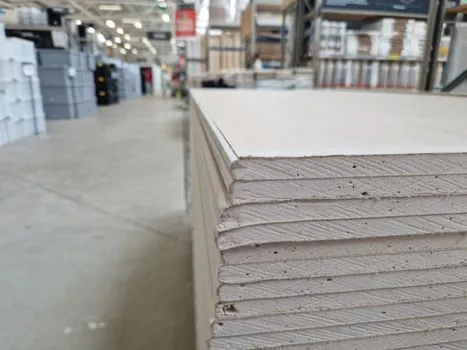
Lining the main options up against the four dominant renovation criteria gives specifiers a defensible shortlist. Epoxy scores high on chemical resistance and cleanability, mid on impact, and low on thermal-shock tolerance. PU cement scores high on thermal-shock, chemical, and impact resistance, mid on cleanability, and high on installed cost. Quarry tile scores high on impact and hot-water tolerance, mid on chemical resistance (joint-dependent), and high on repairability because single tiles can be lifted and re-set. VCT or LVT scores high on initial cost and install speed, low on chemical and impact resistance, and is therefore reserved for offices, not production. Rubber sheet or tile scores high on slip and fatigue comfort, mid on chemical resistance, and is typically limited to gyms, labs, and ESD-protected rooms. Polished or sealed concrete scores high on load and life-cycle cost, low on chemical resistance unless densified and sealed, and is the standard choice for warehouses on a tight capex budget [S7][S2][S3].
Renovation Sequence and Downtime Constraints
Renovation projects are governed by shutdown windows, and the install-cure cycle often beats raw material cost in the final decision. Epoxy self-levelling systems typically need 24-48 hours of foot-traffic cure and 5-7 days for full chemical exposure, while PU cement can accept foot traffic in 8-12 hours and forklift traffic in 24 hours, which is why cold-storage and food plants tolerate its higher price. Vinyl overlays and SPC flooring click systems install fastest, often in a single shift over a prepared slab, and they allow staged renovation of one production zone while the rest of the plant stays live. Quarry tile and mortar-bed systems sit at the slow end, with several days of cure, which is acceptable only when the area can be taken offline or when the renovation is bundled with a major plant shutdown. [S4]
Standards, Testing, and Documentation

Specification-grade renovation packages cite the substrate prep standard (typically referencing ICRI concrete surface profile levels), the resin system's chemical-resistance chart, the slip-resistance test method (pendulum test or ASTM-style ramp rating), and the manufacturer's moisture and pH limits for warranty [S4][S2]. Project documents should record substrate moisture readings, surface profile achieved, primer and build coat lot numbers, and the aggregate broadcast rate, because these are the data points warranty claims are judged against when a floor fails. For schools, healthcare, and government renovations, additional documentation around Floor Flatness (FF) and Floor Levelness (FL) numbers, plus LEED-compliant material declarations, is typically layered on top of the industrial spec [S4]. A renovation spec that omits these records is essentially a verbal warranty, and the failure mode is the same.
For plant engineers comparing renovation options alongside adjacent equipment upgrades, the same spec-first logic used in disc coupling selection for automotive production lines and safety interlock switch selection for oil and gas facilities applies: lock the duty cycle, then match the material. Trackable signals to watch over the next 6-12 months include updated PU cement thermal-shock ratings from major resin suppliers, low-VOC and bio-based epoxy line extensions for indoor air quality compliance, and tighter slip-resistance thresholds for warehousing under revised workplace-safety guidance.