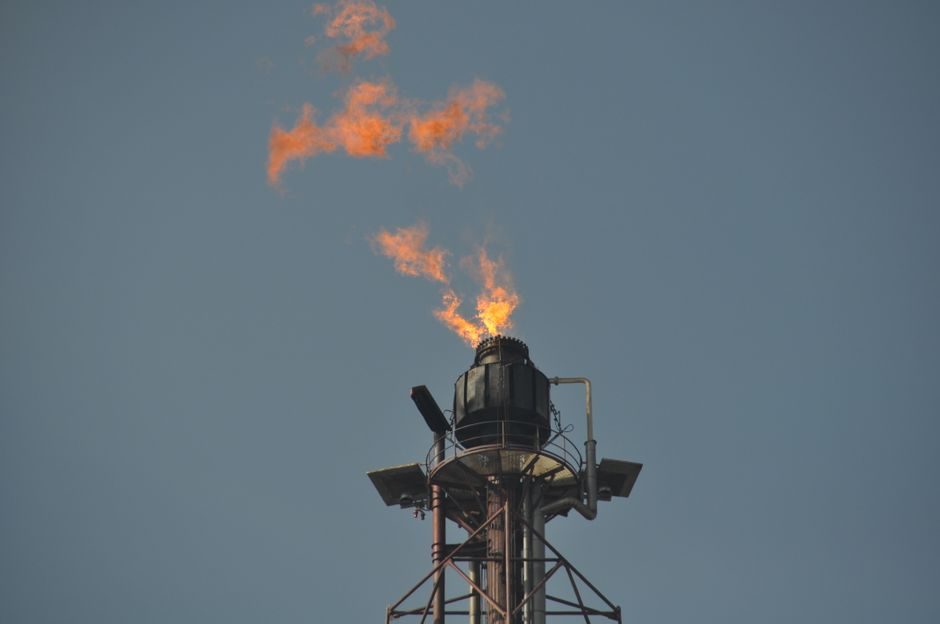
Industrial gas procurement in 2026 is not a commodity decision; it is a five-gate spec exercise where purity, supply mode, application certification, delivery radius and total cost of ownership each knock out a vendor or a product line [S1][S4].
WestAir operates 19+ locations across California and Arizona with 350+ employees and 24/7 account management for atmospheric gases, while Messer runs a USA footprint for bulk, medical and industrial product lines and Josef Gas serves Ontario with propane and welding gases [S1][S3][S4]. The buyer-side task is to map a real consumption profile against that supplier matrix, not to chase the lowest sticker price.
Purity Grade and Impurity Class: The First Knockout Gate
Purity is the single most-misunderstood selection variable because the marketing label ("industrial," "medical," "research") is not the spec — the certificate of analysis (COA) is the spec, expressed in ppm or ppb impurity limits for O2, H2O, THC and CO/CO2 [S1][S4].
A buyer sourcing argon for GTAW stainless welding tolerates a different envelope than a buyer sourcing the same argon for pharmaceutical purge or for a gas chromatograph carrier line; the welding cell typically runs 99.99% (40 ppm total impurities) or better, while a GC carrier loop usually needs 99.999% (5 ppm) with strict O2 and H2O ceilings [S4]. Messer's product catalog explicitly separates industrial, medical and bulk grades — the dividing line is not the molecule, it is the impurity envelope the supplier commits to on the COA [S4].
Supply Mode: Cylinder, Liquid Bulk, Pipeline and On-Site Generation
Supply mode is the second gate and it is decided by volume thresholds, not by preference: below roughly 50 m³/month of gaseous equivalent, high-pressure cylinders and cryogenic dewars dominate; between 50 and 5,000 m³/month, liquid bulk with a customer tank and telemetry; above that, on-site generation (PSA, membrane or electrolytic) starts to pencil out [S1][S2].
PT. ANUGRAH GASINDO ABADI positions itself as a trading-house model for industrial gas in Indonesia, fitting the cylinder-and-bulk mid-market where on-site generation does not yet justify capex, while Messer's bulk and on-site programs are built for customers who have crossed that 5,000 m³/month crossover and want supply security without running the plant themselves [S2][S4]. WestAir's 19-location California-Arizona network is the cylinder-and-dewar workhorse: the operating logic is delivery radius under 150 miles, same-day emergency callout and a cylinder demurrage model that charges the customer for slow turns [S1].
Application Certification and End-Use Compliance
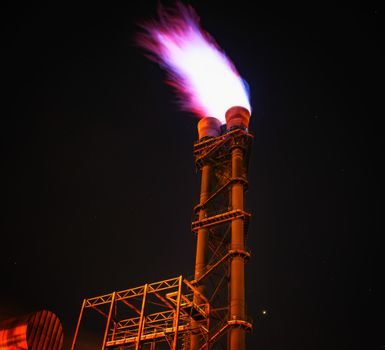
Application certification is the third gate and it is binary: if the gas touches a medical, food, pharmaceutical or aerospace weld, the supplier must hold the relevant quality registration and the gas must ship with a COA tied to a traceable batch number [S1][S4].
Medical oxygen and nitrous oxide in North America route through a prescription / pharmacy-controlled channel even when delivered by an industrial gas supplier; Josef Gas explicitly carries propane, industrial and welding SKUs, but medical oxygen on a Josef-type distributor is normally a regulated item that requires a licensed pharmacy partner [S3]. For welding shops running ASME-coded pressure-vessel work, the gas supplier's traceability documentation (heat-lot, COA, cylinder stamp) is what the inspector audits — not the brand on the truck, and the comparable logic applies to any end-use where a fixed gas detector is monitoring a process stream for safety compliance [S4].
Delivery Footprint, Cylinder Fleet and Emergency Response
Delivery footprint is the fourth gate and it is where many "low-cost" quotes collapse: a supplier with a 3-hour emergency window in the buyer's county will outperform a cheaper supplier 200 miles away every time there is a plant trip or a combustible gas detector trip-shutdown event. [S1]
WestAir claims 24/7 dedicated account management across 19+ California and Arizona branches, which translates operationally into a defined run-out-to-delivery SLA, a swap-cylinder pool and a telematics-tracked tanker fleet for liquid nitrogen, oxygen and argon [S1]. Boubyan Gases in Kuwait frames its value on a "strong legacy" of regional distribution depth — the same logic, just on the Arabian Gulf side, where supply assurance is built on marine-terminal access for liquid shipments rather than over-the-road cylinders [S6].
Total Cost of Ownership: Price, Demurrage, Lost-Production Risk
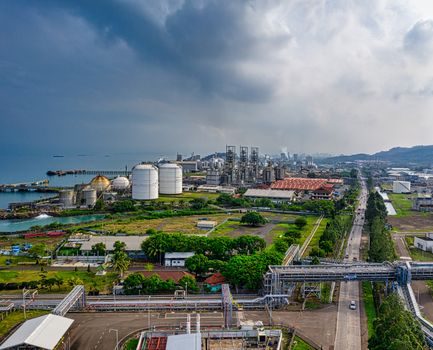
Total cost of ownership (TCO) is the fifth gate and it is the one that disciplines the other four: cylinder rental, demurrage, vaporization losses, energy cost of on-site generation and the production-loss exposure of a missed delivery must all be priced in, not just the per-cubic-meter gas charge [S1][S4].
A direct side-by-side for a 200 m³/month nitrogen user in 2026 typically looks like this: high-pressure cylinders run 2–4× the per-m³ cost of liquid bulk but carry zero capex; liquid bulk on a 3,000-gallon tank with telemetry recovers the install cost in 18–30 months at that flow rate; on-site PSA generation breaks even around 1,500–2,000 m³/month and wins above that, but forces the buyer to own compressor and dryer maintenance [S1][S4]. The right answer depends on which TCO curve the buyer's consumption profile actually crosses.
Limits, Failure Modes and When Not to Spec Industrial Gas at All
Industrial gas selection is not always the right answer: for sub-1 m³/month specialty-gas demand in a research lab, a specialty-gas supplier with EPA-grade and SCU (self-contained unit) gas cabinets is the correct channel, and a regional industrial-gas distributor's generalist catalog will fail the purity audit [S4].
For continuous, ultra-high-purity hydrogen or helium at ppb impurity, on-site generation or a tube-trailer specialty contract is the only spec that holds up, and it sits outside the "industrial gas" envelope altogether [S4]. For combustion-safety monitoring around any of these storage or process lines, a gas detector chain from portable to fixed is the parallel spec track, and the industrial gas decision should be made with that monitoring architecture already in scope, not bolted on after delivery.
Trackable next signals for 2026 H2: regional supplier M&A (consolidation of mid-size California / Ontario / Gulf distributors); shifts in the cylinder-rental and demurrage tariff lines on standard price sheets; and any new pipeline-gas or renewable-hydrogen credit programs that re-rank on-site generation TCO curves.
For related coverage, see Suspended Working Platform 2026 Price & Cost Guide: ZLP Model, Material, Power and Cert.