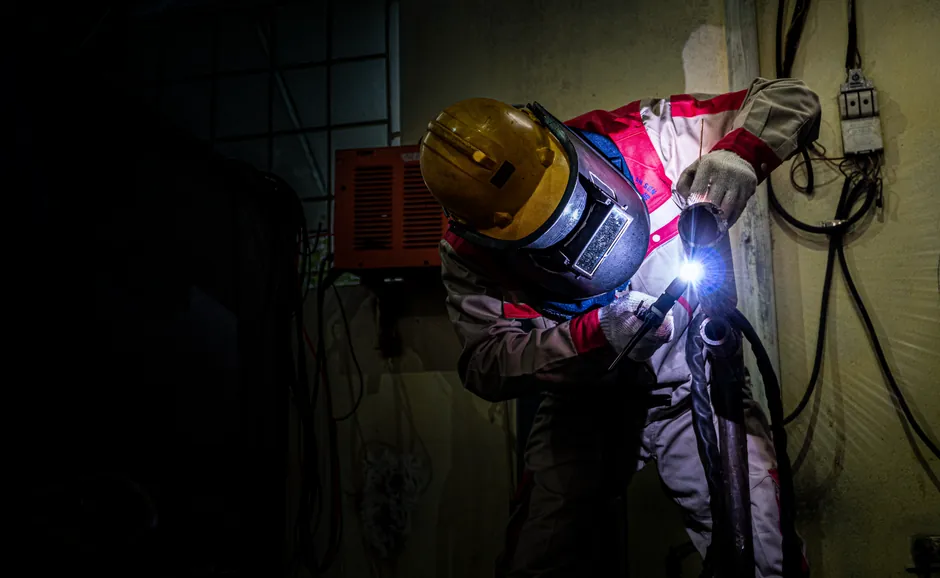
An oxy-fuel cutting torch is sized first by steel thickness and second by fuel gas: acetylene preheats mild steel to its 1,600–1,800 F kindling range in seconds and is rated across the full 3 mm to 300 mm (1/8 in. to 12 in.) working envelope that dominates field fabrication [S1][S3][S6].
For structural steel crews, the decision tree narrows to a small set of variables: tip seat compatibility, plate thickness, duty cycle (light vs. heavy), and the fuel gas already piped on the job. Each variable is anchored to a numeric spec rather than a brand preference, which is why two operators on the same site can specify completely different rigs from the same vendor catalog [S3][S5].
Plate Thickness Drives Tip Size and Torch Class
Cutting-tip selection in oxy-fuel is a direct function of plate thickness, because the center orifice of a one-piece copper or two-piece copper-over-brass tip meters the cutting oxygen for a specific gauge [S3]. The published operating envelope runs from 3 mm (1/8 in.) sheet on a small tip to 300 mm (12 in.) plate on a heavy machine torch tip [S3]. A common staging map uses a 1-1-101 tip for up to 3/4 in. steel and a 6-1-101 tip for up to 8 in. steel, with intermediate sizes (2-1-101, 3-1-101, 4-1-101, 5-1-101) covering the steps between [S4].
Thin plate needs low flow to avoid burn-through and warping; thick plate needs high preheat and cutting-oxygen volume to sustain oxidation through the full section [S1]. ESAB tiers the same logic at the torch level: light-duty torches are compact, portable, and rated up to 4 in. material, while heavy-duty machine torches carry the rest of the range [S2]. Field crews that ignore this gate typically end up either melting 1/4 in. plate with a heavy tip or stalling out at 6 in. with a light one [S1][S2].
Fuel Gas Sets Preheat Time, Flame Temperature, and Cost per Cut
Acetylene is the hottest and fastest-preheating fuel, with a flame temperature between 5,600 F and 5,800 F and short preheat cycles for cutting, gouging, and heating, but it is also the most expensive option per cubic foot [S3]. Propylene (often sold as a generic label covering propane/ethylene blends) burns hotter than propane, handles cutting, gouging, and heating reasonably well, but preheat times run longer because flame temperature is lower than acetylene [S3]. Midland Tool frames the process window in one line: a preheat flame around 5,500 F plus a high-pressure oxygen stream cuts carbon steel up to 12 in. thick [S6].
For steel-construction sites, the practical rule is acetylene for short preheat cycles on structural beams and gouging, and propylene or propane for shop heating, large-area warming, and any duty where fuel cost dominates. Tips are not interchangeable across fuel gases: the orifice geometry is designed per fuel to optimize oxygen and gas delivery, and swapping an acetylene tip onto a propane circuit changes preheat ratio and cut quality [S3].
Light-Duty vs. Heavy-Duty Torch Comparison
Torch selection splits along three decision criteria, and the matrix below maps the main options against capacity, portability, and tip-cost [S2][S3][S4]:
- Light-duty hand torch: cuts up to 4 in. steel, compact, portable, entry kit USD 250–350 with a Victor-style cutting attachment, accepts 1-1-101 through 3-1-101 tip series for typical structural work [S2][S3][S4].
- Medium-duty hand torch: covers roughly 4–8 in. steel using 4-1-101 and 5-1-101 tips, still portable, common on bridge and field-rig crews [S2][S4].
- Heavy-duty machine torch: rated 8–12 in. plate, requires a straight-rail or track system, uses 6-1-101 and larger tips, and delivers the cleanest kerf on long production cuts [S2][S3].
For yard fab shops that need both portability and CNC-style repeatability, an automatic machine torch on a track is the most economical step above 6 in., because tip wear and operator drift become the limiting factors in hand cutting thick plate [S3].
Tip Seat, Application, and Safety Constraints
Seat type is the gate most often skipped, and skipping it damages equipment or causes flammable gas leakage. Each torch model uses a specific seat geometry (shown in yellow on American Torch Tip reference cuts), so a 1-1-101 tip will physically seat on a Victor-type cutting attachment and a Type 1 seat on a Harris torch, but the two are not cross-compatible [S3][S4]. Specialty seats exist for rivet-head removal, I-beam base cutting, and tips that extend up to 24 in. from the torch for awkward reach work [S3].
Application drives the tip family: cutting tips, gouging tips, and heating tips each have different orifice layouts, and two-piece tips with a brass inner and copper outer are common where tip-change downtime matters more than single-piece durability [S3]. High-pressure cutting tips for automated machinery permit quicker, cleaner, more accurate cuts than hand tips at the same nominal thickness, which is the main reason fab shops standardize on machine torches above 2 in. [S3].
Operating Limits and Common Failure Modes
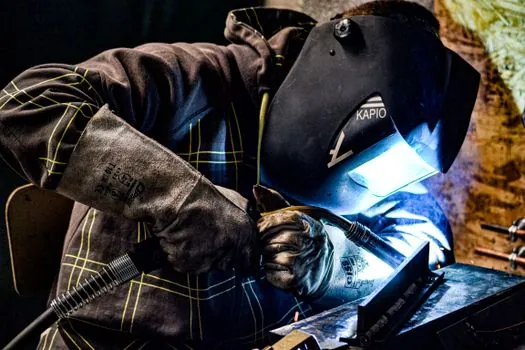
Three failure modes cover most field complaints. First, undersized tip on thick plate: the operator gets a sluggish kerf, heavy slag, and unburned steel at the bottom, because cutting oxygen volume scales with tip center-hole diameter [S1][S3]. Second, oversized tip on thin plate: the material melts before ignition, edges warp, and slag volume jumps because heat input exceeds what the section can absorb [S1]. Third, rusty or scaled plate without extended preheat: the oxide layer blocks flame-to-metal contact, and preheat time must be increased to burn through scale before the cutting oxygen stream engages [S1].
A preheat flame around 5,500 F is the practical working point; torch models quoting higher preheat numbers usually sit at the top of acetylene's 5,600–5,800 F window, while propylene and propane rigs run cooler and slower [S3][S6]. For context on how oxy-fuel compares to plasma in ductwork and thinner-gauge applications, see this HVAC plasma cutter spec map which covers the lower-thickness, higher-speed regime where oxy-fuel is the wrong tool.
Standards, Sourcing, and Construction-Site Spec Discipline
Two sourcing references govern everyday specification work. ESAB's cutting-capacity table tiers torches by plate thickness and duty class, and is the clearest public map between torch model and the 0–12 in. envelope that oxy-fuel covers economically [S2]. Koike Aronson publishes the preheat, kindling-temperature, and tip-chart logic that any operator should run before lighting a tip [S1]. Together, those two references cover the engineering side; American Torch Tip's 4-step method (seat, thickness, application, fuel) covers the procurement side [S3].
For buyers mapping cylinder logistics and fuel-gas choice at the construction-site level, the Industrial Gas Selection for Construction Sites: Spec Gates and Cylinder Logic reference ties acetylene vs. propylene vs. propane cylinder choice into the same preheat/cost trade-off used to pick a fuel-gas-compatible tip. For a broader process view of fuel-gas selection across plant and yard work, the Industrial Gas Selection for Automotive Manufacturing: 2026 Process Map covers automotive-tier duty cycles that overlap with structural fab shops running multi-shift cutting.
Track the next decision node on this topic: ESAB's 2024 cutting-capacity table caps light-duty hand torches at 4 in.; a vendor revision that re-tiers medium-duty at 6 in. (rather than 4–8 in.) would shift the medium-duty tip-cost math across bridge and structural fab shops. Second signal: tip vendors (American Torch Tip, Koike, ESAB) continue to publish per-fuel tip charts rather than universal tips, confirming the no-cross-fuel-interchange rule and reinforcing acetylene's grip on short-preheat structural work [S2][S3].
Spec-level background on the components involved: oxy fuel cutter, construction tools, and construction machinery and equipment.
