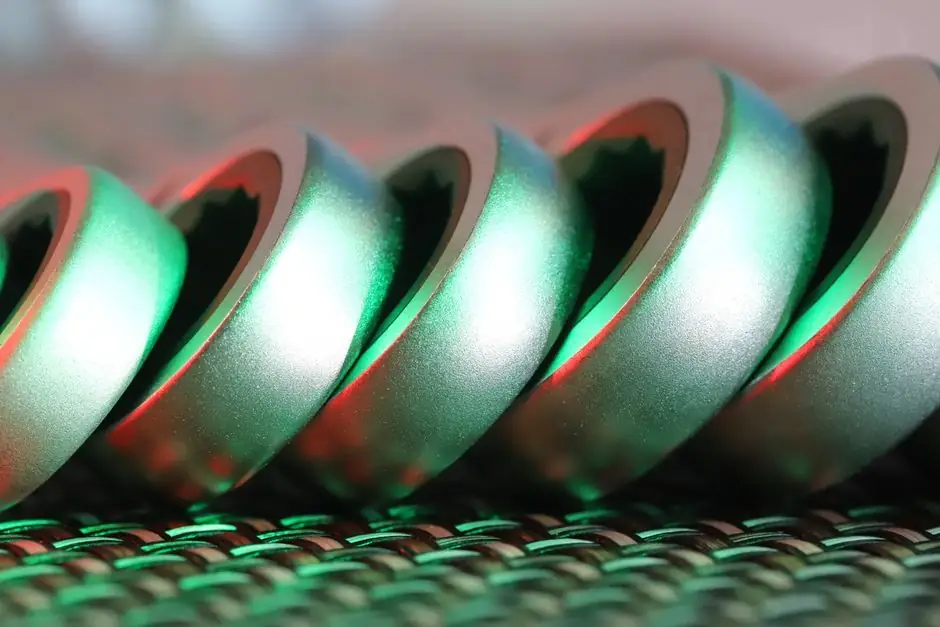
Industrial magnet selection is dominated by four permanent-magnet families, neodymium-iron-boron (NdFeB), samarium-cobalt (SmCo), AlNiCo, and ferrite/ceramic, with electromagnets added where on/off control is required [S4][S5][S6].
Selection criteria are consistent across manufacturers: magnetic strength (measured in Gauss or Tesla), maximum operating temperature, corrosion and chemical environment, geometry/space constraints, and required duty cycle (continuous holding versus cyclic lifting) [S2][S4][S5][S8]. For guidance on related industrial material families, see industrial ceramic and industrial coating references.
Material Family Comparison: Force, Temperature, Corrosion, Cost
Neodymium (NdFeB) is the strongest commercially available permanent magnet, delivering the highest magnetic energy product and coercivity, easily machinable into block, disc, ring, and custom shapes, but it loses strength rapidly above roughly 80-200°C depending on grade and corrodes without plating [S5][S6][S7]. SmCo magnets operate up to a maximum working temperature of 350°C and, above 180°C, exhibit higher maximum energy product, coercivity, temperature stability, and chemical stability than NdFeB, at the cost of a higher price [S5]. AlNiCo magnets reach remanence up to 1.35 T with a very low temperature coefficient, but coercivity is typically below 160 kA/m, the demagnetization curve is nonlinear, and the material is easily demagnetized by external fields or shock [S5]. Ferrite (ceramic) magnets are hard, brittle, and have lower magnetic energy, but resist demagnetization, do not corrode, are simple to produce, and account for the highest output volume in the magnet industry [S5].
A practical comparison for selection: NdFeB wins on strength-per-volume and cost-per-pull-force below about 150°C; SmCo wins above 180°C and in corrosive or vacuum environments; AlNiCo wins where remanence stability over a wide temperature span matters, such as in sensors and meters; ferrite wins where cost, tonnage, and corrosion resistance dominate, as in bulk separation plates and loudspeakers [S4][S5][S6][S9].
Operating Temperature and Environmental Limits
Ceramic (ferrite) magnets retain holding strength up to about 400°F (roughly 204°C), which is why they appear in high-temperature magnet assemblies and sweeper magnets [S2]. Flexible (strontium ferrite + thermoplastic elastomer) magnets have tighter temperature tolerances and are not reliable in extreme conditions, limiting their industrial use to signage, gasketing, and light-duty holding [S3]. SmCo's published maximum working temperature of 350°C is the upper bound for rare-earth permanent magnets in industrial service, and the crossover where SmCo outperforms NdFeB begins near 180°C [S5].
Neodymium magnets will corrode in humid conditions unless they are coated (commonly Ni-Cu-Ni, epoxy, or zinc), and any NdFeB magnet below 1.187 inches in diameter does not meet 2022 child-safety standards, a constraint that also affects small industrial pick-and-place grippers and craft-touching OEM products [S3]. For wet, hygienic, or washdown environments, ferrite and SmCo are the lower-risk choices without secondary coating processes [S4][S5].
Strength Measurement and Pull-Force Translation
Magnetic strength is quantified in Gauss or Tesla (1 T = 10,000 G), with higher numbers indicating stronger field, and the engineering-relevant figure is pull force at a defined air gap [S4][S8]. At zero air gap (magnet directly contacting raw steel), a 3/4-inch craft button pull comparison is commonly cited between flexible, ceramic, and neodymium grades [S3]. For industrial separation duty, magnet suppliers ask the size of the target metal first, because visible bolts are caught by ferrite magnetic plates, while sub-millimetre ferrous contamination requires rare-earth separators [S9].
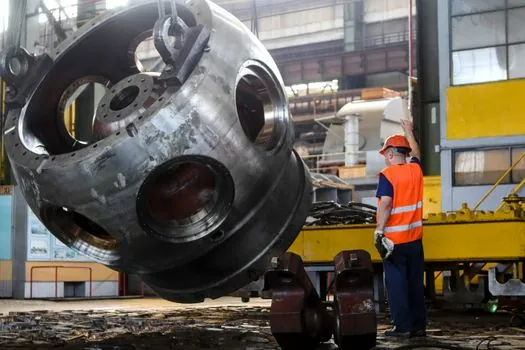
For lifting magnets, two figures must be matched: the rated breakaway force on a flat, clean, low-carbon steel plate, and the rated holding force on the actual workpiece (which can drop by 50% or more on thin plate, rusty surfaces, or non-ferrous alloys) [S2][S4]. Holding force in magnetic assemblies is greatly increased when ceramic magnets are surrounded by steel channels or pot shells, a configuration used in round base magnets, channel magnets, and sandwich assemblies [S2].
Geometry, Mounting, and Assembly Configuration
Geometry questions are identical across suppliers: required length, width, height or diameter; whether standard shapes (block, disc, sphere) fit or the space is irregular; whether the mounting surface is rough, flat, smooth, or porous; whether adhesive backing is needed; and whether the magnet operates indoors, outdoors, or both [S5]. Standard NdFeB blocks, discs, and rings are stocked, while irregular spaces usually require custom pressing or machining, which NdFeB and SmCo accept but ferrite does not because of brittleness [S3][S5].
Flexible strip and sheet magnets are thin rubber composites, cut to size with scissors or supplied with high-tack adhesive backing, but they fail magnet-to-magnet because pole alignment is inconsistent across the cut edge, so they should be excluded where magnet-to-magnet coupling is required [S2]. For material handling, the three functional categories matter: permanent magnets for passive separation and holding fixtures, electromagnets for on/off controlled lifting and conveyor sorting, and hybrid permanent-plus-electro systems for robotic end-effectors needing both persistent hold and controllable release [S4].
Application Fit: Lifting, Separation, Holding, and Detection
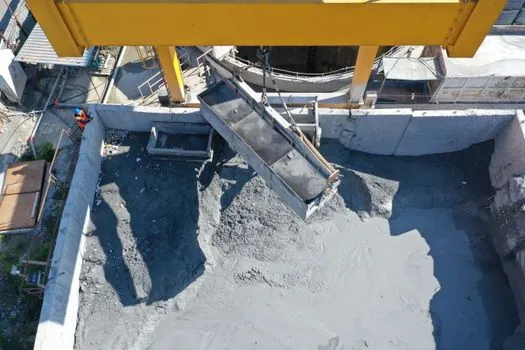
In food processing, rare-earth magnetic separators are installed in chutes to trap iron filings and protect downstream equipment; in recycling, magnets separate ferrous from non-ferrous streams; in automotive, magnetic holding fixtures hold parts during welding and assembly; in pharmaceuticals, magnetic rods in fluid lines trap invisible particles in powders and liquids; in robotics, magnetic end-effectors grip steel components without pneumatic lines [S4]. Ceramic magnets dominate loudspeakers, DC motors, generators, switches, sweeper magnets, and lifting or separating machinery where cost per unit of moderate strength is the driver [S2].
Neodymium is the default for package closures, audio equipment, door catches, motors and generators, bearings, levitation devices, and heavy-duty holding where maximum pull force per unit volume is required [S2][S6]. For purchasing decisions in adjacent industrial categories, see industrial adhesive selection when bonding magnets to housings, and the industrial camera reference where vision-guided magnet placement is required.
Supplier Evaluation and Specification Discipline
Industrial magnet procurement should distinguish manufacturers from distributors: a manufacturer can rebuild existing magnetic equipment, supply custom magnetic equipment built to spec, and configure power magnets, drum magnets, and conveyor belt magnets to suit the installation, while a distributor can only resell catalog parts [S1]. Geographic sourcing affects landed cost, because exchange rates, overseas transportation, and import duty can quickly erase a low unit price on overseas industrial magnetic supplies, and local safety-regulation knowledge plus ongoing service accessibility are real engineering factors [S1].
When specifying, lock the following onto the purchase document: magnet material family and grade (e.g. N35, N42, N52, SH, UH for NdFeB; or 2:17 SmCo grade), maximum continuous operating temperature, surface treatment or coating, dimensional tolerances, magnetization direction, and rated pull force on a defined test piece. A shortlist logic: if duty is bulk ferrous separation at low cost, pick ferrite; if duty is high-force lifting or holding below 150°C, pick NdFeB; if duty exceeds 180°C or is corrosive, pick SmCo; if duty is sensor or meter stability across a wide thermal range, pick AlNiCo. For related industrial material selection logic, see the engineering reference on nylon (PA) types and classifications.