Global industrial motor estimates vary sharply by market definition, from $22.40 billion in 2026 to $25.16 billion, while efficiency-class data show IE3 leading and IE4 accelerating [S2][S3][S7].
IE Classes Define Motor Procurement Boundaries
Industrial motors convert electrical energy into mechanical power for manufacturing, processing, pumping and other machinery, and the market is segmented by voltage, phase, motor type and International Efficiency class from IE1 through IE5 [S3].
A separate energy-efficient motor analysis placed super-premium IE4 at 39% in 2024, with IE3 identified as the fastest-growing class over its forecast period [S4].
The useful engineering distinction is scope. IE1 is the baseline reference class, IE2 and IE3 represent progressively higher efficiency, while IE4 and IE5 address high-efficiency and ultra-high-efficiency applications. Buyers should specify the required class, operating duty and applicable regulatory regime rather than treating efficiency labels as interchangeable marketing descriptions.
IE4 and IE3 Lead the Efficiency Comparison
The frame range demonstrates that efficiency class and physical envelope must be checked together before replacement approval.
Regulation and Automation Shape the 2026 Mix
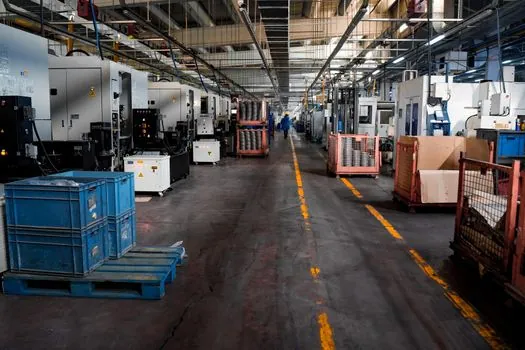
Asia Pacific represented 42.5% of the industrial motor market in 2025, making it the largest regional market, while North America is identified as the fastest-growing region within the broader energy-efficient motor market [S3][S4]. These figures point to two distinct procurement environments: Asia Pacific supplies the largest volume base, while European regulation and North American operating-cost pressure raise the value of upgraded efficiency classes.
Automation adds a second demand vector. Industrial motors serve conveyors, robotic equipment, machine tools and automated assembly systems, where production speed and consistency depend on dependable drive packages [S3]. Data-center growth further supports motor demand from pumps, fans and compressors, the same load categories associated with high-efficiency industrial equipment [S1][S3].
Pumps Fans and Continuous Duty Lead Application Demand
Pumps dominated the energy-efficient motor market by application in 2024, while fans showed significant growth [S4]. IE4 and IE5 technologies are specifically associated with pumps, compressors, fans and industrial machinery because these systems operate long enough for motor losses to influence operating cost [S3].
The AC motor segment dominated the energy-efficient motor market with a 61% market share in 2024 [S4].
For continuous-duty pumps and fans, class selection should be tested against operating hours, starting frequency, load profile, drive configuration and maintenance exposure. For conveyors, robotic cells and machine tools, compatibility with the existing drive, mechanical coupling and control system can outweigh a further efficiency-class increment. Motor selection must match the application rather than maximize a label.
Smart Monitoring Adds a Performance Criterion

IE4 and IE5 deployments can be paired with IoT monitoring of motor vibration, temperature and operating conditions, enabling maintenance teams to identify wear and schedule repairs before production interruption [S3]. This condition monitoring extends efficiency from nameplate performance into operating performance by detecting degradation that increases mechanical friction and electrical losses.
The wider market context supports continued replacement and retrofit spending. Published 2026 industrial motor estimates range from $22.40 billion [S7] to $24.15 billion [S3] and $25.16 billion [S2], reflecting different category boundaries and forecast methodologies.
Monitoring is most valuable where duty is variable, downtime is expensive or motor degradation is difficult to detect during routine inspections. It is less consequential for infrequent-duty equipment with simple starts, provided that the mechanical and electrical protections still match the installation.
Market Forecasts Confirm Expansion but Defy One-Size Claims
Industrial motor forecasts published in 2026 project 2034 values of $35.13 billion at a 4.8% CAGR [S3] and $40.50 billion at a 6.13% CAGR [S2]. The industrial motors market is valued at USD 23.39 billion in 2026 and is growing at a CAGR of 4.73% to reach USD 29.46 billion by 2031 [S6]. The energy-efficient motor category is forecast separately at $72.87 billion in 2026 and $152.10 billion by 2034, a 9.63% CAGR for 2026–2034 [S4].
These differences should be checked against product scope, geography and whether the estimate includes motors, components or broader electrical equipment.
For buyers, the defensible market signal is not a single global total. It is the combination of IE3 scale, faster movement into IE4, regulatory pressure in Europe, data-center load growth and continued industrial automation. The industrial lubricant decision remains linked to bearing reliability and motor operating efficiency, while correct drive integration determines whether an upgraded motor delivers its rated performance in service.
Track quarterly motor orders by efficiency class, request IE3 and IE4 quotations for the same duty, and compare installed energy cost using actual operating hours rather than nameplate efficiency alone.