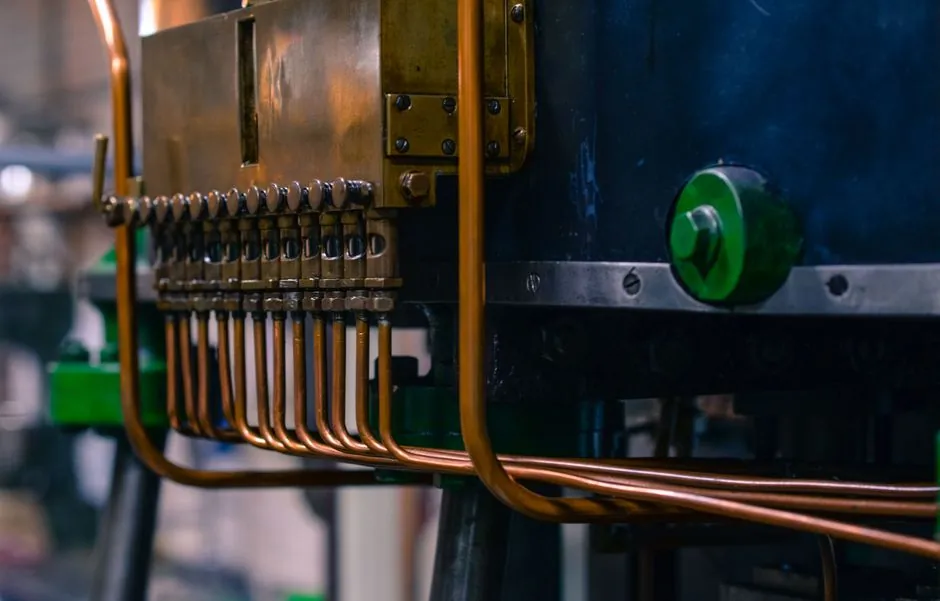
An industrial pump is a mechanical device that moves liquids, slurries or gases by converting rotational or reciprocating mechanical energy into hydraulic energy, with reference spec ranges of head 5–150 m, inlet diameter 25–200 mm, motor power 0.75–250 kW, and efficiency 60–85% at best efficiency point (BEP) [S3].
Standard reference parameters for chemical-manufacturing duty include operating temperature -20 to 150 °C, viscosity up to 200 cP for centrifugal and up to 5000 cP for positive displacement (PD) designs, with solid content limits of 5% w/w centrifugal and 20% w/w PD, and a recommended flow window of 70–110% of BEP to avoid cavitation and recirculation [S3]. Procurement reference standards include ISO 5199, ISO 9906, ASME B73.1, API 610, API 682, EN 1092-1, IEC 60034-1, and ATEX 2014/34/EU [S3].
How Industrial Pumps Are Classified by Mechanism and Pressure
Industrial pumps split into two energy-transfer families: centrifugal machines, where an impeller accelerates fluid radially outward and a volute or diffuser converts velocity into pressure, and positive displacement machines, which trap a fixed volume per cycle and force it into the discharge regardless of downstream pressure [S3].
Pressure class drives the technology choice: Singapore commercial and light-industrial duty commonly sits in the 75–120 bar band, while ultra-high-pressure waterjet and precision cutting systems exceed 500 bar (50 MPa / 7,250 PSI), as illustrated by the Interpump PUMP 5015 R ATEX at 15 L/min, 500 bar, 1,450 rpm, and 14.7 kW input [S2]. Entry-level industrial cleaning units such as the Interpump WW90 series deliver 8 L/min at 90 bar (1,300 PSI) with just 1.47 kW input in a 177 × 175 × 130 mm, 5.2 kg package, showing the wide envelope between light-duty and high-pressure process pumps [S2].
Materials of Construction and Sealing Options
Wetted-parts selection is driven by fluid corrosiveness, temperature and solids, with common alloys spanning cast iron, 304L, 316L, Duplex 2205, Alloy 20, Hastelloy C-276, bronze, polypropylene, and PTFE-lined variants for aggressive chemistry [S3].
Sealing systems scale from packed gland and single mechanical seal for benign service, to double mechanical seal and magnetic-drive (sealless) configurations for toxic, volatile, or API 682-classified duties [S3]. Electric supply to the drive is standardized at 380–480 V, 3-phase, 50/60 Hz, with auxiliary cooling water typically 0.5–5 m³/h at 2–4 bar for thermal management on packaged process pumps [S3]. Expected service life under normal service sits in the 20,000–50,000 hour range, with continuous (S1) and intermittent (S3) duty cycles defined per IEC 60034-1 reference practice [S3].
Selection Criteria and Comparison of Main Pump Types
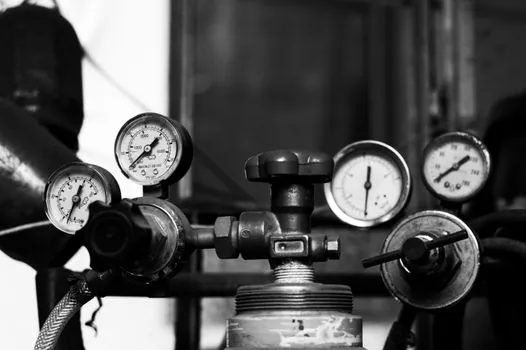
The right pump type is set by four physical limits: required flow, required head, NPSH available versus NPSH required, and fluid properties (viscosity, solids, temperature, corrosiveness); running outside the 70–110% of BEP window causes recirculation, cavitation, premature seal failure, and bearing damage [S3].
For high-flow, high-head industrial duty the main options line up as follows: single-stage horizontal centrifugal units handle low head (below 120 m) with ultra-high flow and offer a 15+ year service life and roughly 14% better continuous-duty energy efficiency than equivalent vertical units, while multi-stage horizontal pumps add impellers in series to reach up to 1200 m head for long-distance high-lift transfer [S4]. Large-flow centrifugal machines are split into horizontal split-case (typical 1,000–100,000 m³/h, 10–200 m head, 88–92% efficiency) and axial-flow designs (2,000–150,000 m³/h, 2–20 m head, 83–87% efficiency), with axial flow favored for flood control and irrigation and split-case favored for municipal water supply and power-plant cooling [S5].
Horizontal end-suction centrifugal pumps (the most common general-purpose process pump) cover 5–150 m head, 25–200 mm inlet diameter, and 0.75–250 kW motor power in a single-stage configuration, and dominate heavy-load industrial deployment at roughly 68% of total high-flow pump share per 2026 industry reporting [S3][S4].
Large-Flow Pumping: Sizing, Margins, and Common Failure Modes
Large flow is defined as a rated continuous output of 1,000 m³/h or higher, and proper sizing starts by summing all concurrent fluid transfer demand, then adding a 10–15% safety margin for pipeline friction, future expansion, and peak events before correcting for system head and pump efficiency [S5].
Hydraulic Institute research referenced in 2026 industry guides attributes roughly 40% of large-flow pump performance problems to incorrect flow specification at the design stage, and 70% of unplanned large-flow shutdowns to improper inlet pressure that causes cavitation, which can cut flow output by 15–25% and destroy impellers within 1–2 years [S5]. Properly sized large-flow units cut total lifecycle energy cost by up to 35% versus incorrectly sized units, while scheduled inspection every 3,000 operating hours and major overhaul every 20,000 hours can extend service life by 40% over purely reactive maintenance [S5].
Use Cases, Standards, and Sourcing Reference
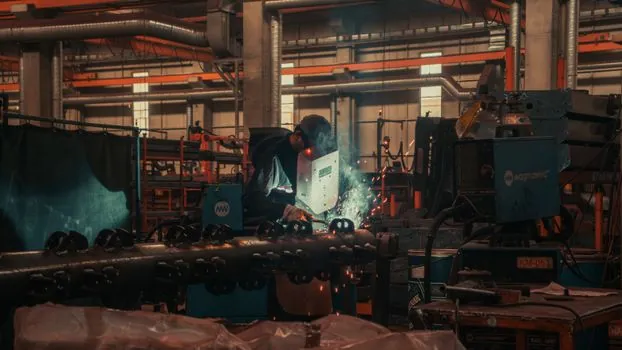
Horizontal industrial pumps are specified across water treatment, chemical processing, mining, municipal water supply, thermal power cooling, flood control, and large-scale desalination, with 62% of 2026 large-flow demand coming from public infrastructure and energy projects and desalination demand growing roughly 18% year-over-year since 2024 [S4][S5].
For plant buyers, the practical reference set is ISO 5199 (centrifugal pumps, technical class), ISO 9906 (hydraulic performance acceptance tests), ASME B73.1 (chemical process end-suction pumps), API 610 (oil, gas and petrochemical process pumps), API 682 (mechanical seals), EN 1092-1 (flange dimensions), IEC 60034-1 (rotating-machine rating), and ATEX 2014/34/EU (explosion atmospheres) [S3]. Sourcing channels include new-equipment purchase and ex-ship refurbishment from ship-breaking yards, where refurbished industrial equipment sourced directly from Alang Ship Breaking Yard is supplied at prices 40–60% below new [S1].
Decision Signals and Trackable Items for 2026 Pump Sourcing
For a 2026 spec sheet, anchor on four numbers: required flow (m³/h) at the duty point, required head (m), NPSHa at worst operating condition, and fluid chemistry, then map to a centrifugal versus PD architecture using the head/viscosity/solids limits above [S3][S5]. Watch for two trackable signals: VFD pairing on large-flow units to match shifting process demand, and ATEX/IECEx zone verification for any pump in flammable-service or hydrogen-rich service, since ATEX 2014/34/EU equipment category dictates both motor enclosure and seal arrangement [S2][S3]. Sizing discipline, not brand, is the single largest lever on lifecycle cost, and correctly specified units routinely deliver 15+ year service life in horizontal end-suction duty and 27% lower long-term operating cost versus poorly matched alternatives [S4].
For the relevant spec sheets and selection criteria, see additive manufacturing material, linear guide, and crossed roller guide.
See also our earlier report, Air Compressor Manufacturing Quality Standards: 2026 Spec Map.