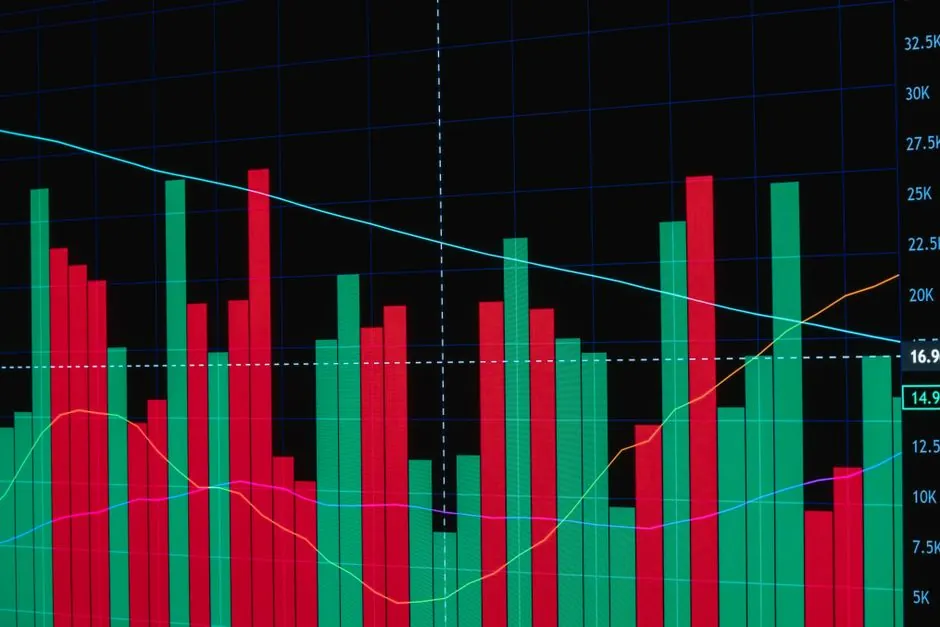
Two parallel forecasts frame the 2026-2030 industrial refrigeration outlook: industrial refrigeration equipment is sized at US$25.1B in 2026, rising to US$36.3B by 2033 at a 5.4% CAGR, while the related industrial refrigeration systems segment is tracked by a separate publisher at a 6.3% CAGR toward a US$34B 2030 value [S2][S3].
Hardware mix leans heavily on compressors at 23% of equipment value, and on ammonia (NH3) as the dominant working fluid with 41% share, with CO2 (R-744) the fastest-growing refrigerant at an 8.8% CAGR driven by low-GWP regulatory pressure [S2]. End-use is anchored by food and beverage processing at 35% of cold-chain demand, while data center cooling is the highest-growth application at 8.6% CAGR [S2].
Market Sizing: Equipment vs Systems, Two Methodologies
The equipment report values the 2026 industrial refrigeration equipment market at US$25.1B and projects US$36.3B by 2033, a US$11.2B absolute increment over 7 years at a 5.4% CAGR, against a 4.6% historical CAGR across 2020-2025 [S2]. The systems report, covering industrial refrigeration systems as a downstream assembly, is modeled to surpass US$34B in 2030, with Asia-Pacific alone reaching US$10.6B that year from a 2025 base of US$7.4B at a 7% regional CAGR, and the USA reaching US$8.7B in 2030 from US$6.9B in 2025 at a 5% CAGR [S3].
The two figures are not contradictions: equipment covers discrete hardware (compressors, condensers, evaporators, controls, auxiliary skids), while systems covers engineered packages built from that equipment. The parent HVAC plus commercial and industrial refrigeration equipment market is projected near US$548B by 2030, with industrial refrigeration systems at roughly 6% of that parent, sitting inside a Machinery industry total near US$5,280B by 2030 [S3]. For spec work, treat equipment CAGR as a hardware-volume proxy and systems CAGR as an installed-project value proxy, since contractor engineering, controls integration, and field commissioning are priced into the systems number but not the equipment number.
Component and Refrigerant Mix: Where the Dollars Sit
Compressors hold 23% of equipment value, the single largest component line, reflecting the core cooling cycle, while controls and control systems are flagged as the fastest-growing component, driven by IoT and AI-enabled predictive maintenance retrofits on existing ammonia and CO2 plants [S2]. On the refrigerant side, ammonia leads at 41% share; CO2 is the fastest-growing at 8.8% CAGR, supported by transcritical CO2 booster architectures now common in European distribution and retail cold rooms; HFCs and HC/HCFC blends make up the balance [S2].
For new European chemical-plant and food-plant builds, specifying ammonia/CO2 cascade or ammonia-only configurations aligns with the regulatory pull described in the equipment report, where natural-refrigerant mandates are a stated demand driver. Controls upgrades are a separate line item: retrofittable PLC + IoT telemetry panels can be specified without replacing the compressor skid, and several recent OEM programs (Danfoss-HPE/Google efficiency work, Aligned DeltaFlow immersion cooling, Engineered Fluents-Iceotope-Juniper integration) are explicitly named as standardizing data center cooling on direct-liquid and two-phase loops [S2]. Specifiers buying controls hardware should evaluate industrial coating compatibility for ammonia plant rooms and industrial camera integration for remote compressor-house monitoring before locking a controls bill of materials.
Regional Split: APAC Leads, Europe Regulates, MEA Accelerates

Asia-Pacific holds the largest regional share at 33% of the equipment market, supported by cold-chain infrastructure buildout in China, India, Japan, and Southeast Asia, with the systems-only forecast giving APAC US$10.6B of 2030 value at a 7% regional CAGR [S2][S3]. Europe holds 29% share at a 4.3% equipment CAGR, where the driver mix is regulatory (F-Gas phase-down, Kigali Agreement enforcement) rather than volume. North America contributes 27% supported by innovation, with the USA systems market at US$8.7B in 2030, growing 5% CAGR from a 2025 base of US$6.9B under EPA refrigerant transition rules [S2][S3].
Middle East and Africa is the highest-growth equipment region at a 6.1% CAGR, driven by food security initiatives, cold storage expansion, and industrial processing investments, which matters for specifiers evaluating skid fabricators in the UAE, Saudi Arabia, Egypt, and South Africa for export-ready ammonia packages [S2]. South America (Brazil, Argentina, Colombia) and Rest of World round out the segmentation, and the commercial refrigeration report tracks parallel growth at a 6.5% CAGR adding US$16.18B over 2025-2030 across retail, restaurants, hotels, and catering units, a downstream pull-through signal for industrial cold-storage and food-processing specifiers [S1]. The regional divergence argues against a single global spec: a buyer in Riyadh, Stuttgart, or São Paulo is paying for different regulatory and ambient drivers, and equipment selection should match those local constraints, not the global average.
End-Use Comparison: Food, Pharma, Data Centers, Chemicals
Food and beverage processing dominates cold-chain application share at 35%, reflecting long-standing demand for blast freezers, plate freezers, and ammonia/CO2 cold stores tied to meat, dairy, and seafood processing. Data centers are the fastest-growing application at 8.6% CAGR, anchored by AI workload heat loads and the move to direct-liquid and immersion cooling, where the named OEM programs (Danfoss-HPE/Google, Aligned DeltaFlow, Engineered Fluents-Iceotope-Juniper) are explicitly standardizing refrigerant and coolant architectures for hyperscale sites [S2].
Pharmaceutical cold chain and chemicals/process cooling are the residual application bucket, growing with biologics and vaccine distribution in North America and with chemical-plant process chilling in Europe and APAC. For spec selection, the working-fluid choice maps to load: ammonia for large centralized industrial sites above roughly 500 kW cooling, CO2 for distribution and supermarket clusters where transcritical booster systems have displaced HFC racks, and HFCs/HC blends only for retrofit or small-load cases where natural-refrigerant codes do not force a change. Buyers comparing material-handling and storage systems for cold-chain facilities should also weigh upstream packaging decisions, and the polypropylene resin demand outlook for 2026-2030 directly affects insulation-panel, pallet, and crate resin pricing. For plants where ammonia leak detection matters, industrial buzzer and gas-detection sensor specifications should be reviewed against the local mechanical code.
Selection Criteria and Vendor Map
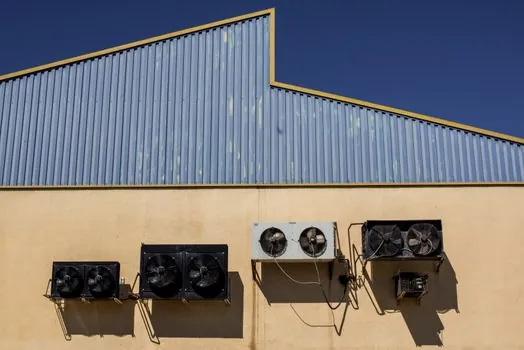
Specification of industrial refrigeration equipment in 2026 should be driven by four decision criteria: working fluid, cooling capacity band, controls architecture, and regional regulatory regime. By working fluid, ammonia (41% share) wins on thermodynamic efficiency and zero-GWP for large industrial sites, CO2 (8.8% CAGR) wins on regulatory alignment in the EU and on smaller distributed loads, HFCs/HCFCs remain a retrofit option, and HFOs and natural blends are emerging. By capacity, screw and centrifugal compressors cover the 200 kW to multi-MW band, with reciprocating units holding small and medium loads. By controls, IoT-enabled PLC panels with predictive maintenance are the fastest-growing line and a near-mandatory spec for new builds. By region, EU buyers face the strictest natural-refrigerant pull, APAC buyers face the largest volume growth, and North American buyers face EPA-driven HFC phase-down timelines [S2].
The commercial refrigeration vendor set, Ali Group, Blue Star, Daikin, Dover, Electrolux, Felix Storch, FREOR, FUJIMAK, Haier, HOSHIZAKI, Illinois Tool Works, Imbera, Lennox, Panasonic, Tecumseh, TEFCOLD, Middleby, and Turbo Air, overlaps with industrial suppliers at the controls and compressor-component tier [S1]. For signal conditioning and process instrumentation around compressor houses and cold-storage loading bays, the signal conditioner supplier landscape is a useful spec baseline. The Business Research Company industrial refrigeration systems report profiles an even broader vendor tier, including EPC contractors and system integrators not all listed here [S3].
Constraints, Risks, and Trackable Signals
Three constraints will temper the headline CAGRs. First, refrigerant regulation is uneven: the EU F-Gas phase-down and Kigali Agreement enforcement force natural-refrigerant migration on European sites, while US EPA rules are tightening on a slower schedule, and APAC and MEA markets remain more permissive on HFC use, so global OEMs must run parallel product lines. Second, ammonia plant safety codes (IIAR 2 in North America, EN 378 in Europe, and equivalents in APAC) gate siting, machinery-room ventilation, and emergency stop design, raising installed cost for ammonia versus HFC plants even where ammonia is thermodynamically preferred. Third, data center cooling demand is sensitive to hyperscale build cycles: the 8.6% CAGR application forecast is anchored on AI workload growth that is not contractually locked, and a slowdown in GPU deployment or a shift to higher-temperature district cooling would compress the 2030 number. [S1]
Two signals to track over the next 12-18 months: CO2 compressor pricing versus screw ammonia compressor pricing on a $/kW basis, since convergence would tilt new-build economics toward transcritical CO2 in mid-size plants; and the share of new industrial refrigeration systems contracts that bundle IoT controls and predictive maintenance as a standard line item versus an option, since controls is the named fastest-growing component segment [S2]. The 6.5% CAGR commercial refrigeration build behind the industrial number, forecast to add US$16.18B over 2025-2030, is the leading indicator for upstream industrial cold-storage and food-processing demand [S1].