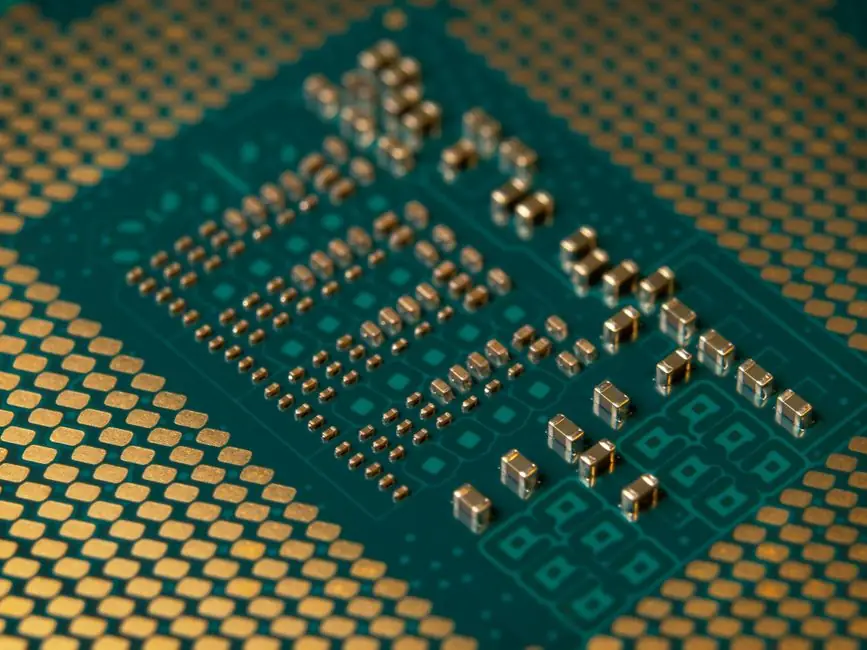
Global semiconductor sales are projected to grow by approximately 8–9% in 2026, with AI computing, high-performance processors, memory and automotive chips leading demand while industrial equipment recovers more gradually [S5].
The cycle has moved beyond stabilization into a selective upcycle: Avnet Silica values the served semiconductor market at $454 billion for 2026, versus its earlier $433 billion forecast, but longer lead times and renewed availability pressure make the recovery uneven [S3].
What the 2026 recovery actually shows
The recovery entered 2026 after a strong 2025, when global semiconductor sales reached approximately $791.7 billion and the World Semiconductor Trade Statistics forecast called for roughly 8–9% expansion in 2026 [S5]. A WSTS forecast published on June 16, 2025 projected an 8.5% global market increase in 2026, reaching $760.7 billion [S4].
Avnet Silica’s Q3 2026 Trendliner data moved its served-market estimate from $433 billion to $454 billion for 2026. It also projected a further 10.8% increase in 2027 to $503 billion and growth to $584 billion by 2029, making the planning horizon longer than a single quarterly restocking cycle [S3].
The industrial signal is therefore broadening, not uniform.
AI and compute lead, industrial demand trails
AI infrastructure remained the primary structural demand driver at the beginning of 2026, with data-center expansion and model training increasing demand for advanced processors and high-bandwidth memory [S5]. At the beginning of Q1 2026, demand remained concentrated in AI computing, high-performance processors, memory technologies, and automotive semiconductors, while consumer electronics and industrial equipment showed a more gradual recovery [S5].
That pattern matters to industrial buyers because AI consumption competes for manufacturing capacity and advanced packaging. A signal calibrator or industrial camera upgrade may use the same mature-node analog, power-management, memory, and sensing components exposed to these allocation shifts, even when the end product is not an AI accelerator.
Consumer electronics and industrial equipment were recovering more gradually in Q1 2026, while automotive, memory and high-performance processors carried stronger demand [S5].
Europe recovery remains less synchronized
Eurozone manufacturing output expanded for a fifth consecutive month in June 2026, moving from 51.3 to 51.7 and producing the region’s strongest quarter since 2022 [S3]. That is a measurable improvement, but it does not by itself confirm a broad industrial restocking cycle.
Export demand remained weak, inventories were still being reduced, and the International Monetary Fund lowered its 2026 European Union growth forecast from 1.1% to 0.9% [S3].
The practical distinction is visible in industrial production trends, where physical output and component purchasing can diverge. For semiconductor sourcing, local manufacturing expansion, customer order intake and supplier lead times are more useful evidence than a regional forecast alone.
Recovery, constrained supply and procurement risk
By March 2026, the semiconductor cycle had shifted from recovery toward a supply crunch, with exceptionally strong AI-chip demand and constrained compute availability limiting the supply response [S2]. Avnet Silica likewise identified longer lead times, changing manufacturing priorities and renewed pressure on component availability during Q3 2026 [S3].
As the semiconductor market moved further into an upcycle in Q2 2026, changing manufacturing priorities, longer lead times, and renewed pressure on component availability were creating a more uneven recovery [S3]. A broad “market up” assumption is therefore unreliable for component planning.
Industrial equipment should be secured against allocation risk using approved alternatives, lifecycle status and redesign thresholds rather than blanket stock increases. If a data logger depends on a constrained memory or processor family, the engineering plan should identify a pin-compatible or firmware-compatible alternative and define the validation effort before the shortage closes the sourcing window.
Industrial buyers by demand profile
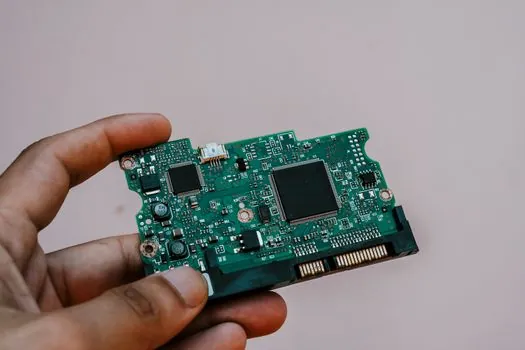
AI infrastructure buyers face the strongest demand but also the sharpest compute constraints, making capacity reservation, design qualification and package-level alternatives more important than spot-price optimization [S2][S5]. Automotive and electrification buyers sit in a larger demand pool, with automotive valued at $17 billion in EMEA, but regional manufacturing and inventory conditions can still delay order conversion [S3].
General industrial equipment buyers face the slowest and least uniform recovery. Their risk is not simply too few chips; it is buying at the wrong point after customers advance orders, then carrying excess inventory when European export demand and factory output soften [S3].
For plant instrumentation, the comparison is straightforward: AI and data-center hardware offers stronger volume momentum but higher supply constraint; automotive electronics offers established scale with cyclical lead-time exposure; general industrial equipment offers lower near-term growth but more substitution opportunities. A dc power supply procurement plan, for example, should test power-device alternatives, thermal margins and lifecycle notices before treating market growth as justification for a broad buffer-stock increase.
Supply-chain constraints beyond wafer capacity
Semiconductor production depends on energy, industrial gases, logistics and packaging, so a recovery can raise exposure to inputs outside the fab itself. Helium is used in processes including lithography and wafer cooling, while air-freight disruption around a major Gulf logistics hub can delay high-value semiconductor distribution [S5].
These dependencies do not imply that every conflict or logistics interruption becomes a production stoppage. They create scenarios that should be assessed against a qualified supplier’s material sources, transport routes, safety stock and substitution plan [S5]. High-value components with long recovery cycles require more attention than interchangeable low-cost parts, particularly when the same commodity is exposed to several routes.
At equipment level, process consistency, material purity and maintenance readiness become more important as utilization rises. Fab modernization can extend tool life through controller upgrades, while plasma characterization and endpoint detection support deposition control and yield [S4]. These measures affect effective output rather than merely nominal wafer capacity.
How to validate recovery before expanding inventory

Track four measurable signals: order intake for industrial automation and plant equipment, supplier lead-time movement, inventory normalization among customers, and the mix between AI, memory, automotive and mature-node products [S1][S3][S5]. These indicators separate a broad demand expansion from a capacity-constrained segment or customer pull-forward.
Use approved-alternative and redesign rules before shortages force a reactive substitution. For inspection equipment, the practical validation path may involve an industrial borescope or industrial X-ray system, with image-quality, calibration, enclosure, hazardous-area and service requirements checked against the existing installation rather than compared by unit price alone.
The next verification point is whether Europe’s manufacturing index remains above the 50 expansion threshold, domestic orders strengthen after pull-forward buying fades, and inventories stabilize alongside broader factory output [S3]. WSTS’s 8–9% 2026 growth projection, Avnet Silica’s $454 billion served-market estimate and the reported extension of longer lead times should then be read together, not as interchangeable indicators [S3][S5].