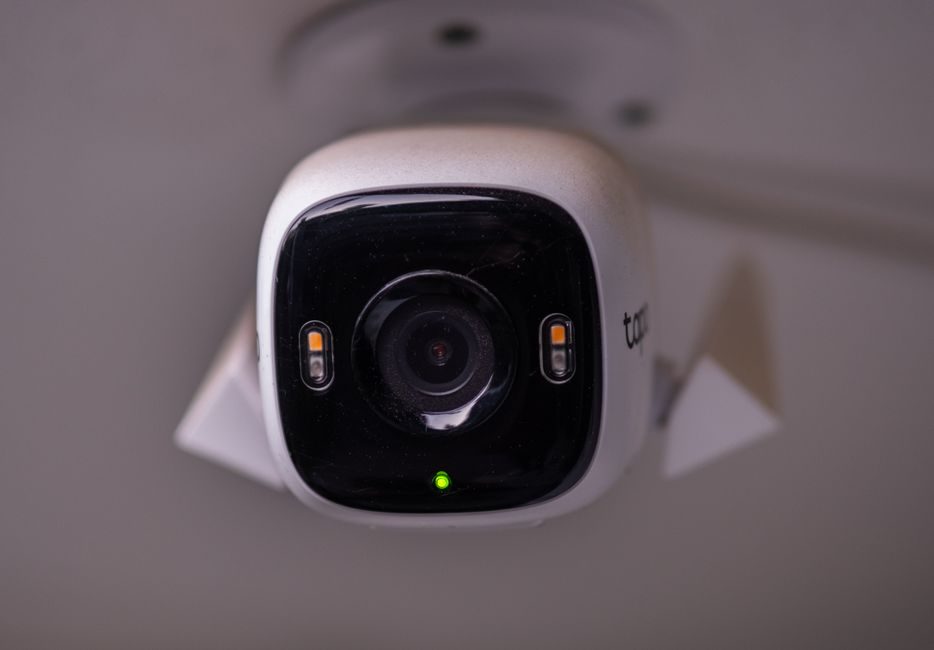
An industrial-grade install starts with the camera's published envelope, not the bracket on the shelf: ingress, impact rating, sensor class, and PoE power class must match the mounting location before a single hole is drilled [S1].
For perimeter, plant-floor, and outdoor public-space deployments, the AXIS P13 Network Camera Series demonstrates the typical spec stack an installer should plan around — light-sensitive models up to 4K resolution, indoor and outdoor versions, CS-mount flexibility, and Lightfinder / Forensic WDR for low-light industrial aisles [S1].
Match Ingress and Impact Rating to the Mounting Location
Outdoor cameras in industrial yards need a minimum of IP66/IP67 plus IK10 impact resistance, because wash-down, dust, and accidental impact are baseline risks, not edge cases [S1]. The P13 outdoor-ready models are explicitly described as "robust" and outdoor-rated in the manufacturer's published characteristics, with the same family offering indoor variants for clean electrical rooms or control cabinets [S1]. Specifying an indoor housing on a loading dock is the single most common cause of premature failure in industrial surveillance — seal the housing to its environment, not to its price list.
Don't trust the badge alone: ask the vendor for the test certificate against IEC 60529 (IP) and IEC 62262 (IK) and confirm the rating covers the cable entry, not just the body. For chemical or marine-adjacent sites, push further to IP66 + 316L stainless or IK10+ polycarbonate and verify salt-spray test hours, because a standard IP66 plastic dome can still craze within 12 months in a chloride atmosphere.
PoE Class, Cable Run, and Power Budget
Most modern industrial IP cameras, including the P13 series variants, draw power via PoE, which collapses two cables into one and simplifies conduit runs [S1]. The catch is the PoE class: a heater-blower-equipped outdoor dome often needs Class 4 (up to 25.5 W at the PD), which a 100 m Cat6 run can deliver but a 250 m run cannot without extenders or midspans.
Rule of thumb the install team should write on the as-built: 100 m max for full-power PoE over Cat5e/Cat6, derate for temperatures below -10 °C on outdoor runs, and budget 20% headroom on the injector's total wattage to cover IR LED surge on cold-start. Cross-check against the switch's per-port budget — a 24-port PoE+ switch does not always deliver 30 W on all 24 ports simultaneously, and thermal throttling at 40 °C ambient is the usual silent failure [S1].
Lens, IR Throw, and Sensor Stack for the Application
For a 4K P13 with CS-mount, the lens choice sets the field of view and the IR throw distance — a 2.8 mm lens covers a doorway, a 12 mm lens reads a licence plate at 25 m, and neither is interchangeable after install [S1]. Lightfinder technology and Forensic WDR on the same family specifically address mixed-lighting industrial aisles where a loading bay door competes with high-bay fluorescents [S1].
On the OEM module side, Shenzhen CCDCAM's catalogue illustrates the sensor/SOC combinations that drive low-light behaviour: 8MP 30 fps modules pairing 3519DV500 SoC with IMX415/IMX678/IMX585 sensors in 38×38 mm footprints, plus 5MP options on SSC377D + IMX335, all running at 30 fps with 1Gbit/2Gbit DDR3L [S2]. When matching a third-party module to a P13-class housing, confirm the module's operating temperature window and the IR-cut filter type — a module rated 0 °C to 60 °C will fog inside an unheated northern outdoor dome in winter.
Validate the Link with a CCTV Tester Before Final Fix
On the day of install, a handheld CCTV tester is the difference between a one-trip and a three-trip job: technicians use it to confirm IP address assignment, ONVIF handshake, focus, IR illumination at night, and recorded frame rate before the camera is finally torqued to its bracket [S2]. The CCDCAM catalogue lists a dedicated CCTV Tester product line alongside its IP camera modules, signalling that the manufacturer treats tester-based validation as part of the deployment workflow, not a separate trade [S2].
Acceptance values to write into the commissioning sheet: H.265 stream at the configured resolution hitting ≥25 fps with no dropped frames over 5 minutes, ONVIF Profile S/T discovery completing in under 10 seconds, IR illumination covering the full claimed throw distance on a test chart, and PoE draw at the PD within ±10% of the datasheet figure at the moment of IR cutover. Anything outside those bands is a re-visit, not a sign-off.
Mounting, Conduit, and Earthing for Industrial Yards
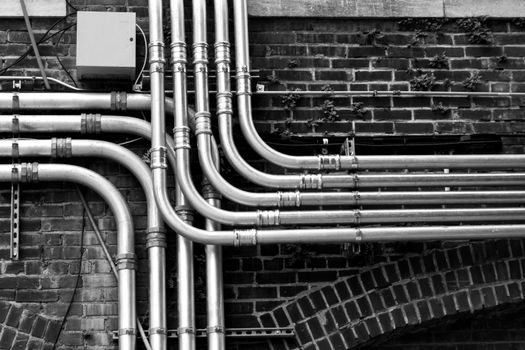
Outdoor industrial mounts carry three load cases that residential installs ignore: wind load on the bracket, vibration from adjacent machinery, and galvanic corrosion at the fixing interface. Use 316 stainless fixings into a powder-coated or galvanised bracket, isolate dissimilar metals with nylon washers, and route the drain loop below the conduit entry so any condensation drains away from the housing, not into the RJ45 gland [S1].
Earthing is the silent killer in industrial surveillance: a floating camera on a long PoE run picks up ground potential differences that show up as banding, reset loops, and IR-cut filter flicker. Bond the housing to the site's protective earth with a short, fat conductor — not the signal cable's drain wire — and check the resistance to the main earthing bar is below 1 Ω on commissioning. This is also where adjacent equipment spec work converges: installers handling arc welding machine power, grounding, and duty-cycle work will recognise the same earth-loop discipline.
When the Camera Is Not the Right Tool
A fixed surveillance camera is the wrong answer for moving machinery envelopes, blind spots under conveyors, or anywhere the failure cost is high and lighting is uncontrolled — escalate to a thermal or pan-tilt-zoom model, or to a multi-sensor unit, before adding more fixed domes [S1]. Likewise, do not specify an indoor-flanged IP camera for an ATEX zoned area; the housing certification is what counts, not the marketing line.
If the brief is "see if anyone is there" in a low-traffic plant room, an industrial sensor or a simple motion detector with logging is cheaper, more reliable, and avoids the NDAA, GDPR, and retention paperwork that an always-recording IP camera drags in. A camera is a deliberate compliance object; treat the spec sheet as a legal artefact, not a sales flyer.
Sourcing, Standards, and Documentation Trail
Two sourcing patterns dominate industrial surveillance in mid-2026: established European/Japanese OEMs publishing full IEC 60529, IEC 62262, and ONVIF conformance data with each SKU [S1], and Shenzhen-based module houses such as CCDCAM publishing 2026 product catalogues with sensor/SOC pairings and CGI/SDK downloads for OEM integrators [S2]. Both are valid; the specifier's job is to make the same acceptance criteria apply regardless of source — IP/IK certificate, ONVIF profile, PoE class, and a recorded commissioning video with timestamps [S1][S2].
Track for the rest of 2026: the Axis InnoTrans 2026 appearance in Berlin (Hall 2.1, Stand 625, 22-25 Sep 2026) where new P-series and Q-series variants are typically released, and any CCDCAM 2026 catalogue update that adds higher-frame-rate AI SOC modules beyond the current 2.5 TOPS 3519DV500 platform [S1][S2].
Spec-level background on the components involved: surveillance camera, linear guide, and crossed roller guide.