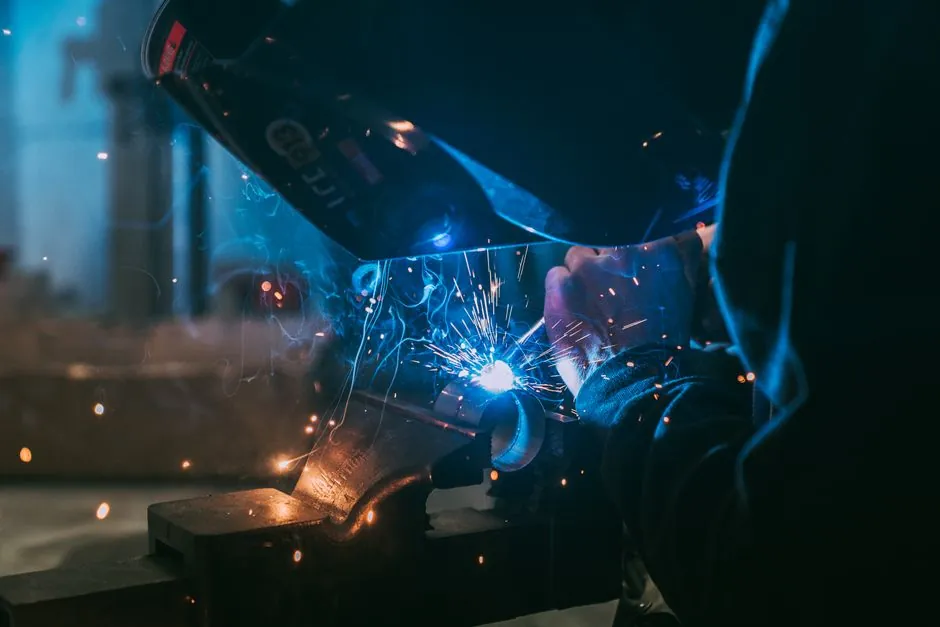
Selecting an industrial camera for a welding work cell is a process-engineering decision, not a security-camera purchase: the dominant signal is a 2,000-6,000 K arc running at 100-300 A within 200-400 mm of the lens, and any optical chain that cannot manage that flux will saturate, fog, or die from spatter impact [S1][S2].
The decision tree is driven by seven variables in fixed order: arc brightness class, viewing target (puddle vs. seam vs. surrounding HAZ), stand-off distance, lens and filter requirement, enclosure rating, software/analytics layer, and process-specific imaging technology (HDR visible, short-wave IR, thermal, or pulsed-laser illumination) [S1][S2]. Buyers who collapse that list into "resolution and price" typically replace the unit inside one quarter.
Match the Imaging Technology to the Welding Process
Process type sets the sensor class before resolution is discussed: MIG/GMAW produces a bright arc with high spatter and mandates high dynamic range imaging so the puddle and the surrounding workpiece are both legible; TIG/GTAW runs cleaner but still demands fine tonal gradation; laser welding needs a fast shutter and high energy-density handling; submerged-arc and plasma-arc cells often require thermal or short-wave IR because the visible arc is obscured by flux or plasma glare [S2]. Short-wave IR is the standard answer where fumes and smoke block the visible band, while pulsed-diode laser illumination (e.g. CAVILUX-class sources up to 5 MHz pulse rate) is used to "freeze" arc motion and read the weld as if it were cold [S3].
Visible-light cameras remain adequate only when the arc is well separated from the optical path and lighting is controlled; the moment a robot torch swings across the line of sight, an HDR or actively-illuminated chain is the safer spec [S2]. Selecting a camera designed for the specific process is the single biggest determinant of inspection accuracy, because post-weld NDT or destructive testing only catches defects after the part has left the cell [S3].
Environmental Gates: IP, Spatter, Heat, Vibration
Welding cells attack the camera on four fronts simultaneously: heat from the workpiece and torch, spatter droplets travelling several metres, dust and metallic fume, and vibration from robot axes or stamping neighbours. Minimum enclosure rating is IP65 for general fabrication cells, with IP66 specified where high-pressure wash-down or heavy dust loading is present, and explosion-proof housings required for chemical or solvent-adjacent cells [S2][S4]. A lens shield or anti-spatter filter (typically a clamped glass or sacrificial polycarbonate window) is treated as consumable, not optional, because a single MIG droplet at 300 mm standoff can pit a coated lens in one shift.
Robot-mounted cameras add a second failure mode: cable fatigue. Industrial drag-chain-rated cables with PUR or TPE jackets rated for 5-10 million flex cycles are the default for 6-axis cells, and a quick-disconnect at the camera head cuts mean-time-to-replace from hours to minutes [S2]. Heat resistance is delivered through cooled housings or remote optics (fibre-coupled sensor head separated from the lens), which keeps the CMOS die below 60 °C even next to a 400 °C preheat plate [S1][S2].
Resolution, Frame Rate, and HDR as a Triple Constraint
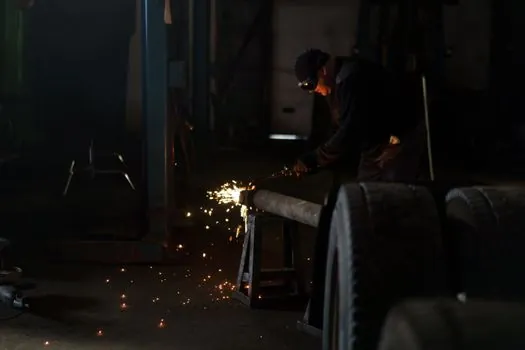
For weld-quality inspection the minimum baseline is 1080p (1920 × 1080) at 30 fps, with 60 fps specified the moment a robot, a seam tracker, or a high-speed wire feed is in the loop, because porosity, undercut, and incomplete fusion only become legible when motion blur is below one pixel per bead-width [S2]. HDR is treated as a separate axis from resolution: a 4K sensor without HDR will still clip the arc to pure white, and the puddle detail is lost; conversely, a 1080p HDR sensor will read both the arc envelope and the surrounding 0.5 mm HAZ line.
Frame-rate scaling should be matched to wire feed speed: at 8 m/min wire feed and 1.0 mm bead width, a 60 fps capture yields roughly 1.3 mm of bead per frame, which is enough to resolve most defect classes. Pulsed-laser illumination pushes effective exposure time into the sub-microsecond band, which is how slow-motion weld imaging is achieved without exotic sensor pricing [S3]. For related guidance on camera placement in adjacent harsh areas, see Industrial surveillance cameras for mining: 2026 selection map.
Decision Comparison: Sensor Class vs. Welding Process
Welding cells are specified against four primary sensor options, and the choice is dominated by arc visibility, not by budget: visible-light HDR suits MIG/MAG with clear sightlines and is the lowest-cost entry; short-wave IR cuts through fumes and smoke common in GMAW with long cable runs or confined-space work; thermal imaging is reserved for submerged-arc, plasma-arc, and any application where the arc itself is hidden and the temperature field is the inspection target; pulsed-diode laser illumination is used where the user needs to visualise the arc "as if it were cold" and is standard in R&D, additive-manufacturing, and high-speed seam-tracking retrofits [S2][S3]. The trade-off is concrete: visible HDR is roughly one-third the price of a SWIR chain of the same resolution, but it will not see through the fume cloud that a robotic MIG cell produces after 30 minutes of continuous duty.
For cells handling both safety monitoring (perimeter, EHS) and process monitoring, a hybrid build is common: an IP66 visible-light dome on the cell perimeter for safety compliance, paired with a process-dedicated HDR or SWIR sensor aimed at the torch. Buyers should resist the temptation to use one camera for both jobs, because safety cameras are optimised for low-light wide coverage, and process cameras for narrow-band, high-flux arc imaging [S4].
Welding Camera vs. Manufacturing Security Camera: Where the Specs Diverge
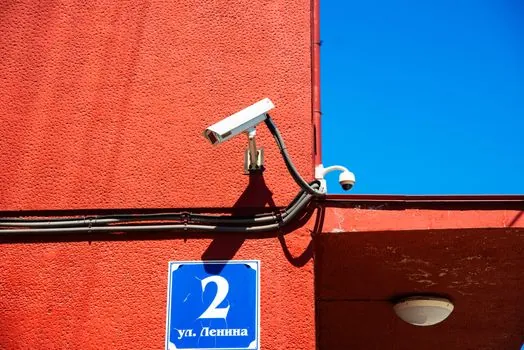
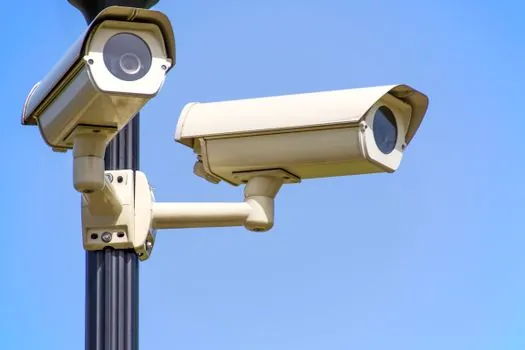
Industrial surveillance cameras for general plant security and welding cameras share an enclosure and vibration-ruggedness baseline, but the optics and sensor stacks diverge sharply. A manufacturing security camera is built for 24/7 low-light wide coverage, IP66 ingress protection, and continuous operation under sustained vibration from stamping or rolling lines, with explosion-proof housings for chemical or steel-adjacent zones [S4]. A welding camera adds arc-brightness management (HDR or active illumination), a sacrificial spatter shield, often a fibre-coupled remote head, and thermal/SWIR options that a general security line does not offer [S1][S2][S4].
Specifying the wrong class is a known failure pattern: a standard IP66 surveillance dome placed 600 mm from a robotic MIG torch will saturate the sensor, collect spatter on the dome, and typically fail within 30-90 days. The correct spec for that mounting position is a process-dedicated welding camera with an HDR sensor, anti-spatter window, and active cooling or remote-head fibre coupling [S1][S2]. For more on the perimeter/EHS side of the same plant, the welding and cutting tool encyclopedia entry and the industrial camera overview provide the adjacent spec context.
Software, Analytics, and Integration Constraints
Hardware selection is only half the spec: the software layer determines whether the camera output becomes data or stays as video. Real-time weld monitoring packages extract bead width, penetration indicators, and arc stability from the live feed, and the camera must expose a clean digital interface (GigE Vision, USB3 Vision, or CoaXPress) at the frame rate quoted, with deterministic latency below 50 ms for closed-loop seam tracking [S1][S2].
For QA-only retrofits, an HDMI or SDI output to a recording encoder is acceptable; for in-line process control, a GigE or 10 GigE interface is the practical floor, and PoE+ power simplifies robot-mounted cabling. Analytics for arc-on time, spatter count, and puddle oscillation need timestamped metadata, which in practice rules out consumer-grade HDMI capture cards on the plant network [S2]. Where the camera also feeds an MES or weld-data historian, ONVIF or OPC-UA bridging is the integration pattern most cells settle on.
Who This Spec Is For, and Where It Fails
The seven-gate spec above is built for buyers specifying a camera that will sit inside or directly adjacent to an active weld cell, including robotic MIG/TIG lines, laser welding workstations, and submerged-arc or plasma-arc cells. It is the right framework for automotive body-in-white suppliers, shipyards, pressure-vessel shops, and any fabricator running more than two shifts of automated welding. [S2]
It is the wrong framework for general plant perimeter surveillance, office-area monitoring, or any camera placement more than 3 m from the torch; for those jobs the industrial surveillance camera spec is driven by low-light sensitivity, wide dynamic range for doorways, and ONVIF conformance rather than arc management. For hazardous-area builds in chemical or oil-and-gas plants, the spec is dominated by zone/gas-group classification and explosion-proof housing, covered separately in Chemical Plant Surveillance Camera Specs: Gas Group, Zone, and Material Gates and the related explosion-proof camera guide.
Trackable signals over the next quarter: vendor releases of 4K HDR weld cameras with sub-10 W active cooling, and IEC 62443 conformance statements on welding-camera network interfaces as cells move from isolated networks to MES-connected IIoT topologies.
Spec-level background on the components involved: surveillance camera.