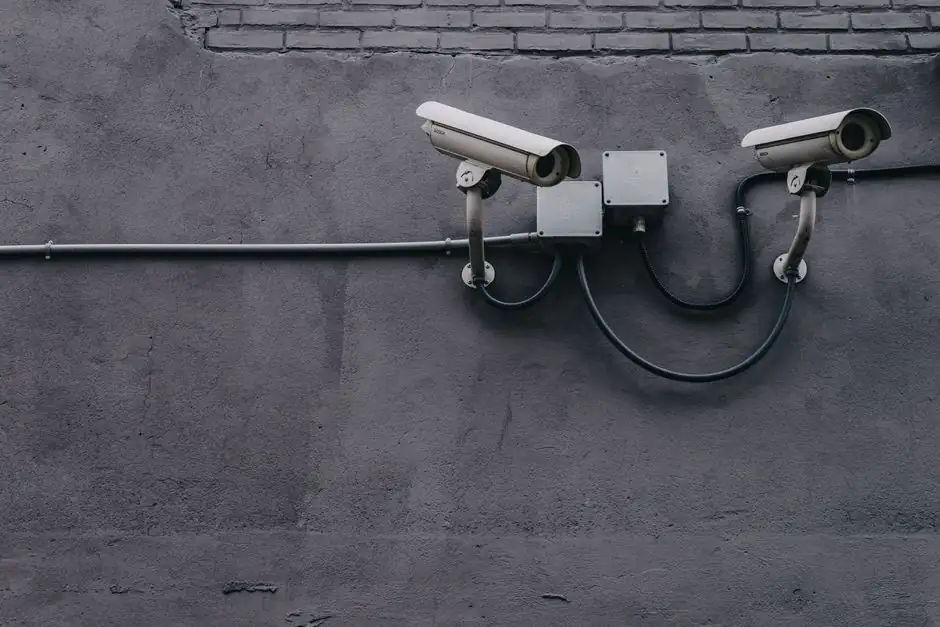
Specifying an industrial surveillance camera for elevated mounting is a balancing act between field of view, vandal resistance, and operating temperature, and the data points the process engineer needs are mounting height, lens focal length, IP/IK rating, and PoE+ONVIF compliance [S2][S3].
Across the manufacturing, construction, and infrastructure sectors, the cameras that survive at height share a tight spec envelope: IP66/IP67 sealing, IK10 impact rating, operating temperature typically -30 deg C to +60 deg C, and PoE for single-cable install on aerial work platforms and fixed masts [S2][S4].
Mounting Height and Lens Choice: The Geometry Decision
Lower mounting heights of roughly 2.3 m (7.5 ft) deliver close-range facial detail but expose the camera to tampering, while mounts up to 5.5 m (18 ft) trade face ID for broader scene coverage on production floors and laydown yards [S1]. For most industrial work-at-height rigs the practical window is 3.0-4.5 m on a fixed mast or pendant arm, with 8-10 ft (2.4-3.0 m) the cited sweet spot for general perimeter work [S6][S7].
Lens choice is dictated by that height: a 3.6 mm lens gives roughly a 90 deg horizontal field of view and is the industry default for general surveillance, a 2.8 mm lens widens to about 110 deg for tight aisles, and longer 6-12 mm focal lengths are used when the camera is mounted high and needs to identify objects at 20-50 m [S3]. On an aerial work truck boom, 2.8-3.6 mm lenses are the standard because the working distance to the subject changes minute by minute.
IK/IP Ratings, Temperature, and Vibration: Surviving the Plant
IK10 vandal resistance and IP66 or IP67 ingress protection are the two ratings that separate a consumer dome from a plant-grade surveillance camera; IP66 confirms the enclosure is dust-tight and protected against high-pressure water jets, while IP67 adds temporary immersion resistance [S2][S4]. For chemical, steel, or grain-handling zones the next step is explosion-proof housing, which is both waterproof and dust-tight by design [S4].
Vibration from stamping presses, crushers, and crane slewing drives kills commercial cameras in 6-18 months, so industrial units specify internal shock mounts and conformal-coated PCBs; published operating ranges commonly span -30 deg C to +60 deg C, with some -40 deg C cold-start models for outdoor tower sites [S2][S4]. 24/7 plants also need infrared or full-color low-light sensors, because production rarely stops for sunset.
PoE, ONVIF, and Resolution: The Wiring and Imaging Stack
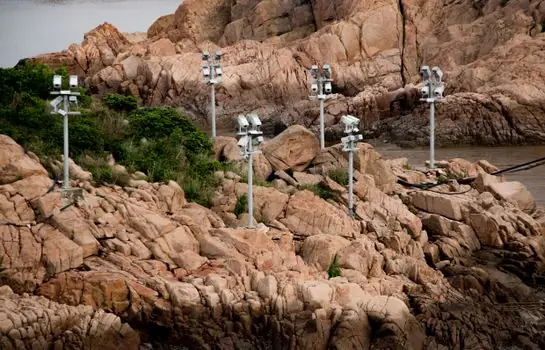
Power over Ethernet (PoE) is the default for new industrial installs because it carries both data and up to 25.5 W (PoE+) or 60-90 W (PoE++) over a single Cat6 run, which matters when the camera is mounted 5 m up a mast with no local power [S2]. ONVIF Profile S/T compliance is the cross-vendor handshake that lets any NVR or VMS pick up the stream, and is the main reason mixed-fleet plants can standardize on one recorder.
Resolution is the next decision: 4K (8 MP) is now common for perimeter and gate coverage where pixel density matters, while 4 MP is usually enough for in-plant process monitoring; the IPC-class 8 MP PoE units on the market pair 4K with Ultra H.265 compression, IK10, IP67, and up to 256 GB on-board SD retention for fail-over recording [S2]. For high-mast solar sites, fixed-position IR units with 6 mm+ lenses out-perform PTZs because they draw less power and have a narrower, predictable field of view.
PTZ vs Fixed Dome vs Multi-Sensor: Matching Camera Type to Task
PTZ cameras are specified for active perimeter patrol because one PTZ can replace three or four fixed units by capturing four distinct pan presets across a jobsite, and they can be robotically panned to investigate motion events [S5]. The trade-off is that PTZs have more moving parts, higher power draw (often requiring PoE++ or local 24 V AC), and a narrow viewing angle when not actively scanning, so they are paired with fixed cameras for always-on coverage of critical zones [S2][S5].
Fixed dome and bullet cameras dominate the count on any industrial bill of materials: domes resist vandalism better (IK10 standard), bullets carry longer lenses and IR illuminators for 30-50 m reach, and multi-sensor or fisheye units cover 180-360 deg from a single mount point, useful inside circular tanks or under roof trusses [S1][S2]. For work-at-height on a boom, where the platform itself moves, fixed wide-angle domes are preferred over PTZs because there is no operator to drive the pan-tilt head and the constant motion would trigger false tracking.
Comparison: Camera Options Against Four Decision Criteria
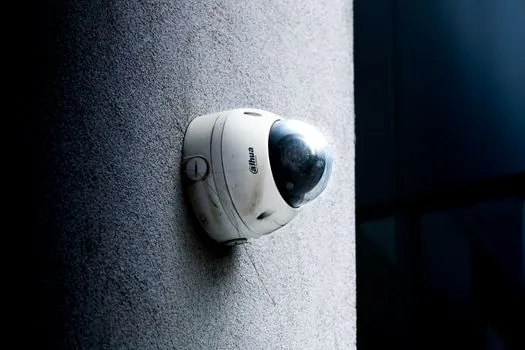
Selection logic compresses to four numbers: field of view, vandal/ingress rating, power budget, and analytics load. The four camera families line up against those criteria as follows: (1) Fixed 2.8-3.6 mm dome: 90-110 deg FOV, IK10/IP67, PoE 8-12 W, basic motion/line-cross analytics, lowest unit cost; (2) Fixed 6-12 mm bullet: 30-45 deg FOV, IK10/IP67, PoE 12-18 W with IR on, basic analytics plus license-plate capture at gates; (3) PTZ 4 MP/8 MP: 360 deg pan x 90 deg tilt, IK10/IP66, PoE++ 40-60 W with heater, full analytics plus auto-tracking, 4-8x unit cost; (4) Multi-sensor 4 x 4 MP or 12 MP fisheye: 180-360 deg FOV, IK10/IP67, PoE++ 25-40 W, analytics on dewarped streams, used where one mount must replace three or four fixed units [S2][S3][S5].
Standards, Compliance, and What to Ask the Vendor
Two non-negotiable procurement questions: confirm ONVIF Profile S/T conformance in writing (so the unit joins an existing VMS), and ask for the IP and IK certificates by report number rather than marketing claim; an IP66 enclosure should ship with a test report showing 100 kPa water-jet exposure for 3 minutes, and IK10 means a 20 J impact, the energy of a 5 kg steel ball dropped from 400 mm [S2][S4].
For hazardous-area plants, the explosion-proof housing must carry the right zone rating (ATEX/IECEx for EU, NEC Class/Div for North America) and the certificate number must be traceable, not a generic "explosion-proof" label [S4]. A practical sanity check before sign-off: run a 48-hour burn-in on a vibration table or on the actual boom, because MTBF claims of 50,000+ hours assume a benign environment that a stamping cell or a slewing crane never provides.
Use Cases: Construction Sites, Plants, and Tunnels
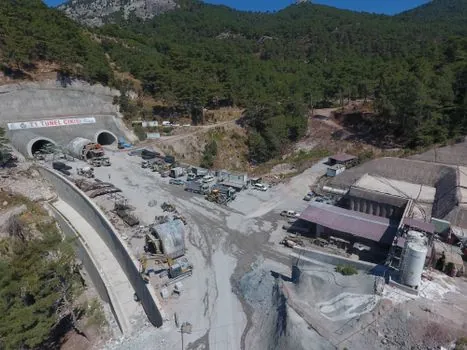
Construction sites use solar-PoE trailers with 6 m telescoping masts and PTZ heads, where IR fixed units watch laydown yards and the PTZ handles active perimeter sweeps; the same site often mounts a time-lapse camera on a separate fixed pole for project documentation [S5]. Permanent plants favor hardwired PoE domes at 3-4.5 m on building steel, with a smaller PTZ count at gates and yards; chemical and steel works add explosion-proof housings and stainless brackets to resist corrosive atmospheres [S2][S4].
Tunnel and infrastructure jobs lift the camera on a suspended working platform or vehicle-mounted boom, where the unit must tolerate wind, dust, and quick re-positioning; in these cases a 2.8-3.6 mm fixed dome with PoE+ and IR out-performs a PTZ because there is no on-site operator to drive the head and the wide FoV forgives small alignment errors.
Trackable signals for the next planning cycle: ONVIF Profile M (metadata for AI analytics) appearing on more 4K units, and PoE++ (60-90 W) becoming the default rather than the exception for heated outdoor PTZs. Also watch for IP69-rated enclosures entering industrial catalogs, which would extend cleaning tolerance to high-pressure, high-temperature wash-downs in food and pharma plants [S2].