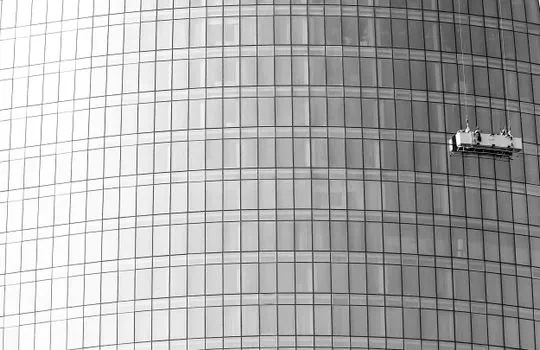
A suspended working platform, a wire-rope-suspended cradle such as the ZLP630 or ZLP800, is rated for 250-1000 kg of live load per cradle and is governed by EN 1808 in the EU market and GB 19155-2003 in Chinese supply chains [S3][S5]. In tunnel construction these cradles are specified for portal facade work, cross-passage lining, ventilation-shaft interiors, and dam-gallery inspection, not for the main bore face.
The reason is structural. A tunnel bore is excavated by a roadheader or shielded TBM, supported by steel sets, lattice girders, and shotcrete, and finished by a tunnel formwork traveller. Suspended access along the crown only becomes useful after the primary lining is in place, and even then, the work envelope is dominated by construction machinery and equipment designed to ride the invert or a rail, not hang from a parapet rig [S5].
What a Suspended Working Platform Actually Is in a Tunnel Context
EN 1808:2015 defines a suspended access platform as a powered work unit with a deck length up to 14 m, raised and lowered by two or more independent wire ropes each sized for a minimum 12 kN breaking load per person on the deck [S5]. The standard ZLP family inherits this geometry: the ZLP630 carries roughly 630 kg of rated load at 7.5 m typical length, the ZLP800 climbs to 800 kg, and a cirque/curved variant pushes to 1200-2000 kg with a 6.6-13.2 kW hoist running at 8-10 m/min [S3].
Wire-rope construction on these cradles is typically 6x19 or 4x31 fibre or independent wire-rope core, 8.3-9.1 mm diameter, supplied in pairs for every stirrup: a working rope that the hoist climbs and a separate safety rope that the lock grips [S6]. The dual-rope layout is the safety architecture that lets a suspended platform survive a single-rope failure during a tunnel-portal job, because the load path is engineered so a single failure does not propagate into a platform drop [S5].
Load Classes, Working Heights, and the Tunnel Realities
Standard cradle capacity 250-500 kg per bay makes a 2-3 person crew with hand tools the realistic envelope, while multi-point platforms and mast climbers take over at 1500-3000 kg and above [S5][S7]. On a tunnel cross-passage or ventilation shaft, the crews are small, the tools are chipping hammers and grout pumps, and the cradle footprint is a 1.0-2.0 m wide aluminium deck [S1][S2].
Working height changes the math. A 6 mm steel wire rope weighs about 0.14 kg per metre, so a 200 m portal face lifts roughly 56 kg of rope per pair, and creep plus elastic elongation above 150 m of rope length force a step up in rope diameter or pre-tension [S2]. Most tunnel portal and shaft jobs sit well below that, but deep ventilation raises and dam galleries can stretch the rope to 100-200 m, which is where variable frequency drives earn their keep: VFD starting current is roughly one-seventh of direct-on-line starting, and the speed control is granular enough for lining-touch work [S2].
Rigging time is the second differentiator. A suspended platform rig takes 1-2 days plus 0.5 day strike, a mast climber 3-4 days plus 1-2, and tube-and-coupler construction tools scaffolding 1-2 weeks plus a week for a 30-storey envelope [S5]. On a tunnel portal that translates into the difference between working alongside the excavation crew and losing a week of face time.
Why the Main Bore Stays Off a Suspended Cradle
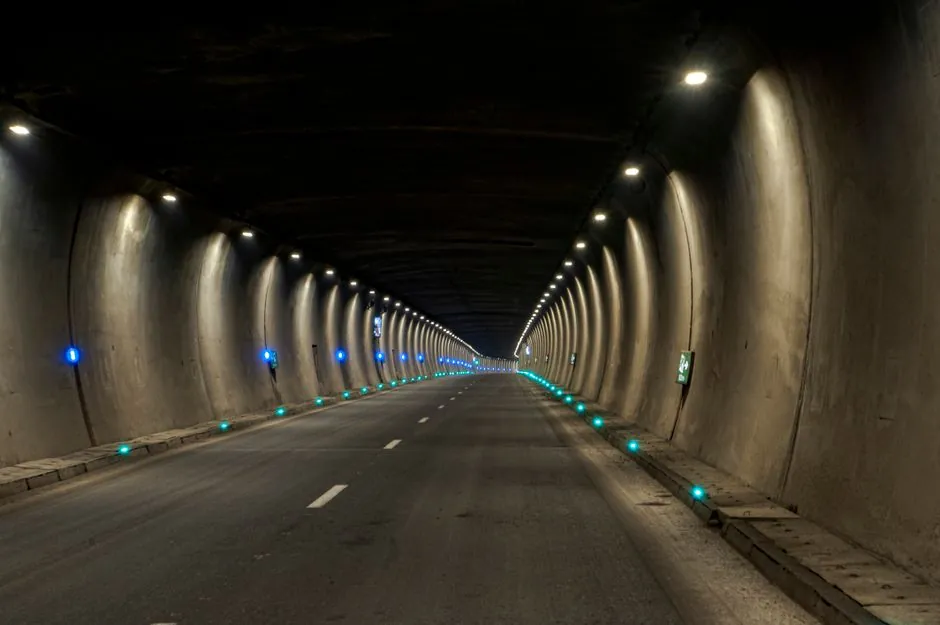
Wind sensitivity is the first reason. Most manufacturers spec a maximum working wind speed of 12.5 m/s, roughly Beaufort 6, and a storm-stow threshold of 17 m/s, while a tunnel heading has its own ventilation draft on top of that, often pushing 0.5-1.5 m/s at the face with diesel particulate in the air [S5]. A cradle can ride that, but a tunnel-bore mainline access system has to be rail- or track-based to handle the wet, blast-scarred invert and the muck-handling traffic.
Anchor geometry is the second reason. Outrigger counterweights must resist at least 1.5 times the worst-case platform reaction, and the roof structure has to accept 10-25 kN of point load per outrigger, which rules out a rope cradle on the sprayed-concrete primary lining [S5]. Even where the cradle works, the suspended ceiling type falsework used in station atriums only fits flat soffits, so curved tunnel cross-sections and irregular portals need custom rigging, and that custom work is where ZLP non-standard orders dominate the supplier mix [S2][S3].
For the mainline bore, the spec map is different: a shotcrete robot arm or pump on a rail-bound carrier handles primary lining, a tunnel formwork traveller handles secondary lining, and a platform scale load-monitoring cradle is still a ZLP, but it lives on a monorail hung from the crown, not on parapet outriggers [S6].
Decision Map: Where a Suspended Cradle Earns Its Place on a Tunnel Job
Use a ZLP630 or ZLP800 cradle when the work is the portal facade, a ventilation shaft interior, a cross-passage lining touch-up, a dam-gallery inspection, or a chimney-style stack, anywhere the geometry is rope-friendly and the crews are 2-3 people plus tools. Do not use it for mainline bore advance, invert work, or muck-handling, and do not use it above 12.5 m/s wind without a stow plan [S5].
Compare the three access types against four criteria for a 30 m high tunnel portal job: a suspended platform riggs in 1-2 days with 250-500 kg per bay and zero ground footprint; a mast climber riggs in 3-4 days with 1500-2500 kg per deck and a small ground footprint; tube-and-coupler scaffolding riggs in 1-2 weeks with 450-750 kg per bay and a large ground footprint [S5]. On dense urban metros the suspended option wins on ground access; on a remote hydropower tunnel portal the mast climber wins on weather tolerance; on a heritage refurbishment the tube-and-coupler rig wins on shape flexibility [S5][S7].
For procurement, standard electric ZLP units list at roughly $8,000-15,000 USD, wide models at $12,000-20,000, and extra-wide at $20,000-35,000, excluding wire ropes and counterweight; rental in the EU and US markets runs $400-800 per day, and a six-month project at rental burns $36,000-72,000, which is approaching the purchase cost of a standard unit [S2]. Annual inspection on a purchased cradle runs 8-12% of procurement price, so the buy-versus-rent crossover typically sits at the 6-month mark [S2].
Safety Architecture: Dual Ropes, Overspeed Locks, Wind Cut-Outs
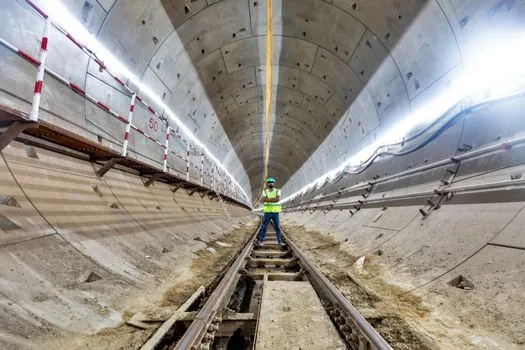
Every ZLP-class cradle runs paired working and safety ropes per stirrup, an overspeed safety lock with 3-11 degree tilt-lock angle and 30 kN allowable impact force, an electromechanical overload detector that prevents the hoist from lifting above rated load, and an optional top limit switch [S1][S3]. On tunnel jobs the tilt lock is the device that catches a cradle if a rope goes slack at the shaft lip, and the overload lock is the device that stops a crew from over-staging rebar on a cross-passage job.
Coastal and high-wind tunnel portals add another layer. Type 304 stainless wire rope suits general coastal humidity; Type 316 is specified for tropical or industrial salt-spray zones, and the service life steps from 6-12 months for galvanised rope to 3-5 years for stainless at coastal sites [S2]. Wind-speed monitoring with automatic stop is standard on Middle East projects, and a Beaufort 7 gust at 15 m/s is the typical hard-stop threshold, well above the 12.5 m/s working limit so the cradle can be stowed before the storm rather than left hanging [S2].
Standards to cite on the datasheet: EN 1808:2015 for EU supply, GB 19155-2003 for Chinese supply, OSHA 1926.451 for US use, and a project-specific wind-load calculation per EN 1808 Annex with a 0.4 dynamic coefficient [S1][S2][S3][S5]. For a platform trolley configuration hung from a monorail inside a shipyard or aircraft hangar, the same EN 1808 rope and lock requirements apply, but the parapet outrigger is replaced by the ceiling rail and the counterweight block disappears.
Common Spec Mistakes on Tunnel Jobs
Three errors show up repeatedly. First, sizing the cradle to personnel only and forgetting the wet-spray shotcrete pump or grout hose weight: a 3-person crew with a 50 kg grout pump and 100 kg of bagged material already needs 440 kg, and a 400 kg standard cradle is overloaded under the 2.0 safety factor rule [S2]. Second, ignoring rope self-weight above 100 m of suspension height and ending up with a cradle that climbs into the creep zone and stalls mid-shaft [S2]. Third, assuming a suspended platform can replace a power trowel on a tunnel invert finish or an oxy-fuel cutting torch on a tunnel heading, which it cannot, because the cradle is a facade-and-shaft tool, not a face-advance tool [S5].
Trackable signals for the next planning cycle: confirm EN 1808:2015 is the cited revision on every EU datasheet, not an older national transposition; confirm GB 19155-2003 compliance on every Chinese-supplied ZLP unit, and check whether a 2026-2027 GB revision is in public consultation; confirm wind-monitoring integration with the site BMS for any Middle East or coastal tunnel portal [S1][S2][S3].