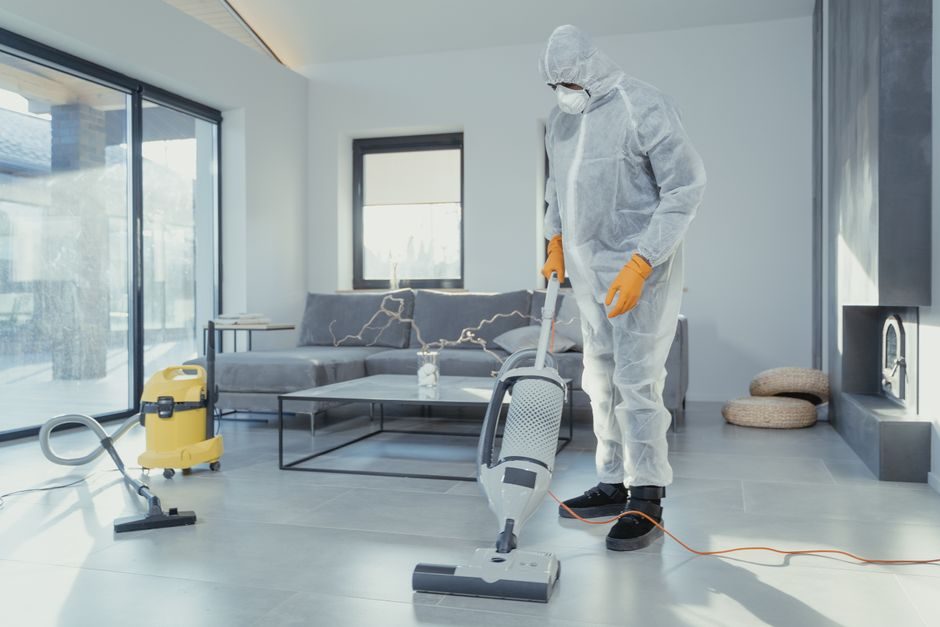
Industrial vacuums divide into three spec clusters — pneumatic ATEX, electric wet/dry, and high-flow chip extraction — with capacities from 9 gal (Ridge Tool HD0900) to 100 L (iVision iV2) and airflows spanning roughly 100 CFM (VAC-U-MAX 40008SS) to 1,400 m³/h (iVision iV2) [S1][S2][S3][S5].
Selection starts with the dust hazard classification, because NFPA 70 grounding rules and ATEX zone certification drive whether a unit can be deployed at all in a given plant area; a Class I Div 2 atmosphere requires an explosion-proof, fully bonded machine with a 99.9% @ 1 µm filter such as the PTFE-coated element on the VAC-U-MAX 40008SS [S1].
ATEX / Class I Div 2 Pneumatic Units: Venturi-Driven, Intrinsically Safe
Pneumatic (Venturi) industrial vacuums eliminate electrical ignition risk because they draw on compressed air with no moving electrical parts, a design pattern that meets the definition of an intrinsically safe vacuum generator on the VAC-U-MAX 40008SS [S1].
The 30-gallon 40008SS delivers 100 CFM, supports 8–16 in. Hg vacuum via an adjustable orifice, integrates manual pulse-jet filter cleaning with an air reservoir and regulator, and is built from anti-sparking stainless steel on four 4-inch static-conductive swivel casters — the full kit required for NFPA 70 grounding and bonding in Class I Division 2 service [S1].
Operators specifying pneumatic units accept lower continuous airflow than centrifugal electric machines — 100 CFM versus 1,400 m³/h — in exchange for safe deployment in flammable vapor or combustible dust zones where an electric motor would be prohibited [S1][S3].
Electric Wet/Dry Mobile Units: 3,000 W Class, 80 L Tank, 162 L/s
Three-motor electric industrial vacuums in the 3,000 W (10,236 BTU/h) bracket, such as the LAVOR SMX-R 80, target general factory and warehouse duty with combined airflow of 162 L/s and 80 L stainless-steel container capacity at 45 kg net weight [S2].
The wet/dry configuration pairs a liquid float valve and drain system with a mechanical horizontal manual filter cleaning system, a static-electric-shock inhibitor, and non-marking pivoting front wheels plus an integrated accessories basket — the standard feature set on this class of 21-gallon mobile machine [S2].
These units are designed for cleaning, not for combustible-dust recovery; LAVOR's separate DTX-R 80 1-30 dry-safety three-phase line exists precisely to bridge wet/dry convenience into higher-hazard dust service [S2].
High-Flow Chip Extraction: 1,400 m³/h Centrifugal Fans for Extrusion
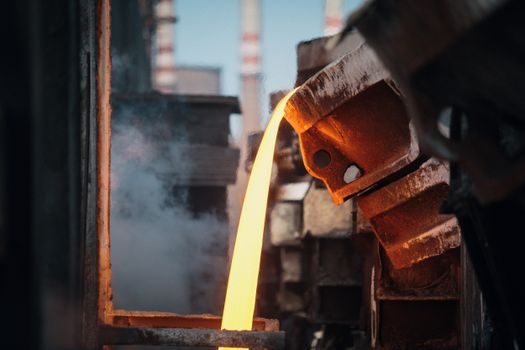
Chip and swarf vacuums for aluminum and PVC window production use high-flow centrifugal fans rather than bypass motors, with the iVision iV2 reaching 1,400 m³/h (49,440 ft³/h) on a 100 L detachable wheeled container at 100 kg total mass [S3].
The iV2 ships with M-class polyester bag filters rated to stop 99.9% of entrained particles, a pneumatic filter shaker, 8 m of electric cable, motor overload protection, and an external silencer — the package spec for an extrusion-line saw paired with single- or small double-head saws [S3].
Vacuum on this class is comparatively shallow at 25–30 mbar; the design trades lift for volumetric flow, which is what moving low-density PVC and aluminum chips actually requires, and the unit is available with ATEX Zone 22 certification for explosive-atmosphere deployment [S3].
Compressed-Air Compact Dry/Wet: 45 L, 362 mbar, 68 dB
Compact compressed-air industrial vacuums occupy a middle ground between the 30-gal ATEX pneumatic and the larger electric mobile units, with the Delfin 452 AIR 7V delivering 150 m³/h airflow at 362 mbar (5 psi) vacuum from a Venturi motor in a 45 L stainless-steel tank at 68 dB noise [S4].
The lower noise figure — 68 dB versus the typical 78–80 dB on consumer-grade wet/dry units such as the Okorder CNWD79 (25 L / 35 L, 16–19 kPa, 1.7–1.9 m³/min) — is the practical reason shops in noise-controlled areas move up to a Delfin-class Venturi machine [S4][S6].
Compressed-air drive also keeps the machine spark-free relative to brushed electric motors, though the 452 AIR 7V is positioned for general dry/wet/dust duty rather than the explicitly certified Class I Div 2 envelope that the 40008SS is built for [S1][S4].
Entry / Jobsite Wet-Dry: 9 gal, 4.25 Peak HP, NFPA Grounding
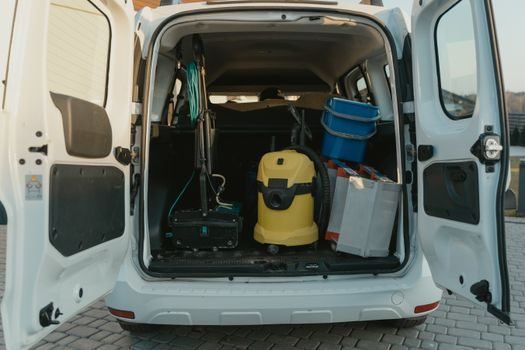
At the lower-capacity end, 9-gallon (≈34 L) electric wet/dry vacs such as the Ridge Tool HD0900 pair a 4.25 peak-horsepower motor with a 9-gal drum and remain common on jobsites and in maintenance shops where the dust hazard is low and mobility matters [S5].
These units are not substitutes for ATEX-rated machines in classified areas, but they are the right tool for general spill recovery, debris cleanup, and shop-floor maintenance in unclassified space — the same envelope where the CNWD79 family (25 L / 35 L, 100–240 V, 50/60 Hz) competes on price [S5][S6].
For continuous production environments, dust of any kind needs a filtered, sealed, M-class or better vacuum rather than an open wet/dry drum, because HEPA-grade capture is what determines whether airborne particulate stays below occupational exposure limits.
Selection Criteria: Hazard Class, Power Source, Airflow, Capacity
The four decision criteria that separate the main options are: (1) area classification (ATEX Zone 22 / Class II Div 2 vs. Class I Div 2 vs. unclassified), (2) power source (pneumatic Venturi vs. three-phase electric vs. single-phase 1,200–3,000 W mobile), (3) airflow at operating vacuum, confirmed on a vacuum gauge, and (4) container capacity matched to shift-change emptying cadence. [S1]
Concrete trade-off: the VAC-U-MAX 40008SS gives 100 CFM at 8–16 in. Hg with full ATEX / NFPA 70 compliance for hazardous dust; the LAVOR SMX-R 80 trades certification for 162 L/s airflow and an 80 L wet-capable tank; the iVision iV2 trades vacuum depth (25–30 mbar) for 1,400 m³/h volumetric flow on swarf; the Delfin 452 AIR 7V offers 150 m³/h at 362 mbar in a compact 45 L compressed-air package; the Ridge Tool HD0900 sits at 9 gal / 4.25 peak HP for unclassified jobsite work [S1][S2][S3][S4][S5].
For plants already running a compressed-air ring, pneumatic Venturi models remove the electric-motor ignition source from the hazard equation entirely; for production lines with no compressed air, three-phase centrifugal units paired with M-class filtration are the practical default.
Standards, Sourcing and Failure Modes

NFPA 70 grounding and bonding requirements apply to the VAC-U-MAX 40008SS in Class I Div 2 service, and the unit's PTFE-coated static-conductive main filter is rated 99.9% efficient @ 1 µm, which is the filter spec engineers should pin in the datasheet review [S1].
Common sourcing pitfalls on Alibaba-class listings (HKTDC Sourcing listing VI-9060, Okorder CNWD79) include missing M-class or HEPA filter certification, no ATEX documentation, and inflated CFM figures measured at zero vacuum rather than at operating lift — a real spec at 200 mbar will be a fraction of the no-load number [S6].
For higher-hazard applications where the dust is conductive or combustible, a vacuum ordered without an M-class filter, a static-conductive hose, and bonded casters is not the same machine as the certified 40008SS, regardless of brand on the nameplate.
Next step: pin the area classification (unclassified, Zone 22, Class I/II Div 2) before quoting airflow, and request the filter efficiency curve at operating vacuum, not the no-load CFM headline number, when comparing supplier data sheets.
For related coverage, see Aluminum Die Casting Selection Guide: Process, Alloy, Tonnage and Sourcing.