
Industrial 1/2" pneumatic impact wrenches such as the Beta 1928XM deliver 1,600 Nm of torque in a compact body, a figure that sits well above the 850 ft-lb ceiling measured on top-shelf cordless 1/2" automotive guns in independent testing [S2][S3].
The gap matters because impact-wrench failure modes differ by class: industrial pneumatic tools are engineered for 8-hour production-line duty in tough environments, while automotive cordless units target lug-nut cycles and short service-bay bursts [S1][S5]. For a maintenance buyer choosing between an air impact wrench configured for plant use and a cordless gun for the garage bay, the spec sheet is the decision, not the price tag.
Torque and Power: Where the Two Classes Separate
Industrial pneumatic 1/2" drives deliver working torque commonly rated 700-1,800 Nm with peak loosening figures above that band, reflecting the air impact wrench family's design for repeated high-cycle bolting on steel structures and large-format fasteners [S2][S6].
Automotive cordless 1/2" wrenches tested by Car and Driver in 2023 peaked at 858 ft-lb fastening and 884 ft-lb loosening on the Makita, with mid-tier Porter-Cable measuring 338 ft-lb fastening and 366 ft-lb loosening, a 2-3x spread across the same form factor [S3]. Entry pneumatic models for shop use are commonly rated 250-600 Nm, which already matches or exceeds most cordless flagships.
The Mister Worker buyer guide (March 2025) benchmarks three Beta 1928-series pneumatic wrenches at 1,600 Nm with a double-hammer impulse mechanism, intended for heavy-duty applications in automotive, industrial, and mechanical sectors where single-impact torque events stack across thousands of cycles per shift [S2].
Durability: Hammer Mechanism, Housing, Duty Cycle
Industrial pneumatic impact wrenches use a twin-hammer or pin-clutch mechanism that spreads the impact energy across two or more hammers, which reduces wear on any single anvil face and extends service intervals under continuous use; the Beta 1928XM specifically uses a double-hammer impulse mechanism designed for fast, consistent performance [S2].
Composite housings dominate the industrial air-impact category because they cut roughly 0.5-1.0 kg versus equivalent steel-bodied guns, and Apach's 2024 buying guide notes that composite air impact wrenches are lighter than traditional metal tools, making them easier to handle during extended use, which also reduces operator fatigue that drives drop-induced damage [S8].
Cordless automotive units rely on a single internal motor, planetary gearbox, and spring-loaded hammer; the moving parts are sealed against workshop dust, but the battery cells, electronics, and brush wear become the durability limit. The 2025 Mister Worker review explicitly contrasts pneumatic shop favorites for decades because they are powerful, durable, and usually lighter than comparable cordless tools in sustained production use [S5].
Weight, Noise, and Operator Endurance
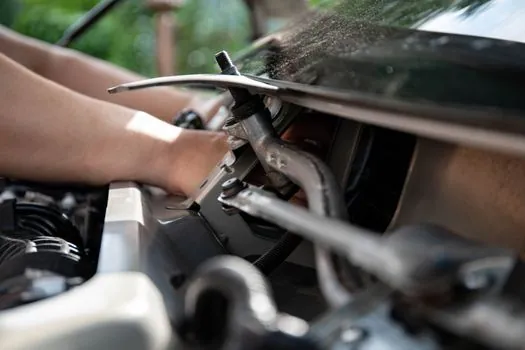
The 2023 Car and Driver cordless shootout logged the Makita 1/2" cordless at 8.0 lb, DeWalt at 7.3 lb, Porter-Cable at 6.0 lb, and the Ryobi entry unit at 5.4 lb, with no cordless tested below 5 lb at 1/2" drive [S3].
Industrial 1/2" pneumatic equivalents in the Beta 1928 line land at roughly 2.0-2.5 kg (4.4-5.5 lb) for the body, with the air hose and FRL adding another 1-2 kg of drag at the tool, but the in-hand mass is still lower than most cordless flagships [S2].
Decibel readings on the cordless set ran 109-120 dBA under load, with the DeWalt at 120 dBA and the Makita at 117 dBA; pneumatic guns typically register 95-110 dBA at the operator's ear on a properly muffled shop airline, though this can climb to 115 dBA on budget un-muffled units [S3]. Both classes sit above the OSHA 90 dBA action level, so hearing protection is mandatory in either case.
Cost, Infrastructure, and Total Cost of Ownership
A shop-class 1/2" pneumatic impact wrench lists at roughly 200-500 USD, while an industrial-rated 3/4" or 1" pneumatic for plant assembly can run 800-2,000 USD; the cordless equivalent with two 5 Ah batteries, charger, and case (Makita's top kit in the Car and Driver test) reached the top of the cordless price band for 1/2" drive [S3].
The hidden cost of pneumatic is the compressor, hose, FRL (filter-regulator-lubricator), and an air solenoid valve manifold for automated cells; an air quality monitor on the supply line protects the tool's internal vanes and lubrication from moisture and particulate, a maintenance cost the cordless class does not carry at all.
For high-volume automotive shops the cordless route now dominates because the tool pays back through mobility, no hose trip hazard, and the elimination of compressor runtime; one long-time Mopar forum user in December 2023 wrote that he sold his DeWalt 1/2" cordless that was capable of removing drive wheel nuts off a combine, adding that for car repairs, who needs an air or corded impact [S4]. Another commenter stated he had used a Milwaukee M18 Fuel 1/2" since 2017 and would never use an air impact again, reflecting the cordless class's accelerating share of light-vehicle work [S4].
Use-Case Fit: Industrial Plant vs Automotive Shop

For an assembly line, shipyard, oilfield service truck, or heavy-equipment repair bay running 6-8 hour shifts, the industrial pneumatic 1/2" or 3/4" wrench is the correct tool: it is built for tough use in rugged industrial environments, has replaceable wear parts, and survives a drop onto concrete better than a sealed cordless motor housing [S1][S6].
For a mobile tire service, an automotive quick-lube, a body shop, or a home garage, a 1/2" cordless brushless impact in the 700-900 ft-lb peak range handles lug nuts, suspension bolts, and engine work; the trade-off is higher per-cycle cost, battery aging, and the need for a spare battery on multi-car days [S3][S4].
For plant maintenance crews who need a portable impact drill or a cordless impact alongside their pneumatic fleet, the right answer is to standardize on one battery platform and keep the pneumatic guns for the heavy-station work; mixing air and cordless across the same fasteners is normal and covered in the switching impact drill from hammer mode to standard drilling mode workflow logic on the maintenance side.
Service Life and Field Failure Modes
Field failure data on pneumatic industrial wrenches clusters around vane motor wear, hammer-spring fatigue, and air-inlet thread damage; rebuild kits with replacement rotor blades, hammer pins, and end-plate gaskets are stocked by major industrial suppliers, and a 1/2" industrial gun can run 10+ years with a vane swap every 12-18 months in three-shift service [S5][S6].
Cordless automotive gun failures are dominated by battery capacity loss after 500-1,000 charge cycles, trigger switch failure under high-inrush current, and anvil retainer pin wear; motor and gearbox rebuild is rarely cost-effective outside warranty, so most users replace the whole tool at 3-5 years in shop service [S3][S4].
Torque verification is also part of the durability story: a torque wrench tester on a periodic calibration cycle catches a worn impact gun before it under- or over-torques a critical fastener, a step plant QA teams require on any class of impact tool, pneumatic or cordless.
Decision Matrix: When to Pick Which
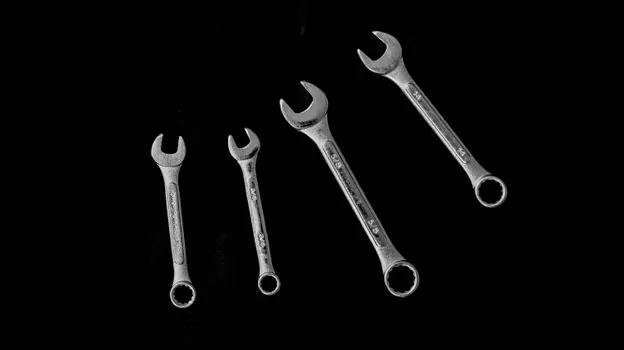
Pick industrial pneumatic when the application is multi-shift production, fastener sizes above M16, ambient dust or fluid exposure, and the shop already runs a compressed-air network with FRL and a regulated air solenoid valve distribution; expect 1,000-1,800 Nm working torque, 4-5 lb tool mass, and a rebuild-friendly service life [S1][S2][S5].
Pick automotive cordless when the application is intermittent, mobility matters more than peak torque, fastener sizes are M10-M18, and the operator does not have a hose reel within reach; expect 300-900 ft-lb (400-1,200 Nm) peak, 5-8 lb tool mass, and a 3-5 year service life tied to battery cycle count [S3][S4].
Do not pick a 3/8" cordless for truck wheel-lug duty above 200 ft-lb per fastener: the 200 ft-lb axle-nut removal test in the Car and Driver protocol is the realistic ceiling for a 3/8" drive, and truck work generally needs a 3/4" or 1" cordless or a 1" pneumatic; the Mopar forum thread on 1" extended-anvil pneumatic impact for truck wheels reports freeze-ups below 45 F that effectively rule out pneumatic in cold-weather field work, a niche where cordless wins on ambient-temperature robustness [S3][S4].
Track the cordless torque ceiling, the next automotive cordless 1/2" launches (Milwaukee, DeWalt, Makita refresh cycles are typically 18-24 months), and any 2026 OSHA noise-enforcement updates that could push more shops toward lower-dBA pneumatic guns as a measured engineering response to the 109-120 dBA cordless readings [S3].