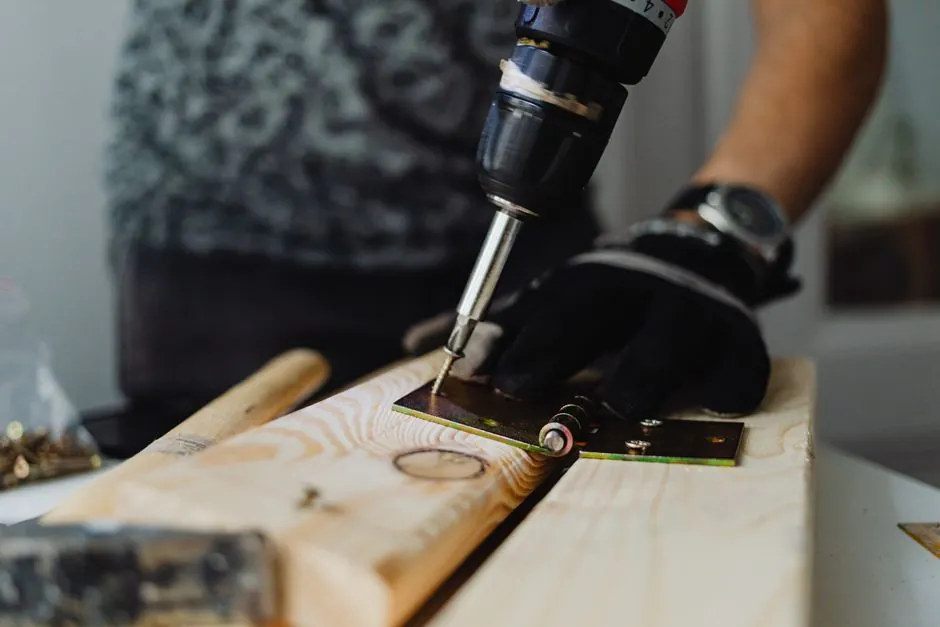
A 3-jaw keyless chuck on an impact drill accepts only round-shank and 1/4 inch hex-shank bits within its clamping range (typically 1.5–13 mm), while an SDS chuck accepts only the slotted shank geometry of its native SDS family [S2][S4].
The two systems are physically and mechanically distinct: SDS bits use two open slots and two closed slots that engage locking balls in the chuck for axial float, a feature no 3-jaw chuck can replicate [S2][S5].
Why a 3-Jaw Keyless Chuck Cannot Hold an SDS Bit
SDS-Plus shanks are 10 mm diameter with four precisely positioned slots, and SDS-Max shanks are 18 mm with five slots; these geometries are dimensionally incompatible with the three radial clamping jaws of any standard keyless chuck [S1][S2]. The shank simply will not seat far enough for the jaws to grip a cylindrical surface, and even if forced in, the slots would prevent torque transmission and the locking balls have nothing to engage [S2]. Champion Chisel confirms SDS bits cannot be used in a standard hammer drill unless the drill has an SDS-compatible chuck or an adapter, because SDS bits require the tool's slot-and-groove engagement to function [S5].
Keyless 3-jaw chucks are designed for round-shank HSS twist drills, wood bits, step drills, and 1/4 inch hex quick-change accessories, and they deliver the best runout accuracy for precision drilling in metal, wood, and plastic where concentricity matters [S2]. Their main limitation under impact-load conditions is jaw slippage on worn chucks under heavy lateral load, which is precisely the workload profile SDS systems were engineered to solve [S2].
SDS-Plus vs SDS-Max: Slot Counts, Tool Class, Bit Diameter
SDS-Plus (10 mm shank, 4 slots: 2 open + 2 closed) fits rotary hammers in the 2–5 kg class and supports standard bit diameters from 4 mm to 26 mm, with specialist bits reaching 32 mm [S2]. Champion Chisel's specification places SDS-Plus bits in rotary hammers from 2 to 10 lb and limits typical hole diameter to 1 inch (25.4 mm) for production anchor and rebar-doweling work [S5].
SDS-Max (18 mm shank, 5 slots: 3 open + 2 closed) is built for 5 kg+ demolition hammers and supports bit diameters from 16 mm to 40 mm with lengths up to 1200 mm for large anchor holes and deep structural penetrations [S2]. Industrial Monitor Direct's compatibility guide states the three SDS formats are not interchangeable: an SDS-Plus bit will not seat in an SDS-Max chuck, and an SDS-Plus bit will not seat in an SDS-Max chuck [S1].
Adapters exist for emergency cross-system use, but they reduce energy transfer and are only recommended for short-duration tasks rather than production drilling [S2].
Decision Matrix: Chuck System vs Application
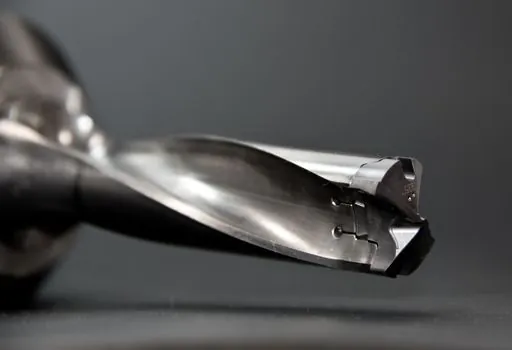
The selection boils down to material, hole size, and bit-change frequency. For wood, metal, and plastic with round-shank bits up to 13 mm, a 1/2 inch (13 mm) keyless chuck is the standard professional choice; for repetitive concrete anchoring and masonry under 26 mm diameter, SDS-Plus is the construction default; for holes above 26 mm and sustained demolition work, SDS-Max is the only viable option [S2][S4].
Keyed chucks still hold an edge in high-torque metalworking because the chuck key applies stronger clamping force, while keyless chucks win on job-site convenience and bit-change speed [S4]. The hammer mechanism itself differs: standard hammer drills use a mechanical clutch that produces light "jabbing" action suitable for brick and mortar, whereas SDS rotary hammers use a pneumatic hammer mechanism that delivers much higher per-blow energy for dense concrete and rebar [S3][S5]. This is why a keyless-chuck impact drill is acceptable for occasional masonry anchors in blockwork, but production concrete drilling in C30+ mix quickly exposes the limits of clutch-based hammer action [S3].
Adapter Options and Their Real-World Limits
SDS-to-3-jaw adapters let a rotary hammer accept round-shank bits, but they add runout, reduce impact energy, and lock the bit in a fixed axial position, defeating the float that gives SDS its hammering efficiency [S2][S5]. For the reverse case, 3-jaw-to-SDS adapters exist for odd-job flexibility, yet they cannot generate the slot engagement SDS chucks require for proper hammer function, so the tool effectively reverts to rotation-only drilling [S2].
Champion Chisel's guidance is explicit: if the job involves repeat drilling in hard materials, an SDS or SDS-Plus rotary hammer is the smart investment, and adapters are treated as a contingency, not a primary tool configuration [S5].
Chuck Sizing and Bit-Capacity Considerations
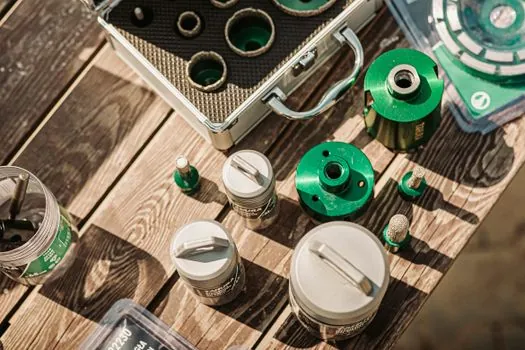
Common chuck capacities are 3/8 inch (10 mm) for light-duty work, 1/2 inch (13 mm) for professional construction and woodworking, and 5/8 inch (16 mm) for heavy industrial applications, with larger capacities allowing bigger hole saws and step drills [S4]. For SDS systems, the capacity question shifts from chuck jaw opening to the bit diameter the rotary hammer's hammer mechanism can drive efficiently, which is why SDS-Plus is generally capped near 26 mm and SDS-Max begins around 16 mm [S2].
For trades working across wood, metal, and concrete, the practical kit is a 1/2 inch keyless chuck impact driver for the first two materials plus a separate SDS-Plus rotary hammer for masonry, rather than a single hybrid tool expected to cover all three [S4]. If the workflow is dominated by overhead anchor installation in concrete, a lightweight 2–5 kg SDS-Plus tool is the better weight-to-performance trade than a heavy keyless-chuck hammer drill [S2][S5].
For related tooling decisions on a production floor, the front vs rear discharge concrete mixer trucks selection logic follows a similar spec-driven rule, and the bead vs spray vs roll coating dispensing comparison illustrates the same pattern of matching interface to material.
Trackable signals for the next spec refresh: any OEM announcement of a universal keyless-to-SDS hybrid chuck reaching production status, and updates to ISO 1173 (chuck shank dimensions) that would formally govern cross-system adapters.
For the relevant spec sheets and selection criteria, see impact drill, air impact wrench, and pressure transmitter.