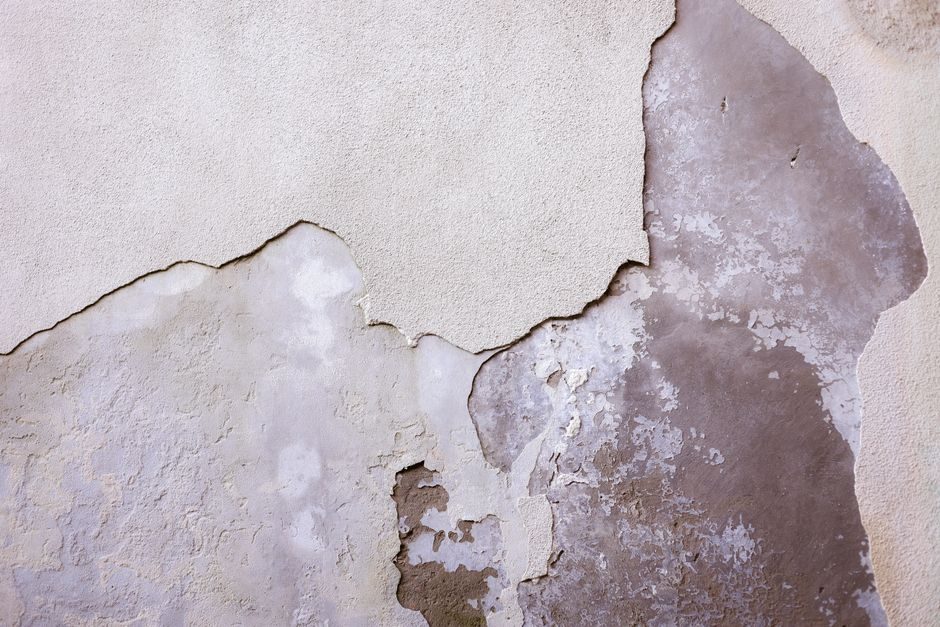
Specifying a waterproofing coating is a chemistry-versus-substrate decision, not a brand decision: the same balcony, potable-water tank or basement wall will reject a generic "best paint" recommendation and demand a system matched to water head, movement, temperature and chemistry [S1].
Five gates govern the choice — substrate profile, hydrostatic exposure, movement/accommodation, chemistry family, and certification scope (potable water, fire grade, root resistance) — and the order of those gates is the order in which a specifier should eliminate options [S1][S2].
Substrate Profile: Concrete, Masonry, Steel or Timber Drive the First Cut
Concrete and masonry substrates dominate below-grade and wet-area waterproofing because the cementitious matrix is chemically compatible with cement-based coatings; cement-based osmotic crystalline waterproofing material is an inorganic grey powder that uses water as the carrier and the chemical characteristics of cement to transmit active substances into the concrete pore structure, forming insoluble crystals that block water pathways [S2]. On steel reinforcement, the same cementitious chemistry cannot bond directly — an anti-corrosion primer plus a compatible membrane is the standard practice, and water-head plus chloride exposure will dictate whether a polyurethane or a bituminous system is layered on top.
For timber and lightweight panels, flexibility and elongation-at-break become the dominant gate: cementitious systems with low elongation will crack over a moving timber deck, while liquid-applied polyurethane with documented elongation values above 300% will accommodate seasonal movement without splitting [S1]. Substrate moisture content at the time of application is the second hard gate; most cement-based osmotic systems require a saturated-surface-dry (SSD) condition, while solvent-borne bituminous primers tolerate damp substrates but reject standing water.
Hydrostatic Exposure: Positive-Side vs Negative-Side, Head Pressure in Metres
Positive-side waterproofing — applied to the face that receives water pressure (tank interiors, basement walls against earth, swimming pools) — is the more demanding application and is where cement-based osmotic crystalline materials dominate because the active chemistry is driven by water contact into the concrete capillary pore structure [S2]. Negative-side waterproofing (interior basement face where water presses against the back of the coating) requires systems engineered to resist back-pressure, typically epoxy-modified cementitious slurries or reactive polyurethane injection; an osmotic crystalline coating is generally specified for positive-side service [S2].
Hydrostatic head is the next variable: a planter box at 0.3 m water head and a 6 m-deep basement wall are not the same specification, and most polyurethane liquid-applied membranes carry a published maximum head rating between 10 m and 30 m of positive pressure at their standard applied film thickness. Below-grade construction in Perth's mining and civil sectors routinely specifies systems to 10 m head and above, with detailing at construction joints and pipe penetrations treated as separate wet-film-thickness targets rather than a single overall DFT call-out [S1].
Movement Tolerance: Elongation, Crack-Bridging and Joint Detailing

Crack-bridging ability is the single most quantitative spec line on a waterproof coating datasheet, expressed as the coating's elongation-at-break and its crack-bridging width in millimetres at a defined film thickness. Cement-based osmotic crystalline systems are rigid and rely on the substrate remaining crack-free; once the concrete cracks beyond the crystal-growth range, the system no longer carries the load [S2]. Polyurethane and polyurea systems, in contrast, are routinely specified at 350–800% elongation, allowing them to span substrate cracks of 1–3 mm at standard DFT without breach [S1].
For structural movement joints, the coating alone is never the answer — a joint sealant plus a bond-breaker tape plus a reinforced membrane turn is the standard detail, and the coating datasheet will quote a maximum movement accommodation factor (typically ±25% of joint width for polyurethane sealants) that the specifier must reconcile against the predicted joint movement. On rooftops and exposed decks, UV stability becomes a parallel gate: aromatic polyurethanes yellow and chalk under UV load and require a topcoat, while aliphatic grades and acrylic systems hold colour and film integrity under direct sun without a sacrificial top layer.
Chemistry Family Comparison: Cementitious, Polyurethane, Acrylic, Bituminous, EPDM
Five chemistry families cover the bulk of 2026 waterproofing-coating specifications, and a direct comparison on four decision criteria — substrate bond, elongation, potable-water approval, and installed cost band — lets a specifier cut the field in one pass. Cement-based osmotic crystalline systems bond chemically to concrete, are rigid with near-zero elongation, hold potable-water certification in most jurisdictions, and sit in the low-to-mid installed-cost band per square metre [S2]. Polyurethane liquid-applied systems bond to concrete, steel and timber with primer, deliver 350–800% elongation, generally do not carry potable-water certification unless specifically tested, and sit in the mid-cost band.
Acrylic waterproofing coatings bond well to concrete and masonry, deliver moderate elongation (typically 100–300%), are widely used as balcony and roof coatings in residential and light-commercial builds, and are the lowest installed-cost option for non-immersed exposure. Bituminous coatings and membranes bond to concrete and steel, are near-rigid with limited elongation, are not certified for potable water, and are the standard below-grade and tank-exterior choice where hydrocarbon resistance and root-barrier performance are required. EPDM sheet membranes are mechanically fixed or fully adhered, deliver the highest elongation of the five families (often above 400% at break), are not potable-water certified as a default, and sit in the mid-to-high installed-cost band but offer the longest service life in exposed-roof applications [S1][S2].
Certification and Service Window: Potable Water, Fire Grade, Root Resistance
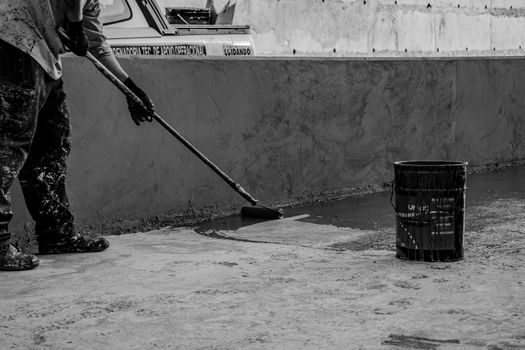
Potable-water certification (typically to AS/NZS 4020 in Australia, NSF/ANSI 61 in North America, or WRAS in the UK) is the first compliance gate for any coating specified inside a drinking-water tank or a water-treatment basin, and cement-based osmotic crystalline materials are the dominant compliant choice on concrete substrates because the inorganic chemistry does not leach organics into the water column [S2]. Fire-grade certification (e.g. to AS 1530.3 indices, ASTM E84 Class A, or EN 13501-1) matters on exposed roof and wall applications, and acrylic and aliphatic polyurethane systems are the common compliant choices for Class A or B roof assemblies.
Root resistance is the third hard gate for green-roof and planter-box applications, and here bituminous membranes with documented root-penetration resistance (tested to CEN/TS 14416 or equivalent) lead, with polyurethane and EPDM specified where the bitumen smell or black aesthetic is unacceptable. Service-life expectations are explicit in most manufacturer datasheets: cement-based osmotic systems quote 30+ years in positive-side immersed service, polyurethane 15–25 years on exposed roofs, and acrylic 8–15 years before a recoat is required [S1][S2]. For an underground waterproofing specification on a Perth civil project, the data sheet is the contract — verify the head rating, the elongation at the specified DFT, and the third-party cert before the system goes on the BoQ.
Spec Gates Mapped to Use Case: Tank, Basement, Balcony, Planter, Roof
Five use cases map cleanly to five spec routes. A concrete drinking-water tank asks for positive-side, potable-certified, rigid, inorganic chemistry — cement-based osmotic crystalline coating is the default, with detailing at pipe penetrations and construction joints using a compatible polyurethane or epoxy putty [S2]. A basement wall to 6–10 m head asks for positive-side, high-head tolerant, crack-bridging — polyurethane liquid-applied membrane over a cementitious primer, or a bituminous self-adhered membrane with protection board.
A balcony or podium deck asks for UV-stable, trafficable, moderate-elongation — aliphatic polyurethane or reinforced acrylic with a non-slip topcoat, applied at 1.5–2.0 mm total DFT. A planter box asks for root-resistant, flexible, chemical-tolerant — bituminous or EPDM membrane with root-barrier certification, protected by a drainage board and a geotextile filter. An exposed metal or concrete roof asks for UV-stable, high-elongation, fire-grade compliant — aliphatic polyurethane or EPDM sheet, mechanically fixed or fully adhered to the substrate [S1]. Selection in each case is a five-gate filter run in order: substrate → head → movement → chemistry → cert.
Limitations and Failure Modes Specifiers Must Pre-empt
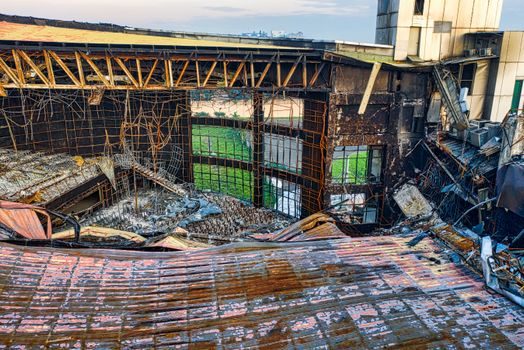
The dominant failure mode across all five chemistry families is inadequate surface preparation — dust, laitance, oil or curing compound on the concrete face will break the bond of any coating family, and the cement-based osmotic system is particularly unforgiving because the active chemistry needs direct contact with the cement matrix to form crystals [S2]. The second failure mode is DFT under-application: most liquid-applied coatings are sold and quoted by litre, not by dry-film-thickness, and a contractor applying a 1.0 mm-wet film that ends up at 0.6 mm DFT has under-spec'd the system by 40% — a common source of leak callbacks on balconies and podium decks.
Negative-side application of a positive-side system is the third classic failure — osmotic crystalline coatings specified on the wrong face of a basement wall will not carry back-pressure and will blister. The fourth is joint neglect: the field of the membrane is rarely where the leak starts, the construction joint or the pipe penetration is — and the spec must include the joint detailing as a line item, not as a contractor allowance. Finally, chemical compatibility between primer and topcoat is a gate that is often skipped: a bituminous primer under an aliphatic polyurethane topcoat can drive topcoat delamination unless an isolating tie-coat is specified between them [S1].
Sourcing, Standards and Trackable Signals for 2026
Cement-based osmotic crystalline materials are covered by GB 18445 in China and by an expanding set of EN test methods in European markets — confirm the local jurisdictional standard is on the datasheet before specifying [S2].
Two trackable signals to watch through 2026: the uptake of crystalline admixtures as an alternative to surface-applied crystalline coatings, which shifts the waterproofing function into the concrete mix itself, and the steady migration of polyurethane and polyurea formulations toward higher solids and lower VOC to align with tightening EU and Australian VOC limits on construction-site coatings. For background on related industrial-coating spec decisions — fire grade, substrate prep, certification scope — the industrial coating selection framework and the waterproof coating reference page are the natural next reads. For thickness verification on a cured membrane, a coating thickness gauge check at multiple points across the field, not a single spot, is the only practical way to confirm the spec'd DFT actually landed on the substrate.
For related coverage, see Vacuum Packaging Machine 2026 Price & Cost Guide.