
Reactive polyurethane (PU) waterproofing coatings conforming to GB/T 19250-2013 — produced in both single-component and multicomponent (two-component) formulations — and cement-based osmotic-crystallisation coatings are two binder families used in Chinese waterproofing practice, with PU products such as a 6 MPa formulation marketed for bridge-deck applications.
Pricing on Made-in-China.com (2026-04 listing snapshot) clusters at US$1-1.5/kg for brush-grade roof PU at 500 kg MOQ, US$2.82-3.66/kg for wood-grade PU at 1000 kg MOQ, and US$25-35/kg for spray-applied roofing systems at 2000 kg MOQ — a 25× spread that maps directly to solids content, certification depth, and substrate prep tolerance [S1][S4].
Binder Chemistry: PU, Cementitious Crystallisation, Rubber-Bitumen
Reactive polyurethane is the dominant 2026 specifier choice for flat-roof and below-grade work because the cured film is seamless, cold-applied, and bonds to concrete, metal, and aged asphalt without a primer in most product lines. [S1]
Single-component PU (NRF-C801) cures by atmospheric moisture reaction; isocyanate and polyether polyol are polymerised with fillers and pigment, then supplied ready to apply — no on-site mixing, so it is the residential default.
Two-component PU (NRF-C802) mixes an A-side prepolymer with a B-side curing agent at a fixed ratio, producing a higher-crosslink film; this is what 6 MPa tensile-strength bridge-deck grades use, and it is what GB 55030-2022 General code for waterproofing of building and municipal engineering ties to for reaction-type systems.
Cement-based osmotic-crystallisation coatings are inorganic grey powders carrying an "active substance" that uses water as a carrier to migrate into capillary pores of cured concrete and form insoluble crystals — a self-sealing mechanism valued for water-tank and basement negative-side work where a film-forming PU cannot adhere to a wet substrate [S6].
For spec context across other building-material categories, see this polyurethane insulation 2026 buying guide — the same isocyanate chemistry is the upstream input for both PU foam and PU waterproofing.
Tensile Strength, Elongation and GB/T 19250-2013 Grading
GB/T 19250-2013 is the governing product standard for polyurethane waterproofing coatings, and GB 55030-2022 is the building-code umbrella both single- and two-component PU grades are tested against. [S2]
Across 2026 listings, bridge-deck PU is published at 6 MPa tensile strength with high elongation — far above the older GB/T 19250 (2003 vintage) Grade II thresholds and aligned with the elongation-at-break values needed for crack-bridging over moving substrates [S4].
Cementitious osmotic-crystallisation products are typically specced on crystallisation depth (commonly ≥0.4 mm penetration under 0.8 MPa water pressure in manufacturer data) rather than tensile strength, because the active mechanism is pore-blocking, not film-forming [S6].
For reference, our industrial coating encyclopedia entry covers the broader category including epoxies and polyurethanes used in tank and pipeline service, which overlap chemically with these construction-grade PUs.
Moisture Tolerance and Substrate Decision Tree
Pick single-component moisture-curing PU when the substrate is dry concrete, primed metal, or aged bitumen and ambient relative humidity is above ~30% — the film cures from airborne water vapour and tolerates a slightly damp slab better than solvent systems. [S3]
Pick two-component PU when the spec demands a 6 MPa tensile bridge-deck membrane, a chemical-resistant tank lining, or a buried structure where the higher crosslink density is the only thing that survives hydrocarbon or biogenic-sulphide exposure.
Pick cementitious osmotic-crystallisation when the structure is permanently wet on the negative side (lift pits, water-retaining tanks, basement walls with active seepage) — no film PU will bond to a continuously wet face, but a crystalline system can grow into the substrate from the inside [S6].
Pick a rubber-bitumen or polymer-modified bitumen emulsion only for non-critical buried membranes under slabs where cost per square metre dominates; these are not in the GB/T 19250 PU family and behave as a different product line entirely [S4].
Price Bands, MOQ and Supplier Tier Levers
2026 factory-gate prices on Made-in-China.com split into three bands: US$1-1.5/kg commodity brush-grade roof PU at 500 kg MOQ, US$2.82-3.66/kg higher-spec PU at 1000 kg MOQ, and US$25-35/kg spray-grade roofing PU at 2000 kg MOQ — the premium tier is driven by higher solids, factory QC, and full ISO/MSDS/CE documentation rather than raw-material cost [S1].
MOQ scales with certification: 200 kg trial batches are available for commodity PU; 500-1000 kg is the entry tier for ISO+CE double-certified product; 2000 kg is typical for spray-grade roofing systems that require factory-batched viscosity and pot-life control [S1][S4].
Volume break-points worth negotiating at order time: 5-10 tonnes unlocks export-grade CE/Reach documentation, 20+ tonnes typically moves pricing 8-15% below listed tier-1, and 50+ tonnes is the threshold at which most Chinese OEM waterproofing lines will tool a private-label SKU [S1][S4].
The reading on this price gap is the same as for other 2026 industrial B2B guides — see how the polyurethane insulation price & cost guide tracks the identical MOQ-vs-certification curve on a sister isocyanate chemistry.
Application Method, DFT and Coverage
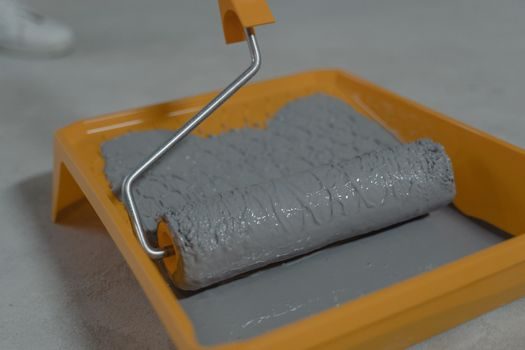
Brush and roller are the default for single-component roof and bathroom PU at 1.0-1.5 kg/m² per coat; spray is reserved for large-area roofing systems and is the only way to hit the US$25-35/kg price band's coverage rate economically [S1].
Two-component PU is typically applied in two coats at a total wet film thickness of 1.5-2.0 mm (roughly 2.0-2.5 kg/m² total) to achieve the published 6 MPa tensile-strength result; under-application is the single most common field failure cause [S4].
Cementitious crystallisation coatings are brush- or spray-applied as a slurry at 1.5-2.0 kg/m² for a two-coat system, then require water curing for 3-7 days to drive the osmotic reaction to completion — a step crews routinely skip, which kills the self-sealing performance [S6].
For comparison with another building-envelope wet-trade product, the concrete pump buying guide covers the placement equipment that often delivers the structural slab these coatings go onto.
Limitations, Failure Modes and Specification Pitfalls
PU films fail at the substrate interface, not in the bulk of the membrane, when the slab is not primed or the concrete is still releasing moisture above 4% by weight — film integrity tests in the lab rarely reproduce a wet, alkaline, or dusty substrate. [S4]
Cementitious crystallisation products do not bridge moving cracks; they seal static capillary pores and dormant micro-cracks only — a structural crack wider than ~0.4 mm needs a PU or a cementitious-flexible composite, not a pure crystallisation grade [S6].
One-component PU has limited chemical resistance and a low flash point for the solvent-borne version; on potable-water tanks, food-grade facilities, or chemical bunds, two-component PU or an epoxy-fibreglass laminate is the correct call.
A field detail often missed: waterproofing thickness is verified with a coating thickness gauge on the cured DFT, not the wet-film thickness read at the bucket — over-spec wet film that shrinks during cure is the standard contractor mistake.
Standards, Documentation and Code Compliance
For any 2026 project in China, the minimum acceptable documentation is GB/T 19250-2013 third-party test report for PU, GB 55030-2022 design-compliance statement for the building envelope, and an ISO 9001 factory certificate for the OEM. [S5]
Export projects to the EU add EN 14891 (liquid-applied waterproofing for bonded installations) or ETAG 005 (for roof-grade PU), while North American commercial work usually defaults to ICC-ES AC39 or ASTM C836 for cold-applied PU [S4].
Reach, CE, RoHS, and MSDS sheets are bundled with most 2026 Chinese OEM PU exports at the 5-10 tonne order tier; below that, expect the factory to supply MSDS only and to charge a documentation fee for the rest [S1][S4].
For wider product-context, the waterproof coating encyclopedia entry maps the category across binder types, substrate compatibility, and the standards landscape.
The next decision node to track is GB 55030-2022 enforcement in 2026 second-half project approvals — Chinese municipal reviewers are tightening on full-system documentation (primer + membrane + protection layer as a single tested assembly) rather than standalone coating test reports. Buyer trackable signal: at tender stage, request the OEM's GB 55030-2022 system-level test report, not just a GB/T 19250-2013 product certificate, before locking the 2026-Q3 order.