
Industrial wireless modules are best specified along five axes: target distance, frequency band, data rate, power budget, and network topology, with regional certification as a non-negotiable gate [S1][S3].
For an indoor plant or warehouse link under 100 m, BLE, Zigbee, or 2.4 GHz modules such as the E73, E104-BT, and E103-WiFi families are the default; for 100 m to 1 km urban coverage, sub-1 GHz LoRa at 20 dBm (E22 series) or legacy FSK (E32/SX1278) is the workhorse [S3].
Distance Bands and Matching Radio Technology
Sub-1 GHz propagation beats 2.4 GHz by 6–10 dB of link budget through walls and metal, which is why most multi-kilometre industrial links sit at 433/470/868/915 MHz rather than 2.4 GHz [S1][S3].
The 2.4 GHz band (SX1280, nRF24L01+) is reserved for high-rate, short-range duty above 100 kbps, where its larger channel bandwidth and antenna compactness outweigh the range loss [S3]. The datasheet rule of thumb, every 3 dBm of extra transmit power roughly multiplies line-of-sight distance by 1.4×, is why 27–33 dBm modules are specified for suburban duty and 20–27 dBm suffices for urban mesh [S3].
Open-field distance is a marketing number; the real number is set by antenna gain, installation height, building obstruction, and EMI floor, so on-site link testing is mandatory before mass-production lock [S1].
Frequency Bands, Regional Certification, and Compliance Gate
Common industrial sub-1 GHz allocations are 433 MHz, 470 MHz, 868 MHz, 915 MHz, plus the global 2.4 GHz ISM band, and each has different duty-cycle, bandwidth, and maximum EIRP rules per region [S1][S3].
For international product deployment, FCC (US), CE-RED (EU), IC (Canada), KC (Korea), TELEC (Japan), and SRRC (China) certifications are the hard gate; a module without these marks cannot be legally imported even if the silicon is identical [S1][S3].
China's wireless module exports reached 12.74 billion CNY in Q1 2025, up 18.3% year-on-year per GACC data, while global LPWAN connections surpassed 1 billion by early 2026 per IoT Analytics, so the vendor pool is deep and price-competitive [S3].
Receive Sensitivity, Link Budget, and Antenna Gain
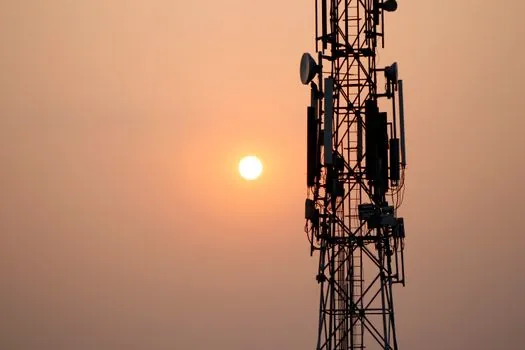
Link budget is the sum of transmit power, transmit antenna gain, receive antenna gain, minus cable and connector loss, minus path loss, minus fade margin; receive sensitivity sets the floor the receiver can decode [S1].
LoRa SX1262-based modules like the E220 series typically reach −137 dBm to −148 dBm sensitivity depending on spreading factor, which is what lets them close 1–10 km links at 20 dBm output [S3].
Industrial antennas should be mounted clear of metal, with the cable run kept under 1–2 m of LMR-200-equivalent coax to keep insertion loss below 1 dB at sub-1 GHz; SMA or RP-SMA connectors dominate the segment [S1].
Data Rate, Modulation, and Power Budget Trade-offs
Below 10 kbps, LoRa spreading-factor modes are the right tool for sensor telemetry; 10–100 kbps is the FSK/GFSK band for control and status; above 100 kbps you leave sub-1 GHz and move to 2.4 GHz SX1280 or nRF24L01+ [S3].
Battery-powered multi-year nodes need WOR (Wake-on-Radio) and deep-sleep modes; the E22 series drops below 2 μA in sleep, which is the threshold for a 10-year life on a 2.4 Ah primary cell at one hourly uplink [S3].
Mains-powered gateways can run higher output (27–33 dBm) and reject the sleep-current trade-off entirely, so the same LoRa chipset can serve both ends with different firmware power tables [S3].
Network Topology and Protocol Layer
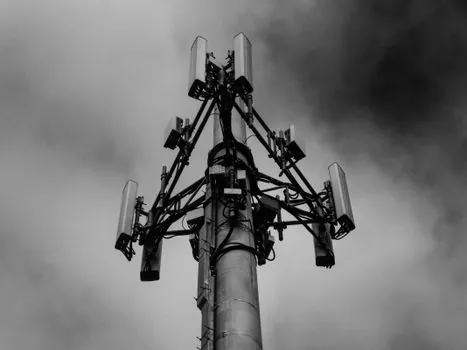
Point-to-point and point-to-multipoint links can use plain UART/SPI transparent modules; star networks need address filtering and channel monitoring, which is where modules with built-in node-ID tables earn their keep [S3].
Mesh and ad-hoc relay duty needs explicit MESH firmware; the E90-DTU series supports automatic relay and is the typical pick for power-meter reading and mountainous area monitoring beyond 10 km [S3].
Protocol choice splits three ways: proprietary LoRa (highest control, lowest interoperability), LoRaWAN (standardized, server-mediated, slower join), and private FSK (legacy, deterministic, lowest latency); the selection hinges on whether the user owns the network or rides a public one [S3].
Environmental Hardening, Security, and Interface
For IIoT security, look for WPA3, secure boot, hardware crypto, secure firmware update, and protected key storage on the module, not just on the host MCU; this is now a hard requirement in most plant cyber-security policies [S2].
Host interface choice (UART vs SPI vs SoC) drives both throughput and BOM; SPI is the right bus for SX1262/SX1280 to feed MAC-layer firmware, while UART transparent modules cut development time for simple telemetry nodes [S3].
Selection Comparison: BLE vs Zigbee vs LoRa vs Cellular
BLE wins on power and smartphone-interop, but caps range near 30 m indoors and 100 m line-of-sight; Zigbee adds mesh and is the right pick for dense lighting or sensor mesh, with typical node counts above 200 per coordinator [S2].
LoRa at 868/915 MHz covers 1–10 km outdoors at 14–20 dBm with multi-year battery life, but tops out near 50 kbps and cannot carry video or firmware images; cellular LTE/5G carries megabits per second globally but kills battery life and requires carrier certification [S2].
The "do not pick the mainstream" case: a buyer who needs 50 ms control-loop latency and 99.999% delivery should avoid LoRaWAN (join procedure, duty cycle, server round-trip) and instead specify a private FSK or Wi-Fi HaLow link with deterministic MAC [S2][S3].
Sourcing, Standards, and Watch-outs
Wi-Fi HaLow (802.11ah) is now a real option for long-range indoor industrial IoT, with modules such as the Vizmonet AHSP1 offering sub-1 GHz Wi-Fi in an embedded form factor for warehouse and utility coverage [S2].
Shortlist logic: lock the distance band first (100 m / 1 km / 10 km / >10 km), then pin the frequency by target market, then match data rate to payload, then verify FCC/CE-RED/SRRC marks on the exact model code, then re-run a site link test before issuing the PO [S1][S3].
For a deeper protocol-gateway pairing once the radio is fixed, see the protocol gateway spec map, and for power-plant-specific radio duty the industrial wireless module spec map for power generation is the right follow-on read; the underlying wireless module entry on SourceBySpec consolidates the shared terminology.
Spec-level background on the components involved: linear guide, and crossed roller guide.