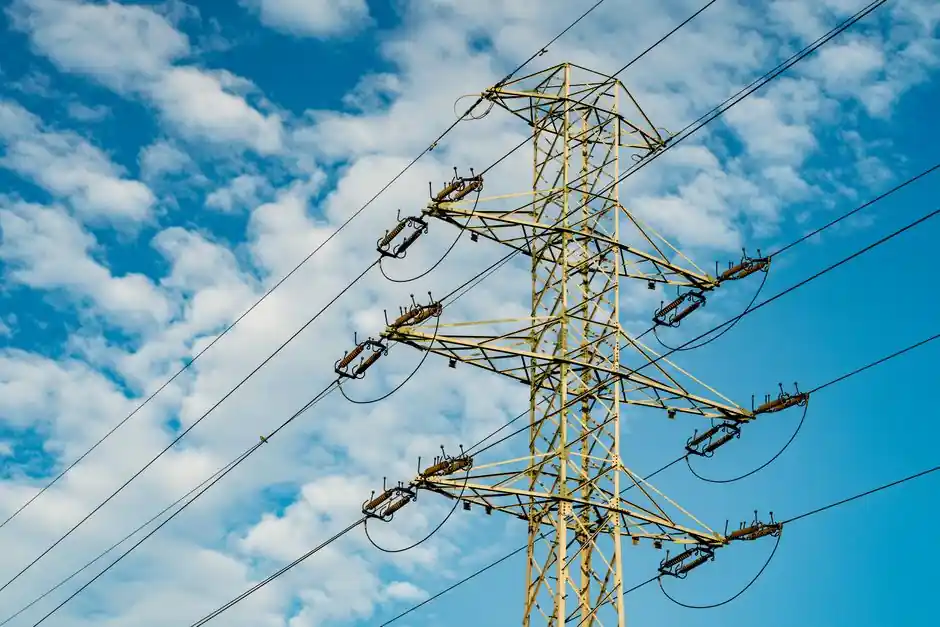
Ebyte's E32-433T30D-V8 LoRa module delivers 30 dBm output power and 8 km line-of-sight range on 433 MHz, sitting inside a Top-10 industrial lineup that reaches 12 km line-of-sight on factory-tuned LoRa parts and supports SPI, UART, and USB host interfaces [S1].
For power generation sites, the radio is only half the bill of materials; the second half is how each remote node gets power, which is why thermoelectric generator (TEG) harvesters, ambient RF harvesting, and battery-backed radios now ship together as a single spec line item rather than three separate purchases.
Defining the Industrial Wireless Module for Power Plants
An industrial wireless module for power generation is a sub-GHz or 2.4 GHz radio block plus protocol stack designed to backhaul sensor data from boilers, generators, switchgear, and balance-of-plant assets without running copper [S1]. Sub-GHz LoRa dominates new utility specs because 433 MHz and 868/915 MHz bands penetrate metal enclosures and concrete walls that kill 2.4 GHz Wi-Fi or BLE links, and the same module can multiplex Modbus RTU over UART for direct RTU/DTU replacement.
Operating temperature, ESD, and RF immunity are the deciding factors between a module qualified for a control room and one qualified for a turbine hall; the Ebyte Top-10 line is factory-tested to CE/FCC/RoHS conformity with industrial-grade temperature range and onboard ESD protection [S1]. For power generation, a wireless module is functionally a multi-protocol radio front end, not a single-frequency transmitter, and the spec sheet should list at least two of LoRa, FSK, GFSK, or BLE alongside the host interface.
Selection Criteria: Radio, Power Budget, and Interface
Three concrete numbers govern every procurement decision. First, the link budget: LoRa parts in the 433-915 MHz bands achieve 8-12 km line-of-sight with 20-30 dBm output power, and that is the range class a generation plant should target before adding any repeater [S1]. Second, the power budget: a self-powered node on a steam pipe must run from a TEG or energy harvester, and the Tecteg TEG1-12610-5.1 produces 5.1 W matched-load output at 3.9 V with a 300°C hot side and 30°C cold side, which is enough to feed a 30 dBm radio plus a small battery or supercap buffer [S2].
Third, the host interface: SPI, UART, and USB appear on the Ebyte Top-10 list because every plant RTU, PLC, or SCADA gateway already exposes at least one of those buses [S1]. Buying a module without a documented SPI or UART register map is the most common procurement mistake on this category, and it forces a custom firmware layer the integrator will not maintain. For balance-of-plant telemetry, pair the radio spec with a power supply sized for the burst current of a 30 dBm transmit cycle, not the average current, or the node brown-outs on every uplink.
Powering the Node: TEG, RF Harvesting, or Battery
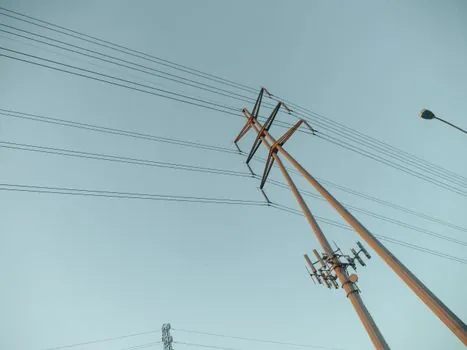
Thermoelectric harvesting is the only field-proven path to multi-year maintenance-free operation in power generation, because every boiler, steam line, and generator housing is a heat source by definition. Nextreme's Thermobility WPG-1S evaluation kit demonstrates the architecture: a solid-state thin-film eTEG HV56 module paired with a Linear Technology LTC3108 ultralow-voltage step-up converter, producing up to 1 mW at temperature differentials as low as 15-20 K and regulated 3.3 V output, with on-board THINERGY MEC storage supplying 2.0 mAh of buffered energy for intermittent heat [S3].
For higher-temperature service, Tecteg's Bi2Te3 series runs to 320°C, the PbTe-BiTe hybrid covers 300-360°C, and the CMO class extends to 500-800°C, which lines up with the 500-600°C exhaust temperatures found in gas turbines and the 150-250°C hot-side window recommended for state-of-the-art semiconductor TEG efficiency [S2]. Where heat is unavailable, long-range RF harvesting is an emerging option: TransferFi has demonstrated wireless energy transfer at 50 m for industrial IoT sensor networks, and that distance class fits a generation-plant substation where a single powered gateway can energize a cluster of sensors [S4].
Battery-only nodes are the fallback, not the design target, because every battery swap on a 50 m turbine-hall transmitter costs more than the radio itself. When specifying a power meter front end, the same TEG output rail can feed both the metering IC and the radio, so the two procurement lines should be co-specified from day one.
Comparison: LoRa vs Wi-Fi vs ZigBee vs BLE for Plant Use
LoRa, Wi-Fi, ZigBee, and BLE are the four radios a power generation buyer will see on a shortlist, and they line up against four decision criteria. Range: LoRa wins at 8-12 km line-of-sight, ZigBee lands around 100 m, Wi-Fi 2.4 GHz tops out near 200 m, and BLE 5 is in the same 100-200 m window as ZigBee [S1]. Penetration: sub-GHz LoRa signals propagate through metal-clad turbine halls that 2.4 GHz radios cannot, so Wi-Fi and BLE need a mesh of gateways.
Power draw: BLE and ZigBee are designed for coin-cell duty cycles, LoRa is battery-tolerant but transmits at higher peak current (20-30 dBm), and Wi-Fi is a poor fit for any energy-harvested node. Data rate: LoRa tops out in the low kbps, which is correct for SCADA telemetry; Wi-Fi and BLE carry video and firmware streams, which is overkill for a bearing-temperature reading. The Ebyte Top-10 list deliberately mixes LoRa, FSK, GFSK, nRF24L01, and BLE parts so a buyer can pick the protocol that matches the asset class rather than the protocol the integrator knows [S1].
Use Cases Inside a Power Generation Plant
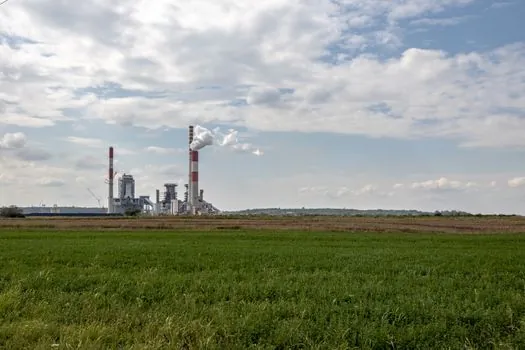
Boiler tube leak detection is the classic wireless deployment, with thermocouples or acoustic-emission sensors on manifolds above 300°C, where a TEG harvester plus a 433 MHz LoRa module replaces a kilometre of compensation cable. Generator stator temperature monitoring uses 6-12 RTD per machine, and a 915 MHz LoRaWAN node on each end-winding cuts the commissioning cost versus running fibre through the hydrogen-cooled housing. [S2]
Switchgear partial-discharge monitoring is a third use case that maps directly to the long-range wireless power transfer concept: a single powered gateway in the substation room can energize and backhaul 20-30 battery-free PD sensors at 50 m spacing, which is exactly the architecture TransferFi has prototyped [S4]. Auxiliary applications such as smart metering of plant air, water, and fuel lines use the same Ebyte modules with Modbus RTU passthrough, and a power distribution cabinet can be retrofitted with a wireless branch monitor in an afternoon rather than a shutdown window.
Limitations, Failure Modes, and Sourcing Standards
Every wireless module on a power plant must be sourced with proof of CE/FCC/RoHS conformity and, for any Zone 1 or Zone 2 area, ATEX/IECEx certification matched to the gas group and temperature class of the site; the Ebyte Top-10 line is conformant to CE/FCC/RoHS for general-purpose industrial areas, but hazardous-area deployment requires additional certification not listed in the Top-10 datasheet [S1]. A common failure mode is antenna detuning when the module is installed inside a metal enclosure, which is why the antenna category on the same Ebyte catalog lists 433 MHz, 868/915 MHz, 2.4 GHz, and 5.8 GHz fiberglass and lightweight variants sized for metal-mount service.
A second failure mode is regulator instability on the TEG rail: the WPG-1S uses an LTC3108 specifically because TEG output is open-circuit at low temperature differential and can exceed 5 V at high differential, so a step-up converter with proper cold-start and over-voltage protection is mandatory, not optional [S3]. Engineers pairing wireless modules with power cable runs to a remote gateway should keep the cable shielded and bonded at both ends, because the same RF noise that helps a wireless link can couple back into a 4-20 mA analog loop on the same cable tray and confuse the readings.
Sourcing and Standards Discipline
Procurement should require three documents with every wireless module order: a full datasheet with register map, a CE/FCC/RoHS declaration, and a test report for ESD, surge, and operating-temperature margin; the Ebyte factory ships modules directly with this documentation pack and engineering support [S1]. For thermoelectric harvesting, Tecteg publishes per-module matched-load output at a defined hot-side and cold-side temperature, which is the only way to compare two TEG vendors fairly, and the TEG1-12610-5.1 datasheet of 5.1 W at 3.9 V (T_H 300°C, T_C 30°C) is the baseline figure to ask any competing vendor to match [S2].
For harmonized RF compliance, modules in the 433 MHz and 868/915 MHz bands must meet regional radio regulations in the target market, and any retrofit into a hazardous area also requires ATEX 2014/34/EU equipment-level certification matched to the zone classification. The same selection discipline is laid out in this How to Choose an Industrial Wireless Module: A 2026 Spec Map guide, which walks through the same radio-and-power pairing logic for adjacent industries. Two trackable signals to watch: CE/FCC/RoHS datasheet revisions for hazardous-area wireless modules in 2026, and field deployments of TransferFi-style 50 m RF energy harvesting inside utility substations, which would shift the power-budget math for sensor nodes that today still depend on TEGs or battery swaps [S4].