A protocol gateway is a hardware module that translates data between two industrial networks so devices speaking Modbus RTU, Modbus TCP, EtherNet/IP, PROFINET, OPC UA, DNP3, IEC 61850, and MQTT can share registers and event records without a rip-and-replace [S3].
Selection comes down to confirming the exact protocol, role, and physical port on both sides first, then checking 24 VDC DIN-rail fit, polling speed, and the security stack (RBAC, TLS/SSH, SNMPv3, VPN with MFA) before price [S3]. For a working definition and protocol taxonomy, see the protocol gateway primer; for the broader industrial gateway family, the fieldbus gateway reference lays out the network-side scope.
Five-Criteria Filter That Catches Commissioning Failures
Compatibility problems at the gateway level often surface during commissioning, not bench test, especially when bridging IEC 61850 relays to a DNP3 SCADA master where event records and fault files must be reassembled cleanly [S3]. The five checks a senior engineer should run before signing the PO: (1) protocol and interface fit on both sides, not just the name; (2) performance: polling speed, local logic, serial and Ethernet throughput limits, and electrical-noise immunity; (3) security: RBAC, TLS/SSH, X.509 certificates, SNMPv3, VPN with MFA, audit logs, and a vendor hardening guide; (4) panel and site fit: 24 VDC input, DIN-rail or panel mount, operating temperature and humidity, EMC/ESD ratings; (5) 5-year total cost: hardware, licenses, setup labor, travel, support, warranty, and replacement risk [S3].
The framework is meant to be used as a single decision filter, not five parallel checklists, because a gateway that passes protocol fit but fails panel fit still fails the install [S3]. When the downstream side is a SCADA historian and the upstream side is a pressure transmitter bus, the mapping is a few hundred registers; when the upstream is an IEC 61850 IED, the gateway has to carry GOOSE or MMS event payloads, which is a different device class entirely.
Port, Power, and Protocol Count: What the Datasheet Must Show
Real-world industrial gateway form factors cluster around a small set of port and power combinations, useful as a baseline when comparing datasheets. The RTA N-series is a representative example: 12-24 VDC input on a 2-pin screw terminal, one or two RJ45 Ethernet ports at 10/100 Mbps auto-negotiation half or full duplex, and serial ports ranging from a single RS-232/485 to dual RS-485 with RS-422 support on the same DB9 or screw-terminal block [S2]. UL, cUL (some models rated Class I Div 2), RoHS, CE, and on the N34 model FCC round out the typical certification stack for U.S. panel builders [S2].
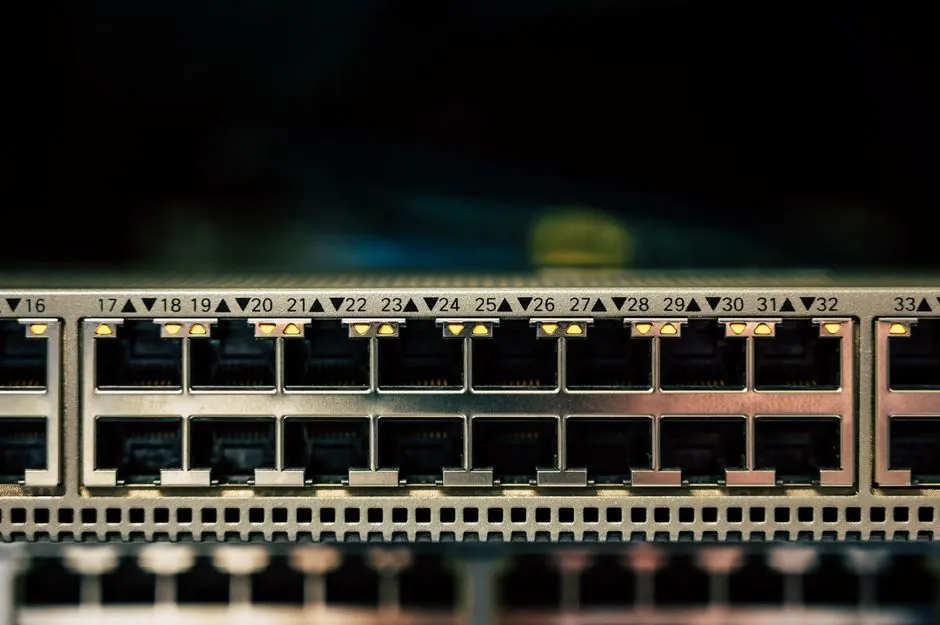
Serial/Ethernet port count is the single biggest driver of hardware fit. A job that needs Modbus RTU on RS-485 from a flow meter bank plus Modbus TCP to the SCADA is usually a one-Ethernet, one-serial unit; a job that needs two independent serial masters (for example, a DNP3 substation gateway fronting two feeders) needs the dual-RS-485 variant. The N34 in that family adds 1 CAN port for mobile equipment or NMEA 2000 bridging, which is a niche but real spec [S2].
Protocol Fit: Confirm Both Sides, Then Confirm the Role

A gateway that supports Modbus TCP does not necessarily support Modbus TCP as a master to poll downstream slaves; many list it as a server only. Spectrum Controls' guidance is blunt: confirm the specific protocols you need on both the input and output side, and the role on each side, before shortlisting [S1]. The same lesson shows up in Moxa's 2023 criteria write-up: a one-port protocol gateway per field device gives the cleanest data path but inflates hardware cost, so multi-drop gateways earn their keep when the polling cycle is loose [S7].
The hardest mapping cases are not TCP-to-TCP; they are serial-to-Ethernet and event-to-register. Bridging IEC 61850 GOOSE or MMS reports into a DNP3 master is a mapping job, not a wire job, and the gateway has to expose enough internal buffer to carry a fault record through without truncation [S3]. For plants mixing PROFINET and EtherNet/IP, the more common 2026 retrofit, look for gateways that explicitly list both as named protocols with their respective role modes (PROFINET IO device vs. controller, EtherNet/IP scanner vs. adapter), not "Ethernet protocols" as a bullet [S3][S4].
Security Stack: Treat the Gateway as OT/IT Border Equipment
Because the gateway sits between field devices and the plant network, weak controls there expose downstream PLCs, protection relays, and meters. The minimum 2026 baseline is RBAC for management, TLS or SSH for config, X.509 certificate support, SNMPv3 for monitoring (not SNMPv1/v2c), VPN with MFA for remote access, and an audit log of configuration changes [S3]. A vendor hardening guide, ideally aligned to IEC 62443, should be downloadable with the firmware, not gated behind an NDA.
Default credentials, open telnet or HTTP management, and unsigned firmware are still common in low-cost units; they are disqualifying for any substation, water/wastewater, or process skid connecting to a corporate network. For perimeter use, Class I Div 2 certification is a meaningful marker because it implies the supplier has done the enclosure and component testing expected in hazardous-area U.S. panels [S2][S3].
Panel and Site Fit: 24 VDC, DIN-Rail, Thermal Envelope
U.S. industrial panels run on 24 VDC control power as the norm, so 12-24 VDC input on a 2-pin screw terminal is the safe default [S2][S3]. Mounting should be DIN-rail with a panel-mount option for retrofits; LED count (one power LED plus two application LEDs on most models) is a small but useful diagnostic at commissioning [S2]. Operating temperature and humidity, plus EMC and ESD ratings, must be in the datasheet, not buried in a brochure; heat, dust, and cabinet crowding are the most common install-day surprises in U.S. plants [S3].
If the gateway is feeding data from a pressure sensor array or industrial valve actuator bank into a historian, panel space and port placement often decide the model before the protocol list does. For cabinet retrofits, footprint and wiring direction (top vs. side) can add a day of mechanical rework if missed, so pull the dimensional drawing at the same time as the protocol list.
5-Year Cost: Hardware Is the Smallest Line
A lower purchase price regularly loses to a higher 5-year total cost once licenses, setup labor, travel, support contracts, warranty, and the probability of replacement are summed. The honest filter is: hardware + license + setup labor + travel + support + warranty + (replacement risk x unit cost), with replacement risk weighted by the vendor's published MTBF and the panel's access cost [S3]. The same logic pushes buyers away from one-port-per-device topologies unless the application genuinely needs that isolation, since the per-port hardware spend is hard to recoup over a 5-year horizon [S7].
For mixed-protocol plants, the air solenoid valve selection guide and the spec-first temperature controller reference follow the same five-criteria discipline, useful templates for the procurement template your team is already building.
Who Should NOT Pick a Generic Multi-Protocol Box
Three use cases need a purpose-built gateway, not a generic multi-protocol module. (a) IEC 61850 to DNP3 substation gateways, where event-record fidelity and time synchronization (IEEE 1588 or IRIG-B) matter more than raw register count. (b) Safety systems up to SIL 2/3, where the gateway has to be in the safety loop's vendor compatibility list and typically carries a TUV or exida certificate. (c) High-density serial substation work (32+ RS-485 drops) where a multi-port serial concentrator with protocol mapping outclasses a stack of single-port gateways on both cost and noise immunity [S3][S7].
For everyone else, the shortlist logic is: confirm the two protocol endpoints and roles, lock the 24 VDC DIN-rail form factor, then sort the survivors by serial/Ethernet port count, security stack, and 5-year cost [S1][S2][S3]. Two trackable signals to watch: vendor firmware release notes citing IEC 62443 conformance, and 2026 catalog updates adding native MQTT-Sparkplug B alongside OPC UA, both of which are becoming table stakes in U.S. plant retrofits [S3].