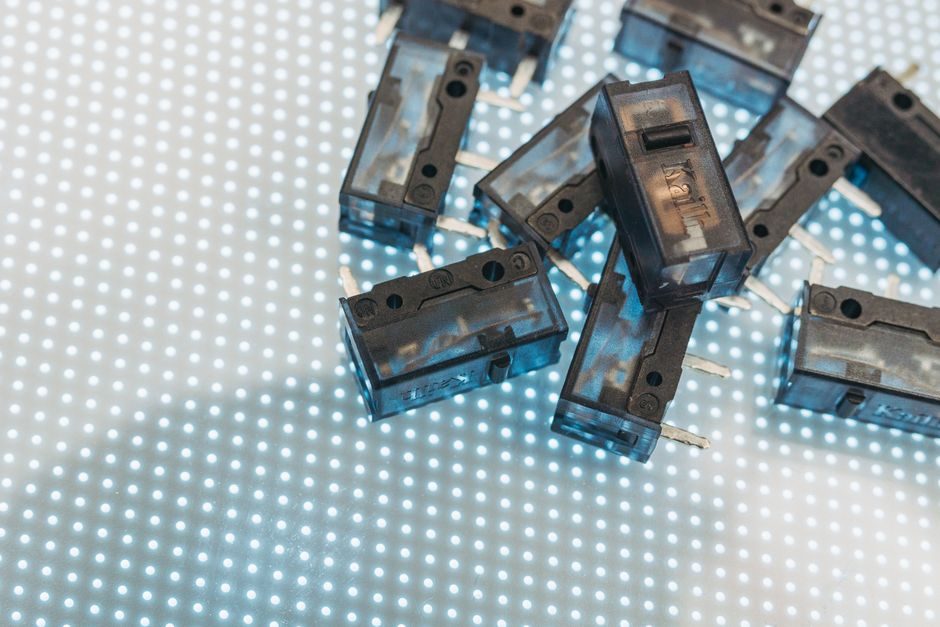
Injection molded part pricing on Chinese B2B platforms in 2026 spans from US$0.05 per piece for small plastic machinery components up to US$1.5–2.0 per piece for finished auto spare parts at minimum order quantities of 500 pieces [S2][S3]. The global market for the end-use parts was valued at USD 387.7 Billion in 2025 and is projected to reach USD 642.6 Billion by 2036, expanding at a CAGR of 4.7%, with standard injection molding holding 68% of the technology share and Asia Pacific capturing 40% of regional revenue [S1].
Three cost drivers dominate every quote line: the per-shot resin cost, the amortized mold cost spread over the order, and the machine-hour rate at the molding shop. A specifier who only compares piece price without opening those three buckets will mis-budget by 30–50% on tooling-heavy programs, especially when the same part shifts from PP to glass-filled PA66 for an under-hood automotive use case [S1][S3].
Resin Cost per Kilogram and Per-Part Material Spend
Resin is the single largest variable line in any injection molded part quotation, and the 2026 commodity spread is wide. Polypropylene and HDPE anchor the low end of the engineering cost curve and dominate packaging and rigid-container volume runs; ABS, polycarbonate, and polyamide (PA6, PA66) sit in the mid-tier for consumer electronics and automotive interior or under-hood parts; PPS, PEEK, and glass-filled nylons close the high end for medical, E&E, and EV battery-housing applications [S1].
For a 50 g PP part at a typical material yield, raw resin accounts for roughly 35–45% of the variable cost before machine time and overhead. CN Mould & Plastic lists working material families as PP, ABS, PC, PE, and Nylon for OEM/ODM runs, with capability ranges of 2 g to 5,000 g shot weight and 0.2 cm to 200 cm part length [S2].
Tooling Amortization: How Mold Cost Spreads Across Volume
Tooling is the second cost bucket and the one most often underestimated by first-time buyers. A single-cavity prototype or low-volume steel mold for a Chinese-sourced part typically lands in the low five-figure USD range, while a production-grade multi-cavity mold with hot runners, slides, and side-actions for an auto spare-parts family can reach into the low six figures [S2][S3]. The amortization per piece is simply mold price divided by total lifetime shot count, and it is the reason a US$0.6–0.8 piece at MOQ 5,000 (typical for custom plastic injection molded parts) can drop to a few cents at MOQ 100,000 [S3].
Two rules of thumb from the 2026 sourcing data: a single-cavity mold is rarely economical below 10,000 pieces because the per-piece tool cost stays above the material cost; a four-cavity family mold with a hot runner becomes the breakeven point for most commodity industrial parts above 50,000 annual pieces. Goldsupplier listings for related custom parts cluster tightly at US$0.6–0.8 with MOQ 5,000, which is the market's signal of where Chinese suppliers are willing to compete on repeat volume rather than tooling margin [S3].
Piece-Price Tiers From the 2026 China Sourcing Market

The 2026 China B2B spot data segments cleanly into three price tiers, and every RFQ should be benchmarked against them before negotiation. Tier 1 covers commodity thin-wall and small precision components at US$0.05–0.20 per piece at MOQ 500–5,000, exemplified by plastic machinery accessories on Goldsupplier [S3]. Tier 2 covers general-purpose custom molded parts — sensor connectors, keypad housings, smart-home components, TWS earphone bodies, gaming components — at US$0.20–0.80 per piece at MOQ 1,000–10,000, which is the bulk of what Shenzhen and Zhongshan shops like CN Mould & Plastic produce [S2].
Tier 3 covers finished or semi-finished industrial parts with secondary operations — plating, screen printing, painting, polish, texture, insert molding, double-shot molding — and lands at US$1.0–2.0 per piece, with the Chongqing Nengsheng listing for auto spare parts (model NS-API025) at US$1.5–2.0 / MOQ 500 sitting at the top of the published range [S3]. Tier 3 piece price embeds not just molding but surface treatment, sub-assembly, and 100% inspection cost, so a direct "molded part only" comparison against Tier 2 quotes is misleading. For a like-for-like benchmark, strip out the post-process cost before pitting one quote against another.
Selection Criteria: Who Should Spec Injection vs Other Processes
Injection molding is the right process for annual volumes above roughly 5,000 pieces where part complexity, repeatability, and surface finish matter, and where the engineering resin set (PP, ABS, PC, PA, PPS) is needed. It is the wrong process for prototype runs under 1,000 pieces (use CNC machined or 3D printed prototypes to freeze the design first), for parts above 5 kg shot weight (blow molding or structural foam is usually cheaper), and for ultra-high-mix / low-volume industrial components where aluminum extrusion pricing is the more competitive baseline [S1][S2].
Within injection itself, four decision criteria separate the technology options: part weight (micro-molding below 1 g vs standard), wall thickness (thin-wall below 1 mm), material class (thermoplastic vs liquid silicone rubber), and integration depth (insert molding for metal-insert hybrid parts vs single-shot plastic). Standard injection molding held 68% of the technology share in 2025 because it covers the broadest envelope; micro-injection, LSR, and metal-plastic hybrid molding are the growth niches for medical, wearable, and EV electronics [S1][S2].
Process Comparison: Standard, Thin-Wall, Micro, LSR, Hybrid

Standard injection molding is the default at 68% of the 2025 technology mix and handles the 2 g to 5,000 g shot weight range that covers most industrial and consumer parts [S1][S2]. Thin-wall molding pushes wall thickness below 1 mm and is used for rigid packaging lids, mobile-phone trays, and battery cassettes where cycle time and material savings dominate. Micro-injection molding targets sub-1 g parts for medical and micro-electromechanical applications, with a per-shot material cost that is small but a tooling cost per cavity that is several multiples of standard.
Liquid silicone rubber (LSR) molding is a separate machine class with a different cold-runner system and is specified for medical, baby-care, and wearable seals where temperature resistance and biocompatibility matter. Metal-plastic hybrid molding — sometimes realized as insert molding where a metal stamping or thread insert is placed in the tool before each shot — is the right pick for sensor connectors, threaded bosses, and any part that needs an integrated metal feature without a downstream assembly step. CN Mould & Plastic explicitly offers insert molding, double-shot molding, micro molding, and LSR molding as separate service lines, which is a strong signal that the cost structure and lead time for each are not interchangeable [S2].
Standards, Tolerances and Quality Gates That Move the Quote
Two standards govern most injection molded part specifications at the engineering level. ISO 9001 sets the quality management baseline for the molder, and ISO 2768 governs general tolerances for linear and angular dimensions on plastic and metal parts; tighter than ISO 2768 medium typically costs 10–25% more per piece because the molder has to slow cycles, add inspection, and reject more. For medical and food-contact parts, ISO 13485 and FDA or EU food-contact migration testing are mandatory, and for automotive, IATF 16949 with PPAP documentation is the entry ticket at most OEM buyers [S1].
Surface-treatment secondary operations have their own cost bands: pad printing and laser marking add a few cents per piece; spray painting or soft-touch coating adds roughly US$0.05–0.20; plating (chrome, nickel) is one of the most expensive secondary ops and can double the piece price on small parts because of the masking, racking, and chemical-handling overhead. The Chongqing Nengsheng listing explicitly offers plating, screen printing, painting, polish, and texture as in-house options, which means those costs are baked into the US$1.5–2.0 Tier 3 piece price [S3].
Failure Modes and Constraints Buyers Should Plan Around
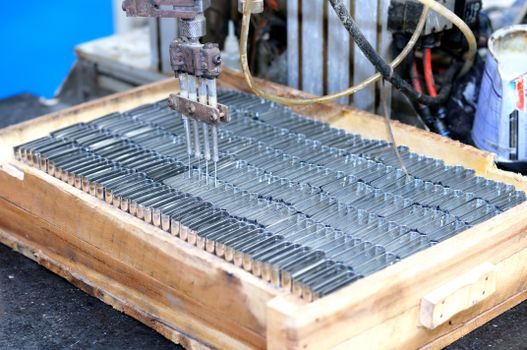
Three failure modes drive most field returns and warranty cost on injection molded parts, and each is priced into the quote in a different place. Warpage and sink marks come from poor gate location, non-uniform wall thickness, or wrong packing profile, and are caught at the tool-design stage — the cheapest place to fix. Short shots, weld lines, and flash come from worn tooling or wrong process window, and they show up in higher scrap rates on the production order, which the molder either absorbs or bills back as a yield allowance. [S1]
Glass-filled resin abrasion is the long-run failure mode that erodes screw, barrel, and mold-cavity surface over hundreds of thousands of shots; it is the reason a quote for glass-filled PA66 carries a 5–15% material premium over unfilled PA66 and the reason production molds for filled resins are specified in hardened tool steel. Buyers should ask for a tonnage-matched machine list (CN Mould & Plastic publishes its machine list as a service-line artifact) and a documented material-change control procedure before signing a multi-year supply contract, because both determine the steady-state scrap rate that the piece price assumes [S2].
Trackable signals to watch over the next two quarters: post-consumer-recycled (PCR) resin capacity expansion by large molders (the analyst view names Berry Global, ALPLA, and Motherson as the lead integrators, and the AmcorBerry merger as a consolidation signal); tooling cost moves on Chinese single-cavity prototype molds (a useful leading indicator for low-volume industrial part pricing); and secondary-operation pricing for plating and painting (which has been moving with nickel and chrome chemistry costs). Buyers building a 2026–2027 cost model should lock the resin index, the mold amortization curve, and the secondary-op cost separately, because only the first is volatile in a normal year and the other two are negotiable.
For component-level specifications, see embedded part, linear guide, and crossed roller guide.