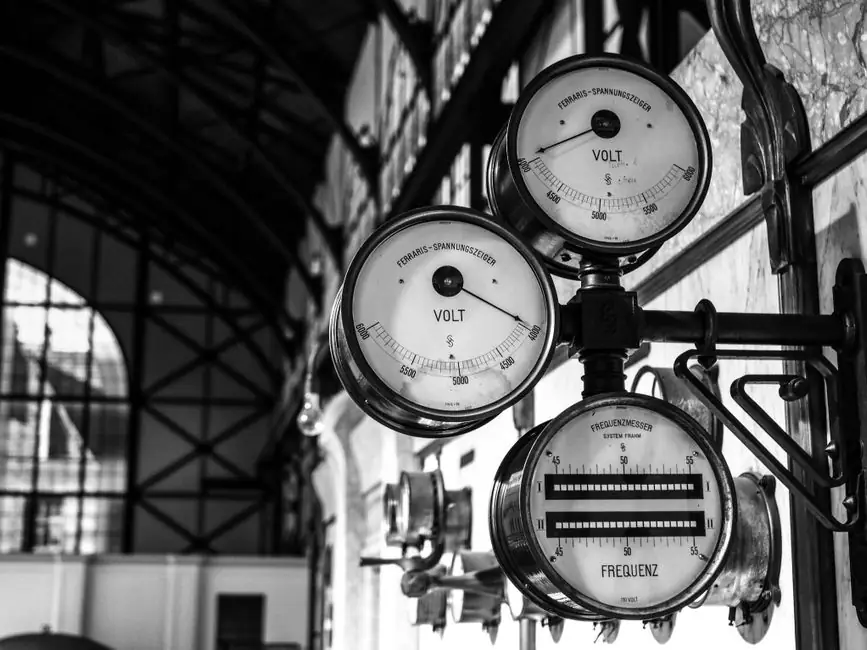
Specifying a turbidity instrument at a hazardous gas detection point means the meter sits in the same Zone or Division envelope as the gas detector it feeds, so its Ex marking, ingress rating, and process-wetted materials must be evaluated as one package, not as a water-quality accessory.
Inline meters such as the optek TF16-N (dual scattered/unscattered light, 0–4000 NTU range) [S7] and the M800 Process turbidity transmitter (ISM sensor, 4-wire, polycarbonate or stainless steel enclosure) [S5] are designed for in-pipe mounting, which is the geometry typically demanded at a gas detection sample-conditioning skid, not a bench unit like the portable Hach 2100Q [S2].
Which Ex marking actually applies to a turbidity meter at a gas detection point
ATEX Equipment Group II covers all surface industries (mining excluded), and within that group Category 1 (Zone 0), Category 2 (Zone 1), and Category 3 (Zone 2) are the gas protection levels that show up in the certificate [S1] in the broader sense that any Ex device must declare its gas group, temperature class, and equipment protection level. For a turbidity meter the relevant equipment protection concepts are typically flameproof enclosure (Ex d), increased safety (Ex e), or intrinsic safety (Ex i) for the signal loop; the certificate number, the notified body, and the “U” suffix for Ex component certificates must all be cross-checked against the gas detector’s certificate, because mismatched EPL is the single most common audit finding on a sample-conditioning skid.
IECEx certification is the alternative path used outside the EU, and an IECEx Certificate of Conformity (IECEx CoC) is mandatory if the skid is built for a region that recognises only IECEx, or if the end user demands a single global mark. The CoC must explicitly list the optical sensor head and the transmitter housing as one assembly when they are a factory-paired unit; reviewers should treat any certificate that names only the transmitter, or only the sensor, as out of scope for hazardous-area installation.
Standards checklist auditors actually verify
Six items appear on essentially every hazardous-area turbidity meter audit: (1) ATEX 2014/34/EU DoC and EU-Type Examination certificate number match the nameplate; (2) IECEx CoC number and the issuing body’s ID appear on the same nameplate; (3) gas group IIA / IIB / IIC marked, with the actual process gas falling inside the certified group; (4) temperature class T1–T6 marked, and the process temperature plus 40 °C ambient margin stays under the class limit; (5) IP66 or higher on the optical head where the sample line can foam or spray; (6) the SIL/IEC 61508 declaration covers the 4–20 mA or HART output when the turbidity reading is part of a safety loop such as a wash-cycle interlock, not just an indicator. [S3]
Two of those items are the most expensive to get wrong. Gas group IIC (hydrogen / acetylene) requires a higher-grade Ex d enclosure than IIA (propane), and the certificate will explicitly name the groups it covers; if the certificate lists IIB but the process gas is hydrogen, the meter cannot be installed in the same Zone 1 boundary as the gas detector regardless of how the datasheet is worded. Temperature class is the second: an Ex d enclosure rated T4 (135 °C) is rejected on a sample line that routinely runs at 140 °C, because the surface temperature class is an absolute limit, not a guideline.
Selection criteria that change the Ex requirement
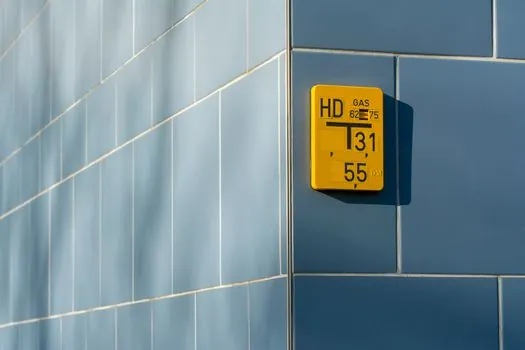
Four selection criteria drive whether the turbidity meter must be Ex-rated at all, and to what level. (1) The sample point is inside Zone 0 (continuous flammable atmosphere) – only intrinsically safe optical heads, Ex ia, are accepted, and a fibreglass or polycarbonate window is preferred over metal to avoid spark risk. (2) The sample point is Zone 1 (likely presence during normal operation) – Ex d or Ex e transmitter housing is acceptable, and the M800 Process in stainless-steel enclosure (ISM sensor, 4-wire) [S5] is a typical fit when a 5.7-inch colour touchscreen in polycarbonate is not the deciding factor. (3) The sample point is Zone 2 (not likely in normal operation) – Ex nA or Category 3 is sufficient, and a standard industrial transmitter is acceptable as long as the nameplate shows the Zone 2 mark. (4) The sample is taken downstream of a flame arrestor in a non-classified area – no Ex rating is required, and the budget can be spent on accuracy class and NIST-traceable formazin calibration instead.
Common failure modes when the wrong cell is picked: bubble fouling on a nephelometric-only sensor at a pressurised sample tap, fixable with an intermittent de-bubble sequence [S1]; coating drift on a single-channel scattered-light sensor, fixable with the dual-channel scattered/unscattered optics used in the TF16-N [S7]; and EMC interference between the turbidity 4–20 mA loop and the gas detector’s Foundation Fieldbus, fixable only by physical separation or by a ProfiNet / EtherNet/IP option on the M800 family (5.7” colour touchscreen, ISM digital sensor) [S5].
Comparison of typical inline options against four decision criteria
Three inline archetypes are commonly shortlisted for a hazardous gas detection point: the dual-beam nephelometric head, the single-beam absorption (unscattered light) head, and the multi-parameter ISM digital transmitter with a paired optical sensor. On (1) Ex-certification breadth, the dual-beam nephelometric head typically ships with ATEX + IECEx + FM in the same SKUs, the single-beam absorption head often carries only ATEX, and the multi-parameter ISM transmitter such as the M800 Process is offered in 4-wire polycarbonate or stainless-steel enclosure variants (ISM sensor, ProfiNet / EtherNet/IP options) [S5]. On (2) measurement range and coating tolerance, the TF16-N (dual scattered/unscattered light) covers 0–4000 NTU and compensates for window fouling with its second detector [S7], while simpler single-beam units lose accuracy above 1000 NTU. On (3) process interface, the dual-beam and ISM heads are factory-paired assemblies, so the Ex certificate names the pair, which simplifies an IECEx gas detector audit. On (4) documentation, a full ATEX DoC + IECEx CoC + FM approval is the minimum acceptable package for a multi-region EPC project, and a one-region-only certificate (EU-only ATEX, for example) should be rejected at the bid stage.
Real use cases and how the checklist differs

On a compressor-station gas sample skid, the turbidity meter sits in the same enclosure as a combustible-gas detector, so the certificate must name the same gas group (typically IIA for natural gas service) and the same temperature class (typically T4 to allow 130 °C process lines). On a chlorine-cell room, the meter is in Zone 1 with hydrogen by-product, the gas group is IIC, and only Ex d IIC T4 or better is acceptable, which usually forces a stainless-steel housing rather than polycarbonate. On a pharmaceutical-grade solvent line, the wetted materials (typically 316L SS, Kalrez, PTFE) must be traceable, and a sanitary tri-clamp process connection is preferred over an NPT thread; the optek TF16-N is documented as fitting pipeline installation [S7], which is the geometry a sample-conditioning skid expects.
For a portable field check on a hazmat response, a bench instrument such as the Hach 2100Q (single standard calibration, on-screen assisted calibration) [S2] is acceptable because it is never operated in the classified area; the rule is that portable meters are pulled out of Zone 1 and Zone 0 entirely, and their readings are taken on a declassified sample. Any portable used inside a classified space must carry an equivalent Ex mark, and the project should not rely on a “we will just step outside” argument during an audit.
How to verify a supplier’s certificate is real and in scope
Three checks separate a valid Ex certificate from a datasheet claim. First, the certificate number is queried on the issuing body’s public database (for ATEX, the notified body; for IECEx, the IECEx OD database), and the equipment description on the certificate must mention the model code, the gas group, and the temperature class exactly as printed on the nameplate. Second, the “U” suffix on an Ex Component Certificate means the unit is not a complete Ex device and must be installed inside a separately certified assembly, so a turbidity sensor head with a “U” certificate cannot be used on its own. Third, the manufacturing date on the nameplate must fall inside the certificate’s validity window; certificates are typically valid for three years and must be renewed by the manufacturer, not by the EPC. [S3]
Suppliers such as Mettler-Toledo publish the M800 Process turbidity transmitter with full ATEX/IECEx marks and a 4-wire polycarbonate or stainless enclosure option [S5], and Hach publishes the 2100Q with a US-only, non-Ex configuration [S2], which is the expected split for a portable. These are the only two role templates: a turbidity meter that is sold as Ex-certified is sold as a complete system (sensor + transmitter + cable entries), and a turbidity meter that is sold as a portable or lab unit is not Ex-rated. The safety certification page on an industrial reference set walks the same three-check rule for any Ex device and is worth bookmarking before the project kickoff.
Track the next certificate renewal date for the chosen turbidity meter on the supplier’s public database, and flag any IECEx CoC that lists “Ex nA only” when the project is Zone 1. A related moisture analyzer certification checklist for emissions sampling is built on the same six-item list, and a polycarbonate selection for electronics enclosures reference covers the housing-material angle when the choice is between the M800 polycarbonate and stainless variants.
For component-level specifications, see gas detection.