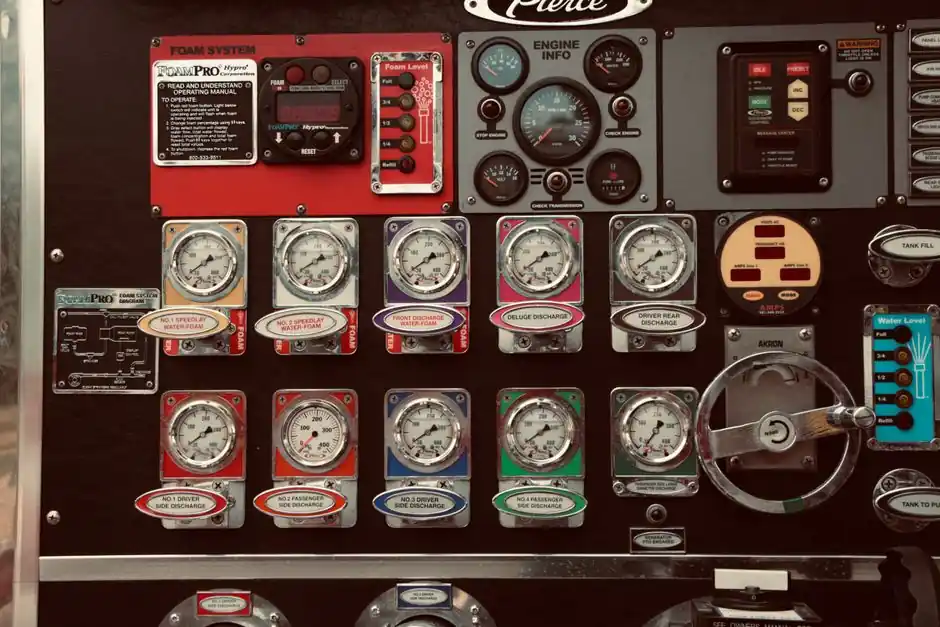
A hydraulic test bench RFQ must commit to a calibrated differential pressure range sized to the maximum test pressure plus proof factor, because under-ranging wastes resolution and over-ranging burns accuracy budget. Industrial hydraulic benches typically run 0-700 bar working pressure with filter and pump ΔP in the 0.2-10 bar window, so most RFQs pair a high-range static pressure transmitter with a dedicated low-range ΔP unit rather than one wide-span device [S1][S2].
Five RFQ fields drive 80% of supplier response variation: pressure range with units, accuracy as a percent of span or URL, output protocol, process connection size and material, and enclosure rating. Bench duty is benign compared to chemical or offshore service, so explosion-proof certification is usually optional unless the bench sits inside a hazardous-area building, and specifying it when not needed inflates unit cost noticeably [S1].
Pressure Range, URL, and Turndown on the RFQ Line
Specifying URL (upper range limit) at 1.5-2.0x the maximum expected differential is the cheapest accuracy gain a buyer can lock in, because most transmitters hold 0.075% of span, not 0.075% of URL [S1]. For a hydraulic test bench with filter monitoring at 0-5 bar ΔP, a 0-10 bar URL unit delivers the full 0.075% reference across the operating window; the same accuracy on a 0-100 bar unit reads as 0.75% of span at 5 bar because of the wider URL.
Turndown ratios of 100:1 are common in modern differential pressure transmitter families, so the same part number can cover 0-1 bar leak-test work and 0-10 bar pump-efficiency work without requalification [S1]. RFQ lines that list a single fixed range without turndown ratio force suppliers to either substitute a wider-range sensor or requote, both of which add days to procurement.
Accuracy, Zero, and Static Pressure Effects
Reference accuracy of 0.075% of span is the floor for bench-grade work, and 0.05% is the practical ceiling before price jumps two to three times [S1]. Zero stability and the static-pressure effect on zero (typically expressed as % URL per 1000 psi line pressure) matter more than reference accuracy on a hydraulic bench, because the line pressure sits at hundreds of bar while ΔP sits in millibar-to-bar territory.
Testo 6381 specifies 0.5% accuracy across a 10 Pa to 100,000 Pa range with automatic zero-point adjustment, illustrating the cleanroom/HVAC end of the market where span and pressure class are low [S2]. HK Instruments DPT-IO-MOD, with a 125-7,000 Pa MEMS range and RS-485/Modbus output, shows the building-automation tier where absolute accuracy is intentionally relaxed in favour of digital bus integration [S3]. A bench spec written with 0.5% accuracy and 10 Pa lower range limit will pull HVAC-grade sensors, not process-grade ones, so the line must read 0.075% or better and a ΔP floor no higher than 50 mbar.
Output Protocol: 4-20 mA, HART, or Fieldbus
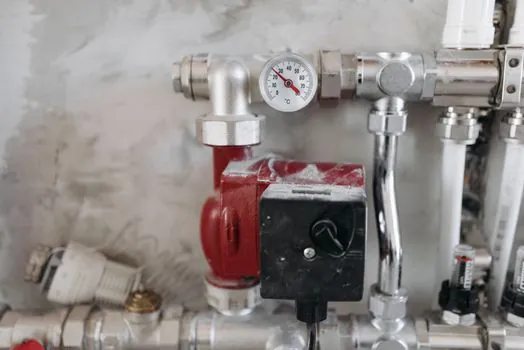
Dual 4-20 mA plus HART 7 is the default for greenfield bench builds because it pairs with every modern PLC and DCS analog input while still exposing device variables for trending [S1]. FOUNDATION Fieldbus or PROFIBUS PA replace the analog loop entirely with a digital segment; specifying them locks the bench into a host controller that can host the relevant EDD or GSD file, otherwise the transmitter is unreadable.
MEMS-based Modbus RTU over RS-485, as in the HK Instruments DPT-IO-MOD, is a legitimate option for a standalone bench with its own SCADA, where daisy-chaining multiple sensors on one bus reduces conduit runs [S3]. A bench spec that says "analog output" without naming mA versus V, and "digital" without naming HART versus Modbus, is the single most common cause of a requote cycle on pressure-instrument RFQs.
Process Connection, Manifold, and Wetted Material
Two 1/2-14 NPT female process connections in 316L stainless steel cover the majority of hydraulic bench installations, with an integrated 5-valve manifold preferred for in-situ zero and calibration check without breaking the process [S1]. Diaphragm material options scale with media compatibility: 316L for standard mineral oil, Hastelloy C276 for synthetic phosphate-ester or water-glycol fluids, and gold-plated 316L for hydrogen service where hydrogen embrittlement is a concern.
RFQ lines that omit process connection size force every bidder to assume a default, and that default will be wrong on at least one line of the BOM. Same for manifold inclusion: a buyer who wants the manifold must write "with 5-valve manifold, NACE MR0175-compliant bolting" rather than leave it as accessory language, because manifold retrofit pricing varies by a factor of three across vendors.
Enclosure, Process Temperature, and IP Rating
IP65 is the minimum enclosure rating for any bench that sees wash-down or oil mist, and IP66/IP67 is the right call when the bench sits near a coolant tank or under a leaking fitting [S2]. Process temperature window must cover at least -20 to 85°C to handle cold-start at 0°C and warmed oil during a 200-bar test; specifying -40 to 125°C is safer but more expensive and usually unnecessary for indoor benches.
The Testo 6381 quotes -20 to 65°C process temperature and IP65, both at the low end of what a hydraulic bench needs and consistent with its cleanroom application envelope [S2]. A spec that lets a cleanroom-grade sensor through will pass the RFQ stage and fail the bench FAT.
Options That Cause Quote Inflation When Omitted
Four optional fields consistently double supplier response time when left blank: hazardous-area certification (ATEX/IECEx zone), NACE MR0175 compliance for sour service, calibration certificate with traceable data, and digital display [S1]. Bench builds rarely need ATEX, so explicitly writing "no hazardous area certification required" is faster than leaving the field silent, because suppliers will otherwise price the worst case.
A 5-point calibration certificate (0, 25, 50, 75, 100% URL) is worth specifying when the bench will be used for traceability work or supplier acceptance testing; a 3-point certificate (0, 50, 100%) is the default and most bidders will not mention the difference. The same logic applies to hydraulic actuator test cells, where the differential pressure reading is part of an efficiency calculation and the calibration budget affects the uncertainty stack-up.
Comparison: Sensor Types Against Bench Duty
Piezoresistive silicon MEMS cells, like those in the HK Instruments DPT-IO-MOD, sit at 1-3% accuracy with 1-2 bar static pressure rating and low price, optimised for cleanroom air rather than 700 bar oil [S3].
Thin-film and bonded-foil strain gauge cells fill the middle, typically ±0.1% with 400-600 bar static, and they handle hydraulic oil well. For a bench scale test stand measuring filter ΔP and pump efficiency at 0-700 bar line pressure, the right cell is capacitive or thin-film, not MEMS, regardless of the MEMS price advantage.
Common Spec Mistakes That Force Requotes
Listing differential pressure range without a static pressure limit produces a quote optimised for low-pressure HVAC service and rejected at the engineering review [S4]. Writing "4-20 mA output" without naming HART, or "digital output" without naming the protocol, are the two highest-frequency requote triggers on pressure-instrument RFQs across the hydraulic test equipment market.
Specifying accuracy as "high" or "precision" without a number defaults the bidder's response to 0.5% and pulls HVAC-grade sensors into a process-grade application [S2][S3]. Wetted material left as "stainless" rather than "316L" or "Hastelloy C276" gives the supplier license to substitute 304 stainless, which fails on chloride-containing fluids. Each of these gaps adds 5-10 days to procurement and 8-15% to landed cost.
Trackable next signals to watch for before issuing the next revision of this RFQ: vendor disclosure of static-pressure zero shift as a percent URL per 1000 psi, explicit IEC 61000-6-2 industrial EMC compliance, and a published proof-pressure versus URL ratio on the datasheet. Suppliers that publish all three can be shortlisted without a sample; suppliers missing any one of them require a technical clarification round before quote acceptance.
For related coverage, see Specifying a Vision Measuring Machine on an Incoming-Inspection RFQ.