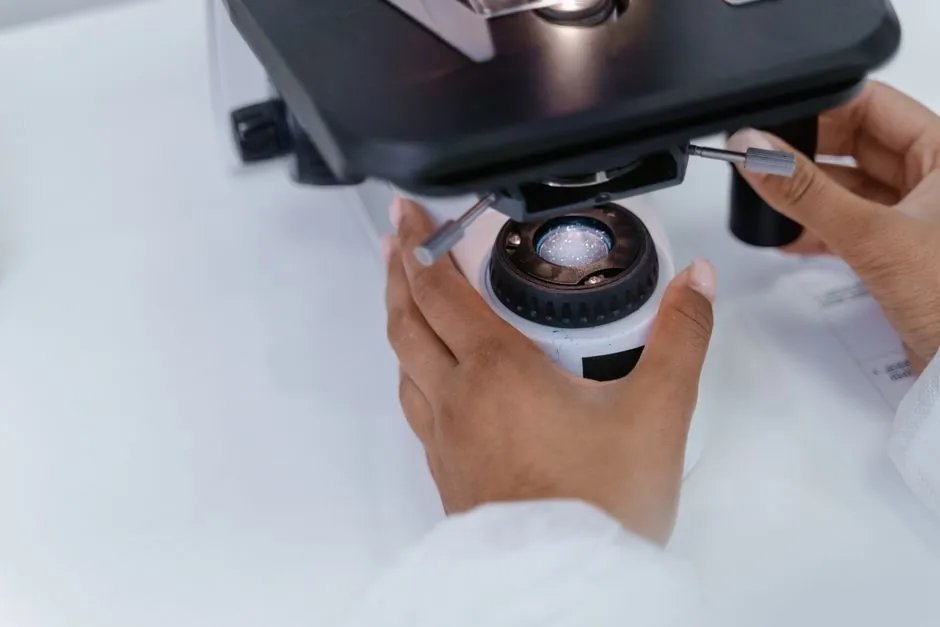
A moisture analyzer installed in an emissions sampling train is judged on three numbers: a heating technology that matches the sample matrix, a documented performance-verification test, and an electronic record format that survives an inspector's audit.
The most common instrument class for laboratory-side moisture confirmation on Method 30B sorbent traps, FTIR extractive streams, and dilution-tunnel particulate samples is the halogen-heated moisture analyzer at 0.001% MC readability, with microwave units reserved for high-moisture wet stacks or slurry-type sources.
Which standard family governs the analyzer selection
Emissions moisture checks sit under source-test methods (US EPA Method 4 for wet-basis correction, Method 5/17 for particulate trains, EN 14790 for European stack moisture) and the analyzer itself is qualified under laboratory metrology practice, not the source-test rule [S3][S6].
What that means in practice: the sampling method prescribes the moisture target (for example, Method 4 requires the water-vapour fraction be determined to within ±0.5% of stack gas absolute moisture content), while the analyzer is judged against a separate metrology evidence package covering readability, repeatability, and a performance-verification consumable [S3][S6]. Halogen heating on instruments such as the Mettler Toledo HX204 covers 40-230°C with 0.1 mg (0.001% MC) readability and 0.05% repeatability on a 2 g sample, satisfying the resolution and repeatability window that EPA Method 4 implicitly demands [S3].
Heating technology comparison for stack and vent samples
For the most common source-test matrix, the choice is between halogen, infrared, and microwave drying, and the trade is speed versus sample-form tolerance rather than raw accuracy [S6][S7].
Halogen (or infrared) units such as the HX204 and HC103 finish a typical 5-15 g sample in 2-8 minutes at 40-230°C and are repeatable to 0.05% (2 g) / 0.01% (10 g), which covers most dried sorbent, salt-impinger residue, and dilution-tunnel filter checks [S3][S4]. Microwave analyzers (Sartorius LMA200PM-class) run "up to 300 times faster" than a drying oven on samples with high moisture content, at the cost of requiring a flowing, liquid, or pasty matrix; they are therefore specified for wet scrubber slurry and quench-water residues rather than for dry sorbent desorption checks [S7]. A practical decision rule: choose halogen if the sample is solid, granular, or solvent-trapped on a filter; choose microwave if the sample is slurry, liquid, or paste; choose vacuum or desiccator drying only when the analyte is thermally labile (for example, ammonium-salt residues above 120°C).
Performance verification consumable and frequency

A reference-standard sachet such as cSmartCal gives the inspector the traceable performance number in a 10-minute run, and is the single most-cited document in an audit trail [S2][S8].
cSmartCal (certified version) and the StarterPac cSmartCal deliver 12 sachets of certified test substance, with the StarterPac adding a thermo-hygrometer so the lab can record ambient T and RH alongside the result; SmartCal is described as a 10-minute test run "in the same easy way as a regular measurement," which keeps the SOP short and the audit answer obvious [S2][S8]. Frequency guidance, taken from the manufacturer and consistent with ALCOA+ expectations: run SmartCal at instrument installation, after any service or firmware change, after a measured result drifts outside the historical control chart, and at minimum once per quarter during an active emissions campaign [S2][S8]. For high-throughput labs running two or more stack-test campaigns per month, weekly SmartCal is common practice and gives the lab a control chart thick enough to spot a 0.1% MC drift before it invalidates a Method 4 report.
Data integrity, ALCOA+, and the audit handoff
Modern halogen analyzers are expected to retain the original measurement on a separate server or LIMS, not on the instrument, and to export to a network printer, FTP server, or PC over Wi-Fi, Ethernet, RS232, or USB [S3].
The HX204 implements this with a "no results on instrument" option, user management with auto-lock, 3000-result on-board memory, 300 methods, 4 drying programs, and an automatic internal adjustment routine, all of which feed the ALCOA+ requirement that data be Attributable, Legible, Contemporaneous, Original, and Accurate [S3]. Connection via the relevant safety certification evidence (CE, UL, or IEC 61010 for the analyzer as a standalone electrical instrument) belongs in the same qualification file, since an emissions-stack moisture check is rarely the only line item under review. A second connecting thread for continuous-emissions work: the same data-integrity rule applies to a stack-side gas analyzer or extractive FTIR, which is why a single network export and LIMS pipeline is preferred over per-instrument thumb drives.
Sample handling, consumables, and throughput

Reliable moisture numbers in an emissions campaign depend as much on the pan, the spatula, and the desiccant as on the instrument, and the OEM publishes a formal consumables list for that reason [S10].
Mettler Toledo's "Accessories and Consumables" range covers sample pans, glass fibre filters, aluminium discs, and reusable components designed to keep the weighing and drying step consistent, and a feeding-line application note (animal feed, which has the same dry-basis vs wet-basis reporting pain point as a stack moisture check) emphasizes correct sample size, uniform distribution, and a drying temperature above the analyte's decomposition point [S5][S10]. The HX204 accepts 0.1-200 g of sample, so the lab can match a 0.5-2 g filter residue or a 10 g sorbent section without re-pouring [S3]. For methods requiring duplicate weighing (Method 4 trains typically run two impingers plus a silica desiccant tube), the same analyst on the same instrument reading the same tare delivers the lowest between-run variance.
Acceptance criteria and common audit findings
An audit-ready emissions moisture file has four written lines: the certified reference result, the measured value, the deviation, and the pass/fail decision against a documented tolerance [S2][S3].
A widely used acceptance band is ±0.3% MC absolute deviation of the measured SmartCal value from the certified sachet value, with action-level escalation (clean, recalibrate, service) if the result falls outside ±0.5% MC, but the lab's own SOP and any contracted test method always take precedence over the OEM's general guidance [S2]. Three common audit findings: (1) the SmartCal certificate is filed but the matching 10-minute run printout is missing; (2) the analyzer's internal adjustment is logged but an external linearity check against a 1 mg-200 g weight set is not; (3) the source-test report quotes a moisture percentage to three decimal places while the raw weighing record is only recorded to 0.1 mg. A more advanced continuity rule ties the analyzer's vibration analyzer-style control chart to the stack-test campaign, so a single out-of-control point invalidates a contiguous date range of Method 4 reports rather than a single sample.
Putting the checklist together

The minimum qualification file an inspector should be able to reconstruct for an emissions-train moisture analyzer is: instrument make, model, and serial; readable accuracy spec (0.001% MC / 0.1 mg) and repeatability spec (0.05% on 2 g); heating technology and temperature range (40-230°C halogen); a current SmartCal certificate within the last 12 months plus a 10-minute test printout; the ALCOA+ export configuration (Wi-Fi, Ethernet, USB Device, USB Host x2, SD Card, RS232); method memory and result memory at 300 and 3000 respectively; user-management with auto-lock enabled; and a service log covering the active campaign dates [S2][S3][S4].
Two signals to watch in 2026 are worth flagging here: more stack-test contractors are moving from halogen to microwave units for high-moisture wet stacks because the 300x speed advantage collapses the per-sample turnaround on slurry impingers [S7]; and instrument vendors are pushing "no results on instrument" options as a default, which raises the floor on ALCOA+ compliance but forces the lab to validate its LIMS export as part of the analyzer's qualification rather than a downstream IT decision [S3]. For a related cert walkthrough on a different wet-basis analyzer family, see the dissolved oxygen meter certification checklist for wastewater plants and the vortex flowmeter certification checklist for compressed air header service.