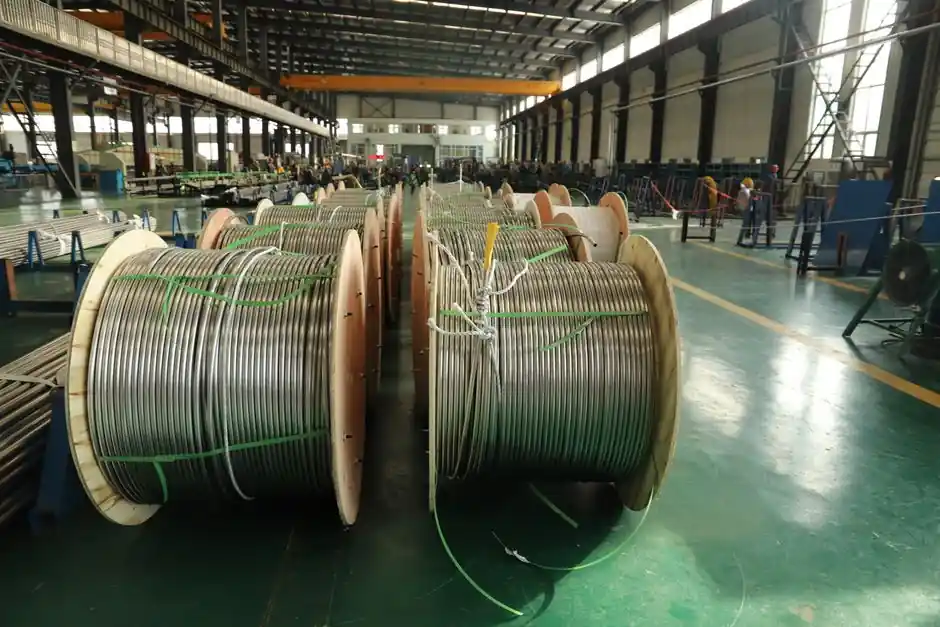
Industrial chiller lead times in 2026 range from 2–4 weeks for built-to-order standard configurations to 30–56+ weeks for custom data-center centrifugal units [S3][S4].
Portable air-cooled units, commercial chilled-water systems and large custom plants occupy different procurement markets, with 2026 U.S. data-center averages near 35 weeks and some HVAC equipment reaching 52 weeks [S1][S2][S3][S5].
Industrial chiller lead times by equipment class
Built-to-order industrial chiller configurations typically ship in 2–4 weeks, while custom and OEM-integrated systems generally require 4–8 weeks, depending on the build [S4]. These shorter figures apply to industrial equipment, not large commercial chilled-water plants.
Commercial chilled-water replacement systems have been reported at 40 weeks, and some HVAC equipment categories have reached 52 weeks [S1][S5]. For large data-center plants, packaged air-cooled scroll units under 300 tons were listed at 16–30 weeks, air-cooled screw frames of 350–600 tons at 24–40 weeks, and air-cooled centrifugal frames of 1,000 tons or more at 36–52 weeks [S3].
Water-cooled centrifugal chillers of 1,000 tons and up were listed at 30–56+ weeks [S3]. The practical lesson is simple: capacity, condenser architecture, compressor type and factory options can move a project from a normal industrial delivery window into a factory-queue problem.
Comparison criteria for major chiller categories
Standard portable industrial chillers are the fastest option: published delivery is 2–4 weeks for built-to-order configurations and 4–8 weeks for custom or OEM systems [S4]. Their advantage is schedule speed, but the boundary is narrow because they do not represent the complete central plant.
Large air-cooled and water-cooled centrifugal chillers are suited to central cooling, but their lead times are configuration-dependent. The comparison below distinguishes delivery risk from the surrounding infrastructure burden:
Standard industrial units offer 2–8 weeks of typical fabrication and ship time, limited plant scope, and the widest range of standard temperatures, while sub-zero equipment adds 30–60% to equipment cost [S4]. Packaged air-cooled data-center frames require 16–40 weeks, depending on frame and compressor, and eliminate the tower, condenser-water pumps and associated piping. Water-cooled centrifugal systems require roughly 30–56+ weeks and add a condenser-water loop, heat-rejection equipment, pumps and commissioning scope [S3].
For an industrial buyer, the industrial filter and industrial hose decisions sit downstream of the chiller selection because process-temperature stability affects filtration and fluid-handling requirements. A shorter chiller delivery does not eliminate those ancillary lead times.
Specification depth determines the queue position
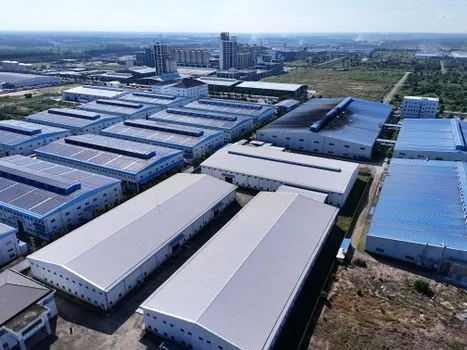
Standard compressor and frame selections are more likely to follow published availability ranges, while custom compressor types, leaving-water temperatures, refrigerants, controls and factory options can require a dedicated production slot [S2][S3]. Screw chillers are projected to account for 29.5% of industrial chiller product-type sales in 2026, ahead of scroll chillers at 26.8%, indicating that the most common technologies are also the sectors competing for manufacturing capacity [S6].
Large data-center projects have distinct configurations. Air-cooled screw frames for 350–600 tons were listed at 24–40 weeks, oil-free magnetic-bearing frames of 300–700 tons at 26–42 weeks, and high-temperature air-cooled centrifugal frames of 1,000 tons or more at 36–52 weeks [S3].
Sub-zero industrial chillers demand additional engineering and price because they require capabilities beyond a standard 40°F or higher temperature envelope [S4]. Published industrial pricing for 2026 listed small portable chillers at 1/3–1 ton for $3,000–$7,000, mid-size portable chillers at 2–5 tons for $7,500–$15,000, and custom large-capacity chillers at 30–60 tons for $50,000–$150,000, while low-temperature chillers added 30–60% to the equivalent standard model's price [S4]. Price is therefore a useful indication of build complexity, but it is not a substitute for a factory-confirmed schedule.
End-to-end schedule is longer than the factory queue
Submittals, manufacturing, shipping, installation, flushing, testing and controls integration all occur between purchase and operation [S2]. A 30-week equipment lead time can therefore support a materially later plant-commissioning date than the delivery date printed on a quotation.
The supporting plant must be planned in parallel. Factory-assembled cooling towers were listed at 14–26 weeks, while large chilled-water pumps and variable-frequency drives were listed at 12–24 weeks [S3]. The 2026 market review estimated installed central-plant cost at $2,200–$4,800 per ton [S3].
Thermal load also needs conversion before equipment selection. One refrigeration ton equals 3.517 kW of cooling, so a 10 MW thermal load corresponds to approximately 2,843 refrigeration tons before redundancy and design margin [S2]. Pumps, fans and other auxiliary heat may add load, while some facility heat can be rejected through economizers, dry coolers or direct liquid loops [S2].
Who benefits from expedited or factory-first procurement
Plants facing a fixed production date, a seasonal cooling deadline or a planned replacement with no viable rental unit should place a production slot before the detailed design is frozen. The 40-week commercial replacement figure supports early ordering for projects with a narrow operating window [S1].
Data-center and other large central-plant buyers should reserve equipment during schematic design because water-cooled quotations do not include the complete condenser loop, cooling tower or dry cooler [S2][S3]. The basket strainer and blind flange specifications should be released with the piping design, allowing procurement to run alongside the chiller rather than after it arrives.
This approach is less valuable for a small laboratory skid with flexible dates and an available rental chiller. Such buyers can use the 2–4-week standard industrial window if the process envelope fits a catalog unit, but should not apply that benchmark to a 1,000-ton centrifugal machine or a custom OEM package [S3][S4].
Commercial constraints and procurement risks
Rental chillers can bridge a delivery gap, but capacity mismatch can reduce cooling performance and create additional operating cost [S1]. Emergency procurement may also force a different efficiency class or limited configuration, while some HVAC categories face forecast 2026 price increases of approximately 10–12% [S1][S5].
The 52-week equipment figure applies to some HVAC categories, not every chiller [S5]. By contrast, the 35-week U.S. average is a data-center planning reference, while the 2–8-week industrial range applies to smaller portable and OEM builds [S2][S3][S4]. Mixing these benchmarks is the most common planning error.
Every request for quotation should identify cooling capacity, fluid type, required process temperature, condenser arrangement, compressor technology, control protocol, redundancy and factory testing. It should also request a written shipment window, production-slot status, submittal date and list of exceptions. Those fields convert a generic lead-time claim into a trackable commitment.
The first trackable signal is the factory slot against the approved submittal, followed by the confirmed shipment window and the long-lead plant items such as towers, pumps and variable-frequency drives [S2][S3]. For industrial projects, the published 2–8-week window offers a measurable baseline; for custom centrifugal plants, 44–60+ weeks is the defensible planning range until the manufacturer narrows it in writing [S3][S4].