Insulated hand tools for laboratory and field electrical work are typically specified to 1,000 V AC and 1,500 V DC working limits, manufactured to IEC 60900, and individually dielectric-tested at 10,000 V to maintain a 10:1 safety margin against the marked working voltage [S1][S2][S3]. For lab managers sourcing a bench kit rather than a full electrician set, that 10:1 ratio and the IEC 60900 marking are the two non-negotiable filters on any quote.
Insulated tools are one control inside a larger electrical-safety program: de-energization, lockout/tagout, absence-of-voltage verification, and arc-rated PPE still lead the hierarchy, and the insulated tool is layered on top of, not in place of, those steps [S3]. Treating the tool as a permit to work live is the most common procurement failure seen across university, pharma, and R&D lab inventories.
What "insulated" actually means on a lab tool
Insulated hand tools are not simply dipped in plastic; they are production-tested units where a nonconductive insulation layer is bonded over the metallic working end and handle [S1][S3]. Under the UL classification cited for 1,000 V-rated tools, each unit is tested to 10,000 V, which yields the 10:1 safety ratio to the marked 1,000 V working limit, and other agencies (ASTM, VDE, ANSI/ASME, ISO) contribute design criteria but do not all require 100% piece-by-piece dielectric testing [S2]. The practical consequence for a lab buyer: a tool marked only "1,000 V" without a standard designation should be rejected, because comfort grips and plastic-coated handles improve ergonomics but are not automatically rated insulation [S3].
Two manufacturing routes dominate the market. Injection-molded insulation, usually a single color, gives consistent wall thickness and is the method most current professional-grade lines have migrated to, while dipped dielectric coatings are usually a dual-layer system where ASTM requires contrasting colors so a wear-through of the outer color exposes the inner color and forces withdrawal [S2]. Most manufacturers have moved away from dipped vinyl because drip patterns during cure create uncontrolled thick and thin zones along the insulation [S2]. For labs that sterilize or wipe tools with solvents, the molded construction is also more resistant to softening than dipped vinyl.
Standards, markings, and the 10 kV dielectric test
The professional benchmark is IEC 60900, which is the standard most commonly printed on a rated 1,000 V tool, and a properly marked tool will show both the voltage rating and the standard on the body, with markings that remain legible through service life rather than a printed sticker that wipes off [S3]. The ASTM contrasting-color rule is the visual wear indicator: a dual-color tool where the inner color is visible has lost its outer dielectric layer and must be pulled from service, which is why the dual-layer construction is a useful, no-meter inspection method in a busy lab [S2][S3].
OSHA 1910.335(a)(2)(i) requires insulated tools or handling equipment when work is near exposed, energized conductors and contact is possible, and NFPA 70E frames the broader qualified-electrical-worker (QEW) requirements including the restricted approach boundary, where insulated tools are required whenever accidental contact with an energized conductor is a realistic possibility [S2]. For a lab that is not a formal QEW environment, these clauses still matter because any teaching, calibration, or instrument-repair bench that opens a live chassis falls under the same logic. The 2018 NFPA 70E revision removed the old task-based PPE tables and now requires an incident-energy calculation, which means the insulated tool alone does not cover arc-flash exposure and must be paired with the calculated PPE category [S2].
Selection criteria: rating, build, geometry, and use case
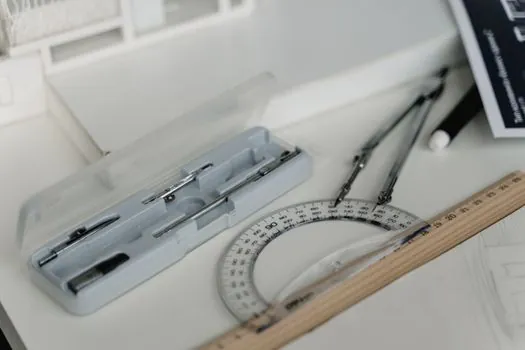
Four criteria filter a lab tool kit. Working voltage and standard marking, insulation build (molded vs dipped, dual-color), geometry matched to the fastener or terminal, and intended use case. A 1,000 V screwdriver is correct for a 230 V bench instrument, but a cable cutter is a different tool from a combination plier, and an open-end wrench may reach a crowded terminal where a socket will not [S3]. Forcing one tool to cover every job is the path to damaged insulation and stripped fasteners, and supervisors should standardize the kit so inspection, replenishment, and training run against one documented setup [S3].
Use case is the easiest filter to apply first. A university electronics teaching lab needs primarily insulated screwdrivers, nut drivers, and pliers in small metric and imperial sizes; an EV or battery-research lab adds insulated cable cutters, T-handle hex, and higher-torque socket sets; a calibration or instrument-repair lab typically needs finer drivers and smaller pliers rather than full ratchet sets. Insulated tools are sold individually or in pre-built kits ranging from a 9-piece classic AGTK-1 nut driver kit up to 28-piece sets that include sockets, wrenches, pliers, and screwdrivers in a lockable storage case [S5][S6]. For lab managers, the lockable case is not a convenience, it is part of the inspection and segregation discipline that keeps insulated tools apart from non-insulated shop stock.
Inspection, storage, and the limits of the tool
Field practice is to inspect insulated hand tools before each use for damage, and to size the tool to the voltage and environment it will be used in [S4]. The visual signal on a dual-layer tool is the appearance of the inner color through the outer layer, which is the unambiguous end-of-life indicator and forces replacement [S2][S4]. A torn or cut insulation sleeve is not cosmetic damage; on a live panel it converts a controlled task into an exposure point, which is why inspection belongs on the job procedure, not on an annual audit [S3].
Storage is the second discipline. Insulated tools should live in a dedicated, labeled, and ideally lockable case so they are not co-mingled with non-insulated shop tools, and so missing pieces surface immediately during kit checks [S3][S5]. For broader PPE context, lab safety programs also require properly selected insulated gloves for thermal hazards and cold-chain work, which is a different "insulated" category from electrical insulation and is not interchangeable [S8]. The two are easy to confuse in a procurement catalog but govern different hazards: one blocks voltage, the other blocks heat transfer.
Comparison: insulation build methods on lab-relevant criteria

On the four criteria a lab buyer actually weighs, injection-molded single-color tools and dipped dual-color tools line up as follows. Dielectric strength is governed by the standard and the 10 kV piece test in either case, so the rating is identical when both are IEC 60900 marked [S2][S3]. Wear indication favors dipped dual-color tools, because the contrasting inner color is a built-in visual flag, whereas single-color molded tools require a closer visual plus tactile inspection for cuts or cracks [S2]. Consistency of insulation thickness favors molded tools, because the liquid-vinyl dip process leaves uneven thick and thin zones from cure drip patterns [S2]. Solvent and wipe-down resistance in a lab also favors molded construction, which tolerates common lab cleaners better than dipped vinyl that can soften with some solvents.
Who insulated tools are for, and where they are not the answer
Insulated tools are for qualified electrical workers, instrument-repair technicians, and trained lab staff performing tasks inside the restricted approach boundary where accidental contact with an energized conductor is a realistic possibility, and the tools should be specified to 1,000 V AC / 1,500 V DC under IEC 60900 with the 10 kV dielectric test [S2][S3]. They are also a sensible control for any teaching, calibration, or R&D bench that opens energized chassis, even if the formal QEW designation does not apply to that worker.
They are not a substitute for arc-flash PPE, lockout/tagout, or an energized-work permit, and a 1,000 V-rated tool does not address arc-flash incident energy on its own [S2][S3]. They are also not the right tool for purely mechanical assembly where the only hazards are torque, pinch, or sharp edges, where a standard ergonomic driver is the better and lower-cost choice. Treating insulated tools as universal "safety tools" inflates kit cost without lifting the actual hazard control, which is the second most common procurement error in mixed-discipline labs.
For broader hand-tool selection context across an industrial site, see the hand tools selection reference; for power-driven site tooling, the machine tools encyclopedia entry covers the adjacent category, and the insulated tools reference page collects the related standard and rating data in one place. Lab-side PPE integration, including glove selection across thermal and electrical hazards, is handled separately in the site safety program and should not be conflated with hand-tool procurement [S8].
Trackable signals for the next 6-12 months
Watch for IEC 60900 maintenance updates and any expansion of the standard's scope to cover newer tool geometries used in EV and battery-lab work, since the dominant growth in insulated-tool demand is in solar, wind, and electric-vehicle service rather than in legacy panel work [S2]. Track whether lab procurement catalogs continue to consolidate around injection-molded construction or retain dual-color dipped lines for the visual wear indication, since both directions are visible in current 28-piece and 9-piece kit offerings [S5][S6]. Finally, verify that any 1,000 V-marked tool carries a current standard designation on the body, not just on the box, because unmarked or sticker-only markings are the most common field failure point and the easiest rejection criterion at goods-in [S3].
See also our earlier report, Multi-Vendor AI Accelerator Procurement: A Field Guide for 2026 Buyers.