1000V-rated insulated hand tools certified to IEC 60900 are the default spec on commercial and industrial electrical jobs, with screwdriver, pliers, and wrench formats dominating field use [S1][S2][S3].
Insulated tools are coated or overmoulded hand tools whose non-conductive barrier sits between the user and an energised conductor, and they are treated as a layer of PPE rather than a substitute for lockout/tagout, gloves, or arc-rated clothing [S3][S4].
Voltage Class and Certification Baseline
1000V AC / 1500V DC is the most common dielectric rating printed on commercial insulated hand tools, and it is the rating that Fluke, Wiha, Knipex, NWS, Stahlwille, and other OEM lines align to [S1][S2][S4]. IEC 60900 is the international standard governing the manufacture and testing of insulated hand tools for live working up to 1000V AC and 1500V DC, and Hoffmann Group USA explicitly states that its insulated screwdrivers and pliers carry that certification [S5]. Tools bearing the IEC 60900 mark are subjected to routine dielectric tests, impact tests, and adhesion tests on the insulation coating, which is the engineering reason a "1000V" stamp is treated as auditable evidence rather than marketing copy [S5].
Two practical consequences flow from that baseline. First, OSHA-aligned jobs in the United States typically reference tools meeting ASTM F1505 / IEC 60900, and KC Tool's insulated product range is positioned against those OSHA requirements [S2]. Second, when a job moves to higher voltages (utility distribution, substation work above 1000V), the spec shifts to Class 4 hot sticks and live-line tools, not bigger insulated hand tools, which is a hard boundary most buyers cross without realising it.
Tool Geometry: What to Stock in Each Format
Selection is driven by tip geometry, drive size, and jaw type as much as by the dielectric rating, and Wiha's catalogue separates insulated screwdrivers, insulated nut drivers, and insulated pliers/cutters into distinct SKU families for that reason [S4]. Insulated screwdrivers ship in slotted, Phillips, Pozidriv, Torx, and hex formats, with slim-shaft variants (Wiha's "SlimLine" line, for instance) designed to reach recessed screws in consumer units and terminal blocks without scraping the insulation [S4].
Insulated pliers cover combination, side-cutting (diagonal), long-nose, and water-pump geometries, and the cutting edges are typically induction-hardened while the handles carry the dielectric overmould, so a single SKU has two different material specifications stamped into one tool [S3][S5]. Insulated wrenches and sockets extend the system to 1/4", 3/8", and 1/2" drives, and KC Tool's category tree lists insulated ratchets, sockets, and T-handles as standalone product lines, confirming that drive-tool insulation is treated as a parallel engineering problem rather than a sleeve retrofit [S2]. For a balanced starter kit, an electrician typically carries 6-10 insulated screwdriver/nut driver sizes, 3-4 insulated pliers formats, and a 3/8" insulated ratchet set with 10-20 sockets, which is the working density that field stocking surveys tend to converge on.
Comparison: Insulated vs Standard vs ESD-Safe Hand Tools
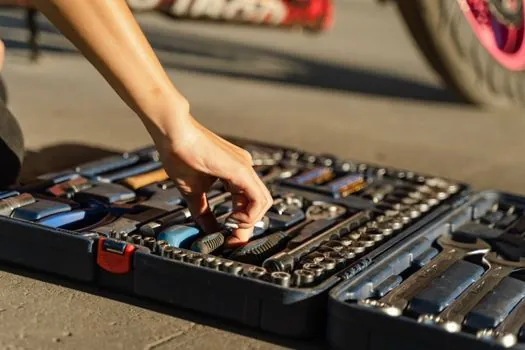
The three hand-tool classes look similar on a bench but solve different problems, and mixing them is a common procurement error. The table below lines up the decision criteria that actually matter on a job: [S3]
<strong>Insulated (1000V IEC 60900):</strong> dielectric overmould rated to 1000V AC / 1500V DC, intended for live AC/DC work up to that threshold, recognised by OSHA and IEC 60900 certification marks, and the only class suitable for energised work [S1][S2][S5]. Typical formats: screwdriver, pliers, wrench, socket, T-handle, cable cutter.
<strong>Standard (uninsulated chrome-vanadium / CrV):</strong> no dielectric rating, mechanically robust, lower cost, and explicitly not for use on or near energised conductors; the standard choice for mechanical assembly, machinery maintenance, and de-energised electrical cabinets once lockout/tagout is confirmed [S3].
<strong>ESD Safe (dissipative, ~10^6 to 10^9 ohm):</strong> controls static discharge, not shock, and is specified for PCB assembly, electronics repair, and explosive atmosphere handling where a spark could ignite vapours, not for working on 230V mains [S2]. Typical formats: precision screwdriver, tweezers, pliers with dissipative grips.
The decision rule: specify IEC 60900 insulated tools whenever the conductor might be live, ESD-safe tools whenever the device is static-sensitive, and standard tools only on confirmed-dead equipment.
Who Insulated Tools Are For, and Who They Are Not For
Insulated 1000V hand tools are the right call for commercial and industrial electricians working on panelboards, motor control centres, and branch circuits up to 1000V AC; for HVAC and facilities maintenance staff who interact with 208-480V three-phase equipment; for renewable-energy installers working on string inverters and DC combiner boxes; and for any oil and gas, mining, or chemical plant technician who may be exposed to energised equipment during turnaround work [S1][S3][S5]. Practitioners in those spaces benefit from starting with the spec-first reference on 1000V insulated tools for oil and gas, which maps the same IEC 60900 family into hazardous-area practice.
They are not the right call for utility line workers on overhead conductors above 1000V, who need Class 4 hot sticks and live-line tools instead; for arc-flash environments with high incident energy, where arc-rated PPE, voltage-rated gloves, and face shields dominate the protection hierarchy; or for any work where lockout/tagout is feasible, because the safer engineering control is to de-energise rather than to rely on tool insulation alone [S3].
Inspection, Storage, and Field Failure Modes

Pre-use inspection is the single most common reason a 1000V tool fails in service, and the failure modes are predictable: cuts or nicks in the overmould from being dropped, chemical attack from solvents that swell the dielectric, and UV embrittlement of stored tools left in truck cabs [S3][S4]. The Bombay Tools guide lists inspection, proper cleaning, and storage as three of its seven top-line safety guidelines, alongside integrating insulated tools with PPE rather than treating them as a standalone solution [S3].
Mechanically, the dielectric overmould is bonded to a CrV or chrome-plated substrate, and the bond is the weak point: if the insulation can be twisted or slid relative to the shank, the tool is out of service. Most OEM re-test intervals sit between 6 and 12 months for tools in daily use, and any tool that has taken a significant impact, been exposed to chemicals outside its compatibility list, or shows visible damage under the inspection lamp should be withdrawn immediately rather than re-dipped or repaired in the field. A useful pre-use discipline borrowed from the broader hand-tools reference is to apply the same visual and tactile checks to insulated handles that you would apply to a striking-face or cutting edge on a non-insulated tool, with the additional rule that dielectric damage is invisible to the user until the next fault.
How Insulated Tools Fit with the Rest of the Toolkit
Insulated hand tools only carry their rated voltage when the surrounding work environment is correctly set up: the circuit is identified and locked out where possible, the worker is wearing the correct voltage-rated gloves and arc-rated clothing, and the test instruments used to verify de-energisation are themselves rated to the system voltage [S3]. Fluke positions its insulated hand tool line directly next to its digital multimeters, clamp meters, and installation testers in the product taxonomy, which mirrors how an electrician actually uses the kit: verify, isolate, then turn the fastener [S1].
Inside a broader PPE and tool programme, insulated hand tools sit between personal voltage-rated gloves (the primary insulator) and the construction tools used for cabinet and conduit work, which are usually uninsulated. For work at height on overhead service, the insulated-tool story hands off to aerial work platform and boom-truck procedures, and the dielectric concern shifts from the hand tool to the platform's insulation rating and bonding strategy.
Track, over the next two quarters, whether IEC 60900 updates its impact and adhesion test thresholds (the standard is the live wire behind nearly every 1000V claim) and whether more OEMs publish IEC 60900 plus ASTM F1505 dual certification on the same SKU, which would be the cleanest signal that the North American and European insulated-tool lines are consolidating around a single test regime rather than two parallel ones. The near-term procurement signal is simpler: stock IEC 60900-certified 1000V insulated screwdrivers, pliers, and a 3/8" socket set from a single OEM family so that the inspection cycle, warranty, and re-test logistics all run on the same clock.